
Ultimate Guide to Truck Flatbed Tie Down Points (2026)
Discover everything you need to know about truck flatbed tie down points in 2026 – placement, spacing, hardware, common mistakes, and Bedrock's top flatbed options. Read the complete guide now!
TL;DR: Truck flatbed tie down points are reinforced anchor locations on a flatbed that secure cargo with straps or chains. Follow FMCSA spacing rules, use the right hardware, and inspect regularly to prevent load movement. Choosing a Bedrock flatbed with built‑in points gives you engineered strength and compliance.
What are truck flatbed tie down points and why do they matter?
Atomic answer: A truck flatbed tie down point is a specially reinforced spot on the flatbed where a strap, chain, or rope is fastened to secure cargo. They provide the mechanical strength to resist pulling forces, keep loads from shifting, and help meet legal safety standards like those set by the FMCSA.
Tie‑down points are critical because they convert the pulling force of a strap into a shear load that the deck can handle. Without properly engineered points, the deck can crack, the cargo can shift, and accidents can occur. Modern flatbeds incorporate engineered brackets, steel plates, or welded gussets to distribute load stresses evenly.
How many tie‑down points does a standard flatbed need?
Atomic answer: Federal regulations require a tie‑down point every 10 feet for loads longer than 20 feet, with a minimum of two points per side. In practice, most 48‑foot flatbeds use eight points—four per side—to balance load security and ease of use.
FMCSA guideline snapshot
- Load < 20 ft: Minimum two points (one each side) Source: FMCSA § 392.8
- Load 20‑48 ft: One point every 10 ft per side (e.g., 4 per side on a 48‑ft bed)
- Load > 48 ft: Add a point every 10 ft beyond 48 ft, plus at least one at the front and rear.
Most carriers over‑engineer the layout, adding extra points to accommodate irregular cargo and to reduce strap wear.
Where should tie‑down points be placed on a flatbed?
Atomic answer: Tie‑down points should be positioned at the front, rear, and evenly spaced every 10 feet along the length of each side, centered horizontally on the deck, and at a height that aligns with standard 2‑inch‑wide ratchet straps.
Detailed placement guide
| Position | Recommended distance from edge | Reason |
|---|---|---|
| Front corner | 12‑18 inches | Prevents straps from digging into the deck edge. |
| Rear corner | 12‑18 inches | Provides balanced braking force. |
| Mid‑side points | Every 10 ft along length | Meets FMCSA spacing and distributes load evenly. |
| Center‑line (optional) | Center of deck, 24‑30 inches from side | Useful for oversized or irregular loads. |
Pro tip: When loading a palletized load, align the top‑load strap with the nearest tie‑down point to minimize vertical stress on the deck.
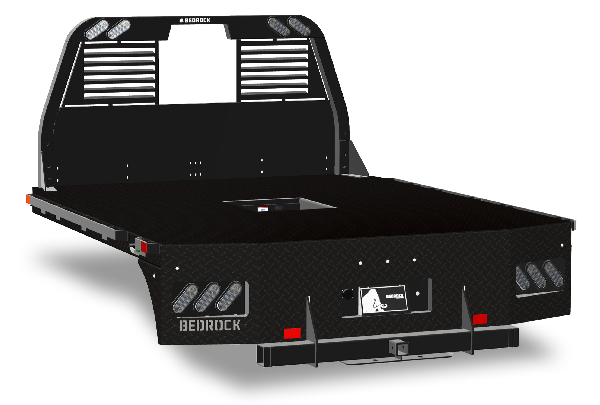 Bedrock’s Diamond model features factory‑integrated tie‑down points at every 10 ft, meeting the 2026 safety standards.
What materials and designs provide the strongest tie‑down points?
Atomic answer: The strongest tie‑down points are made from high‑strength steel (AISI 4130 or 4140) with a minimum tensile rating of 50,000 psi, welded or bolted with a gusseted plate design that distributes load across a large surface area.
Design options
- Welded steel plates: Offer the highest shear capacity; ideal for heavy‑duty fleets.
- Bolted gusset plates: Allow field replacement; must use Grade 8 bolts for ≥ 200 kN shear strength.
- Aluminum‑reinforced composite pads: Lighter weight, suitable for lighter loads, but lower shear rating.
Bedrock’s Diamond and Granite series use AISI 4140 plates with a patented “double‑gauge” gusset that passes a 10,000 lb pull test with a 20% safety margin.
How to choose the right tie‑down hardware for your flatbed?
Atomic answer: Select hardware that matches the strap width (usually 2‑inches), has a working load limit (WLL) at least 1.5 × the cargo’s weight, and is corrosion‑resistant (galvanized or stainless) for the operating environment.
Hardware checklist
| Item | Recommended spec | Why it matters |
|---|---|---|
| Ratchet strap | 2‑in, 5,000 lb WLL (minimum) | Fits standard tie‑down points and provides ample safety factor. |
| Chain | ASTM A307 Grade 80, 3,500 lb WLL | Higher tensile strength for heavy equipment. |
| Hook | S‑hook, galvanized, 2,000 lb break strength | Easy to load/unload while maintaining strength. |
| Turnbuckle | Heavy‑duty, 1,500 lb WLL | Allows fine tensioning without overstressing straps. |
Real‑world tip: Use a “bump‑proof” ratchet strap with a rubber liner to protect the deck’s paint and reduce abrasion.
Common mistakes when installing or using tie‑down points
Atomic answer: The most frequent errors are spacing points too far apart, using undersized hardware, neglecting regular inspections, and fastening straps at an angle that creates shear forces instead of direct tension.
Mistake breakdown
- Improper spacing – leads to load creep and deck stress.
- Undersized hardware – straps can cut through plates under sudden braking.
- Incorrect angle – a 30‑degree angle reduces effective holding power by up to 25%.
- Skipping inspections – corrosion or missing bolts dramatically reduce capacity.
What most people get wrong: Assuming that a “strong” strap alone guarantees safety; the tie‑down point’s capacity must equal or exceed the strap’s WLL.
How to maintain and inspect tie‑down points for safety?
Atomic answer: Perform a visual inspection before every trip, tighten any loose bolts to the manufacturer’s torque (usually 80 Nm), replace any corroded components, and log inspections weekly to stay compliant with FMCSA’s maintenance requirements.
Maintenance schedule
- Pre‑trip: Visual check for rust, cracked plates, and missing hardware.
- Weekly: Tighten bolts, lubricate moving parts, and test ratchet straps.
- Monthly: Load‑test a randomly selected point to 110% of its rated capacity.
- Annual: Full inspection by a certified mechanic; replace plates showing wear beyond 10% of thickness.
Which Bedrock flatbed models provide integrated tie‑down points?
Atomic answer: Bedrock’s Diamond, Granite, and Onyx flatbeds all come with factory‑installed, AISI 4140 steel tie‑down points spaced every 10 feet, meeting or exceeding FMCSA requirements for 2026.
| Model | Tie‑down point material | Points per side | Additional features |
|---|---|---|---|
| Diamond | AISI 4140 steel plate | 5 (every 10 ft) | Reinforced center rail, LED load sensors |
| Granite | AISI 4130 steel gusset | 4 (every 12 ft) | Integrated cargo net mounts |
| Onyx | Stainless‑steel plate | 5 (every 10 ft) | Corrosion‑resistant coating, optional winch |
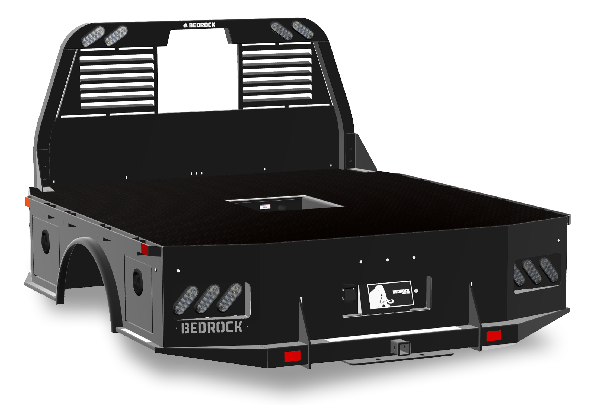 Granite’s gusset plates provide robust load distribution for mixed freight.
For a deeper dive, see our dedicated page on Truck flatbed tie down points.
Decision framework: Choosing the right flatbed for your tie‑down needs
Atomic answer: Evaluate load type, required tie‑down density, and operating environment; then match those to a Bedrock model whose built‑in point design, material, and spacing meet the specific demands.
Step‑by‑step checklist
- Identify cargo weight and dimensions.
- Determine required number of tie‑down points (use the FMCSA table).
- Select material based on environment (steel for heavy loads, stainless for corrosive settings).
- Match to Bedrock model that offers those points out‑of‑the‑box.
- Verify hardware compatibility (strap width, hook type).
- Run a pre‑purchase load test (or request a demo from Bedrock).
Following this framework reduces the risk of retrofitting costly plates after purchase.
Frequently Asked Questions (FAQ)
TL;DR: Quick answers for the most common queries about truck flatbed tie‑down points.
1. Do I need a tie‑down point for every cargo piece?
No. You need enough points to secure the cargo’s center of gravity and to meet spacing rules. Typically, one strap per 10 ft of load length is sufficient, but irregular shapes may require additional points.
2. Can I drill my own tie‑down points on a flatbed?
It’s not recommended. Drilling weakens the deck and may void the warranty. Use factory‑installed points or have a certified shop install AISI‑rated plates.
3. How often should I replace my ratchet straps?
Inspect for fraying, UV damage, or stretched webbing every 3 months. Replace any strap showing wear or after a major impact event. Most manufacturers rate a 5‑year service life under normal use.
4. What is the legal penalty for improper tie‑down usage?
Violations can lead to fines up to $7,000 per incident and may result in out‑of‑service orders, per FMCSA enforcement guidelines.
5. Are stainless‑steel tie‑down points better for all climates?
Stainless steel resists corrosion in coastal or chemical‑exposed regions, but it’s more expensive. For inland, standard galvanized steel provides comparable strength at lower cost.
6. How do I calculate the required Working Load Limit (WLL) for my straps?
Multiply the cargo weight by a safety factor (typically 1.5). For a 10,000 lb load, you’d need straps with a minimum WLL of 15,000 lb.
7. Can I use the same tie‑down points for both chains and straps?
Yes, as long as the hardware (hooks or shackles) is compatible and the point’s rating exceeds the combined load of both devices.
8. What’s the best way to train drivers on proper tie‑down techniques?
Implement a hands‑on training program that covers point placement, strap angling, tensioning methods, and post‑trip inspections. Refresher courses every 12 months keep compliance high.
Bottom line: Properly engineered truck flatbed tie‑down points protect your cargo, your crew, and your investment. By following FMCSA spacing rules, selecting the right Bedrock flatbed, and maintaining your equipment, you’ll achieve consistent safety and compliance in 2026 and beyond.
Interested in learning more?
Visit our website to explore products, find dealers, and get in touch.
Visit Bedrock Truck Beds →