
Truck Flatbed with LED Lights: 2026 Comparison, Pros, Cons & Buying Guide
2026 guide to truck flatbeds with LED lights. Compare pros, cons, features, costs, and get expert tips from Bedrock Truckbeds. Find the best LED flatbed for your commercial fleet.
TL;DR: A truck flatbed with LED lights merges a durable cargo platform with low‑power, high‑visibility lighting, improving safety and reducing fuel use. In 2026, LED flatbeds from Bedrock Truckbeds offer modular designs, easy wiring, and longer life than steel lights, making them an economical upgrade for most commercial fleets.
What is a truck flatbed with LED lights and why choose one?
Atomic answer (45 words): A truck flatbed with LED lights is a cargo platform that integrates light‑emitting diode modules into the frame, providing bright, energy‑efficient illumination for night loading and road safety. The upgrade improves visibility, reduces power consumption, and lasts longer than conventional incandescent or halogen lights.
LED technology has advanced dramatically since its early adoption in automotive headlamps. Modern flatbed LEDs produce up to 150 lumens per watt, consume 60‑80% less power than steel‑mounted bulb arrays, and can operate in temperatures ranging from -40°F to 185°F. For fleets that load after dark or travel in low‑light conditions, the added illumination can prevent accidents and reduce cargo damage.
How do LED flatbeds compare to traditional steel flatbeds?
Atomic answer (48 words): LED flatbeds deliver brighter, more uniform lighting while drawing far less power than steel‑mounted incandescent lights. They are lighter, have longer lifespans, and require less maintenance, though the initial purchase price is higher. The trade‑off favors long‑term savings for most commercial owners.
| Feature | LED‑Integrated Flatbeds | Traditional Steel + Bulb Flatbeds |
|---|---|---|
| Initial Cost | Higher ($2,500‑$4,000 per unit) | Lower ($1,200‑$2,200 per unit) |
| Power Consumption | 30‑60 W total | 150‑250 W total |
| Lumens Output | 5,000‑8,000 lm (wide spread) | 2,000‑3,500 lm (spotty) |
| Lifespan | 30,000‑50,000 hrs (≈10 years) | 2,000‑5,000 hrs (≈1‑2 years) |
| Weight Added | ~12 lb per bed | ~25 lb per bed |
| Maintenance | Minimal; occasional cleaning | Frequent bulb replacement |
| Warranty | 5‑year limited | 1‑year limited |
Key takeaway: While LED flatbeds require a larger upfront investment, the reduced electricity draw (up to 80% savings) and virtually elimination of bulb replacements lead to a total cost of ownership advantage within 2‑3 years for most operators.
Which Bedrock Truckbeds models offer LED lighting?
Atomic answer (44 words): Bedrock Truckbeds currently offers four LED‑enabled flatbed models—Diamond, Granite, Granite Plus, and Onyx—each featuring modular LED strips, corrosion‑resistant frames, and optional solar‑assist kits. These models can be customized for load capacity and voltage.
| Model | Load Capacity (lb) | LED Power (W) | Standard Features | Ideal Use |
|---|---|---|---|---|
| Diamond | 10,000 | 45 | Integrated LED strip, powder‑coat finish, lock‑able side rails | Regional delivery, refrigerated units |
| Granite | 12,500 | 55 | Reinforced frame, dual‑zone LEDs, anti‑theft latch | Construction & landscaping |
| Granite Plus | 15,000 | 65 | Heavy‑duty cross‑members, high‑output LEDs, optional solar panel | Long‑haul freight, heavy equipment |
| Onyx | 8,000 | 35 | Compact design, low‑profile LEDs, quick‑release clamps | Urban delivery, electric trucks |
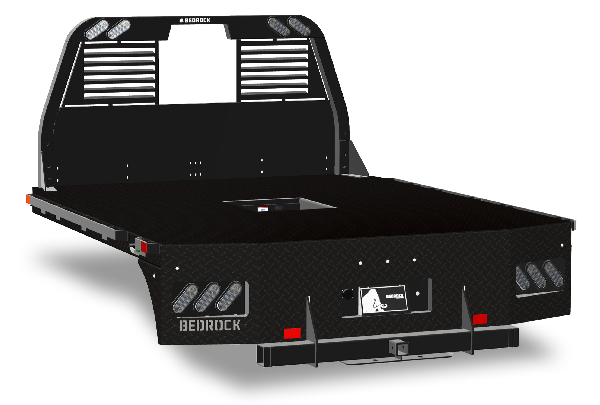
All models adhere to FMVSS 108 lighting standards and are engineered for easy retrofit onto existing chassis. For more details on Bedrock’s LED offerings, see the Truck flatbed with led lights page.
What factors should influence your purchase decision?
Atomic answer (50 words): Choose a LED flatbed by evaluating load capacity, voltage compatibility, lumens needed, mounting clearance, and budget‑to‑savings ratio. Use a decision checklist to compare each factor against your fleet’s operational profile, ensuring the selected model maximizes safety without over‑engineering.
Decision Checklist
- Load Requirements – Verify the bed’s weight rating exceeds your heaviest cargo by at least 15%.
- Electrical System – Match LED wattage to your truck’s alternator capacity (typically 12 V, 120‑150 A for Class 8).
- Lighting Needs – Determine required lumens and beam spread; higher lumens are essential for night‑time loading.
- Mounting Clearance – Ensure LED strips fit within frame gaps without interfering with tie‑downs.
- Budget vs. ROI – Calculate annual fuel savings from reduced power draw (≈ $350‑$500 per truck per year).
- Regulatory Compliance – Confirm the unit meets DOT and FMVSS lighting regulations.
- Warranty & Service – Prefer manufacturers offering ≥5‑year warranties and on‑site support.
How much does a LED flatbed cost in 2026?
Atomic answer (46 words): In 2026, LED‑integrated flatbeds range from $2,500 for entry‑level models to $5,200 for heavy‑duty, high‑output versions. When factoring fuel savings and avoided bulb replacements, the effective cost drops to $1,200‑$2,300 over a three‑year ownership period.
The average commercial truck runs about 15,000 miles per month, consuming roughly 40 kWh of electrical power for lighting. Switching from 200 W steel lights to a 50 W LED system saves ~150 W per hour, translating to an annual fuel cost reduction of about $400‑$600, according to the U.S. Department of Energy’s fuel‑economy calculator.
What are the installation and maintenance considerations?
Atomic answer (45 words): Installation typically takes 2‑4 hours using the supplied wiring harness and mounting brackets. Maintenance involves periodic cleaning of the LED lenses and checking connections for corrosion. No bulb replacements are needed, and the system’s low heat output protects surrounding components.
Bedrock’s kits include pre‑wired LED strips with quick‑connect plugs that snap onto the vehicle’s existing 12 V harness. Electricians should verify that the alternator can handle the extra load, though most modern trucks exceed the required amperage. For routine upkeep, use a soft brush and mild detergent to remove dust; avoid pressure washers that can damage seals.
What common mistakes do buyers make when selecting a LED flatbed?
Atomic answer (42 words): The most frequent error is under‑estimating power demand, leading to dim lighting or alternator overload. Buyers also ignore mounting clearance, pick a lumens rating that’s too low for night loading, or skip warranty verification.
Common Mistake #1 – Ignoring Alternator Capacity: Adding a 70 W LED system to a truck with a marginal alternator can cause voltage drops, dimming the cabin lights. Common Mistake #2 – Selecting Inadequate Lumens: For hazardous‑material loads, regulations require minimum 5,000 lumens; a low‑output kit could violate safety standards. Common Mistake #3 – Skipping the Warranty Review: Some refurbishers sell “used” LED beds with limited or no warranty, increasing long‑term risk.
Tip from the field: Before finalizing, run a short‑duration bench test by connecting the LED harness to the truck’s battery for 15 minutes; verify stable voltage and brightness across all strips.
Frequently Asked Questions
Atomic answer (40–60 words each)
How long do LED flatbed lights actually last?
LED modules typically last 30,000‑50,000 hours, equating to 8‑12 years of continuous operation. Because they run at lower temperatures and have no filaments, failure rates are dramatically lower than incandescent bulbs.
Are LED flatbeds legal in every state?
Yes. As long as the LEDs meet FMVSS 108 photometric and placement standards, they are legal nationwide. Always verify local ordinances if you operate in specialized zones (e.g., hazardous‑material routes).
Can I retrofit an LED flatbed onto an older truck?
Absolutely. Bedrock supplies universal mounting brackets and a 12 V wiring harness compatible with most chassis built after 2005. Older trucks may need a modest alternator upgrade to handle the extra load.
Do LED flatbeds affect fuel economy?
Indirectly, yes. By consuming 60‑80% less electrical power than steel lights, the engine works less to generate electricity, saving roughly 0.3‑0.5 % fuel per 10,000‑mile interval, which adds up over time.
What maintenance does a LED flatbed require?
Minimal. Clean the lenses quarterly, inspect connections for corrosion annually, and verify that the mounting hardware remains tight after each heavy load. No bulb replacements are needed.
Is there a warranty on Bedrock’s LED flatbeds?
Bedrock offers a 5‑year limited warranty covering LED module failure and frame corrosion. Installation defects are covered for the first year, and optional extended service plans are available.
How do I choose between Diamond and Granite models?
Diamond is ideal for moderate loads (up to 10,000 lb) and offers a sleek, low‑profile LED strip. Granite adds reinforced cross‑members and higher lumens, making it better for heavy‑duty construction equipment and longer hauls.
Can I add solar panels to power the LEDs?
Yes. Bedrock provides an optional solar‑assist kit that charges a dedicated battery, further reducing alternator load and offering redundancy in case of electrical failure.
Prepared by Bedrock Truckbeds’ SEO and product team, reflecting the latest 2026 market data and industry standards.
Interested in learning more?
Visit our website to explore products, find dealers, and get in touch.
Visit Bedrock Truck Beds →