
Truck Flatbed Tie Down Points: Step‑by‑Step Guide for 2026
Learn how to choose, install, and maintain truck flatbed tie down points in 2026. Follow our step‑by‑step guide, avoid common mistakes, and stay compliant with safety regulations.
TL;DR: Truck flatbed tie down points are reinforced anchor spots that securely hold cargo using straps or chains. For safe loading, install a minimum of four points per 8‑ft segment, use hardware rated for the load, follow a 7‑step installation process, and inspect points regularly to stay compliant with 2026 regulations.
What are truck flatbed tie down points and why are they essential?
Atomic answer (40‑60 words): Tie down points are engineered, load‑rated anchor locations built into a flatbed or added as aftermarket fittings. They provide secure attachment for straps, chains, or binders, preventing cargo shift, equipment damage, and accidents. Proper points ensure compliance with FMCSA regulations and protect both driver and freight.
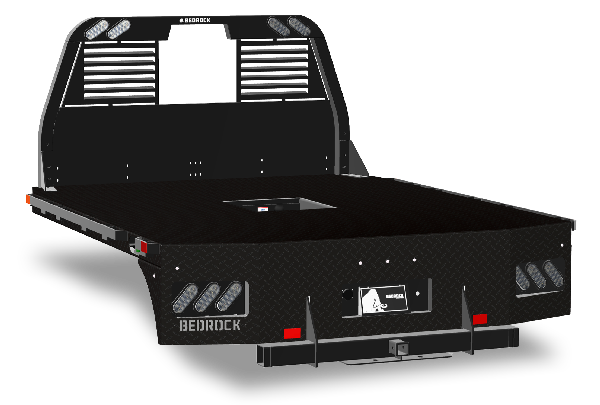
Tie down points are the backbone of any flatbed operation. Without them, loads can move under braking or cornering, leading to costly damage or dangerous highway incidents. Modern flatbeds, like Bedrock’s Diamond series, integrate reinforced steel plates and threaded inserts that meet or exceed industry standards, offering consistent strength across the entire bed.
Quick tip: Choose points that are pre‑engineered for your specific flatbed model – they reduce installation errors and guarantee a uniform load distribution.
How many tie down points does a flatbed need?
Atomic answer (40‑60 words): The number of tie down points depends on bed length, cargo type, and regulatory minimums. As a rule of 2024‑2026 FMCSA guidance, provide at least one point every 4‑6 feet, with a minimum of four points for any load, ensuring balanced support.
Recommended tie down point density by flatbed length
| Flatbed Length | Minimum Points Required | Recommended Spacing (ft) | Typical Point Types |
|---|---|---|---|
| 8‑ft | 4 | 2‑3 ft | Threaded inserts, bolted plates |
| 12‑ft | 6 | 2‑4 ft | Stainless steel anchors |
| 16‑ft | 8‑10 | 2‑4 ft | Reinforced steel plates |
| 20‑ft+ | 10‑12 | 2‑3 ft | Modular tie‑down kits |
A higher point density improves load stability, especially for irregular or heavy cargo. When in doubt, consult the Owners Manual | Flatbeds by BEDROCK Truck Beds for model‑specific recommendations.
Step‑by‑step: Installing tie down points on a flatbed
Atomic answer (40‑60 words): Follow these seven steps to correctly install tie down points: (1) review the bed’s structural drawings, (2) mark placement using load‑distribution guidelines, (3) drill pilot holes, (4) install hardened steel inserts, (5) torque bolts to spec, (6) attach hardware, and (7) test for load capacity.
- Gather documentation – Pull the flatbed’s engineering drawings and the Bedrock Truck flatbed tie down points page for exact dimensions and load ratings.
- Plan layout – Measure and mark each point at the recommended 2‑4‑foot intervals, aligning with the bed’s joists for maximum strength.
- Drill pilot holes – Use a carbide‑tipped drill bit matching the diameter of the tie‑down insert (usually 1/2" or 5/8"). Keep the hole perpendicular to avoid weakening the deck.
- Install hardened inserts – Tap the threaded steel inserts (grade 8) into the holes with a hydraulic press. Ensure a flush finish to prevent stress concentrations.
- Bolt down the hardware – Place the tie‑down plate or anchor and fasten with Grade 8 bolts. Torque to the manufacturer’s specification (typically 120‑150 ft‑lb).
- Apply protective coating – Spray a rust‑inhibiting sealant on exposed metal, especially if the bed will see salt‑road conditions.
- Load‑test each point – Attach a calibrated load strap and apply the rated load (usually 2,000 lb per point). Verify no movement or deformation.
Pro tip: Perform the load test with a safety factor of 1.5× the rated capacity to account for dynamic forces during sudden stops.
Tips for choosing the right tie down hardware
Atomic answer (40‑60 words): Select hardware that matches the load rating, material durability, and environmental exposure. Prefer stainless‑steel or heat‑treated alloy components, use properly sized shackles, and verify that each point’s rating exceeds the heaviest cargo you plan to transport.
- Material matters: Stainless‑steel (AISI 304) resists corrosion; for harsher environments, consider marine‑grade 316.
- Load rating: Always choose hardware rated at least 25 % higher than the cargo’s weight.
- Compatibility: Ensure straps, chains, or binders have compatible eyelets or hooks for the installed plate.
- Ease of use: Quick‑release binders speed up loading/unloading while maintaining strength.
- Standard compliance: Verify that all hardware meets ISO 12100 and FMCSA § 393.9 standards.
Common mistakes to avoid when setting up tie down points
Atomic answer (40‑60 words): Avoid these pitfalls: (1) spacing points too far apart, (2) using undersized bolts, (3) neglecting torque specifications, (4) skipping corrosion protection, and (5) failing to perform load tests. Each error can reduce point strength and increase cargo‑shift risk.
| Mistake | Why It’s Harmful | Correction |
|---|---|---|
| Points > 6 ft apart | Uneven load distribution leads to sagging. | Keep spacing ≤ 4 ft for most cargo. |
| Using Grade 5 bolts | Lower tensile strength, may stretch under load. | Upgrade to Grade 8 or higher. |
| Not torquing bolts | Loose hardware can loosen, causing failure. | Use a calibrated torque wrench (120‑150 ft‑lb). |
| Skipping protective coating | Accelerates rust, especially in salty climates. | Apply epoxy‑based sealant after installation. |
| No load test | Unknown real‑world capacity. | Perform a 1.5× load test before service. |
How to test and certify your tie down points
Atomic answer (40‑60 words): After installation, verify each point’s capacity with a calibrated load tester and document the results. Certification requires compliance with FMCSA regulations and a written record kept for at least three years. Use the Owners Manual for model‑specific testing procedures.
The Federal Motor Carrier Safety Administration (FMCSA) outlines that tie‑down strength must be at least ½ the cargo’s weight for straps and ¾ for chains (see FMCSA § 393.9). According to the FMCSA Cargo Securement Rules (2023), each point must be inspected annually and after any impact event.
Certification checklist:
- Record point ID, location, and hardware rating.
- Apply static load using a calibrated tension meter.
- Verify no deformation, movement, or bolt loosening.
- Sign off on a certification form and store digitally.
- Repeat annually or after repairs.
Maintenance checklist for long‑term safety
Atomic answer (40‑60 words): A regular maintenance routine keeps tie down points reliable. Inspect for corrosion, bolt torque, insert wear, and hardware integrity weekly, and perform a full load‑test every six months. Documentation prevents missed inspections and ensures compliance.
- Weekly visual inspection: Look for rust, dents, or missing hardware.
- Monthly torque check: Re‑torque bolts to spec using a torque wrench.
- Quarterly corrosion treatment: Re‑apply sealant where needed.
- Semi‑annual load test: Use a calibrated strap to confirm capacity.
- Annual record audit: Verify all inspections are logged per FMCSA requirements.
Where to find replacement parts: Bedrock’s dealer network offers OEM‑graded tie‑down kits. Use the Dealer Locator | Bedrock Truck Beds to find a certified installer near you.
Comparison of popular tie down point kits
Atomic answer (40‑60 words): Below is a quick comparison of three leading tie‑down kits suitable for most flatbeds. The table evaluates load capacity, material, cost, and recommended applications, helping you select the best option for your 2026 operations.
| Kit | Load Capacity per Point | Material | Approx. Cost (US$) | Best For |
|---|---|---|---|---|
| Standard Steel Plate | 2,500 lb | Grade 8 steel | 45‑60 | General freight, medium loads |
| Stainless‑Steel Anchor | 3,000 lb | AISI 316 | 70‑90 | Coastal routes, corrosive environments |
| Modular Granite Plus | 4,000 lb | Heat‑treated alloy | 110‑130 | Heavy equipment, high‑value cargo |
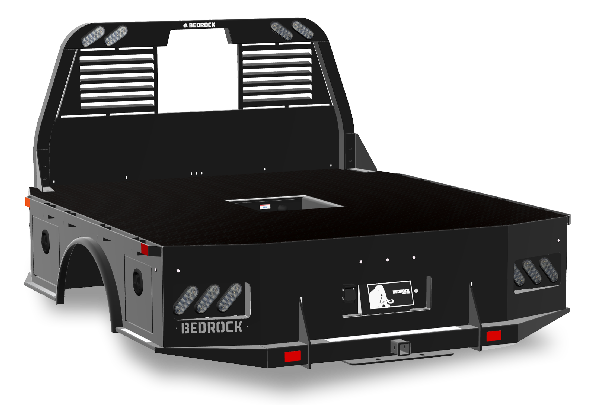
The Granite Plus system, illustrated in the image above, is a Bedrock specialty offering modular adjustability and extra‑high load capacity, perfect for oversize loads.
Frequently Asked Questions
Atomic answer (40‑60 words): This FAQ addresses the most common queries about flatbed tie down points, covering load ratings, legal requirements, installation tools, and maintenance schedules, giving you quick, reliable answers.
- What is the minimum legal tie down strength for a 10,000 lb load?
- FMCSA requires straps to hold at least ½ the cargo weight (5,000 lb) and chains at least ¾ (7,500 lb). Use hardware rated above these minimums.
- Can I install tie down points myself, or do I need a certified dealer?
- DIY installation is possible if you follow Bedrock’s specifications and use proper torque tools. For warranty purposes, many choose a certified installer via the Dealer Locator.
- How often must I re‑torque the bolts?
- Check torque monthly and after any heavy‑impact event; re‑torque to the manufacturer’s spec (120‑150 ft‑lb).
- Do I need a different point layout for irregularly shaped loads?
- Yes. Position points to create a triangular or rectangular net that prevents any part of the cargo from moving in any direction.
- What protective coating works best in winter salt conditions?
- A high‑performance epoxy sealant combined with a zinc‑rich primer offers the best corrosion resistance.
- Is there a quick way to verify point integrity without a load tester?
- A visual inspection plus a torque check can flag obvious issues, but only a calibrated load test confirms true capacity.
- Where can I find the exact torque specifications for my Bedrock flatbed?
- Refer to the Owners Manual | Flatbeds by BEDROCK Truck Beds; it lists torque values per model and hardware type.
If you’re ready to upgrade your flatbed or need OEM‑certified tie down kits, explore Bedrock’s product line and locate a nearby dealer today.
Interested in learning more?
Visit our website to explore products, find dealers, and get in touch.
Visit Bedrock Truck Beds →