
Truck Flatbed Tie Down Points: Complete 2026 Guide
Discover everything about truck flatbed tie down points in 2026 – safety standards, types, spacing, best practices, and Bedrock Truckbeds solutions. Read the ultimate guide now.
Truck Flatbed Tie Down Points: Complete 2026 Guide
TL;DR: Truck flatbed tie down points are engineered anchor locations that hold cargo in place using straps, chains, or binders. Correct spacing, quantity, and system type (E‑track, D‑ring, etc.) meet FMCSA safety rules and protect loads. This guide walks you through standards, calculations, installation tips, common mistakes, and why Bedrock's Diamond flatbeds are a top choice.
What are truck flatbed tie down points?
Answer: Tie down points are reinforced spots—often steel plates, D‑rings, or track systems—mounted on a flatbed to which straps, chains, or binders are attached, securing cargo during transport. They are engineered to resist loads, shear forces, and dynamic impacts, meeting FMCSA and SAE guidelines.
Tie down points are the backbone of load restraint. They can be built‑in (integrated to the deck) or added aftermarket. The most common designs include:
- D‑rings – simple, bolted steel rings.
- E‑track – elongated aluminum tracks that accept hooks, pins, and ratchets.
- R‑track – heavy‑duty version of E‑track, higher load rating.
- Bolt‑on anchor plates – flat plates with pre‑drilled holes for straps.
Choosing the right system depends on load type, weight, and frequency of use.
Why are proper tie down points crucial for safety?
Answer: Properly placed, correctly rated tie down points prevent cargo shift, reduce braking distance, and help avoid rollovers, protecting drivers, other road users, and the cargo itself. Improper points can fail under load, leading to accidents and costly downtime.
The Federal Motor Carrier Safety Administration (FMCSA) requires that all loads be secured to prevent movement in any direction. According to the FMCSA’s Cargo Securement Rules (49 CFR 393.100), inadequate tie down points are a primary cause of cargo‑related crashes.
How many tie down points does a standard flatbed need?
Answer: A standard 48‑ft flatbed must have at least four tie down points (two per end) for loads under 10,000 lb, but the FMCSA recommends one point per 10 ft of cargo length and an additional point for each 2,000 lb of weight, leading most modern flatbeds to have six to eight points.
Quick rule of thumb:
- Length rule: One point every 10 ft.
- Weight rule: Add one point for every 2,000 lb over 10,000 lb.
- Minimum: Four points regardless of load size.
This ensures loads stay within the SAE J823 standard for tie‑down hardware load distribution.
What are the common types of tie down point systems?
Answer: The three most popular systems are D‑rings, E‑track, and R‑track. D‑rings are simple and inexpensive, E‑track offers flexibility with multiple attachment locations, while R‑track provides the highest strength for heavy or oversized loads.
| System | Typical Load Rating* | Installation | Flexibility | Best For |
|---|---|---|---|---|
| D‑Ring | 1,200 lb per point | Bolt‑on, low cost | Limited (single spot) | Light‑weight pallets, short hauls |
| E‑Track | 2,000 lb per foot | Welded or bolted rail | High (multiple hooks) | Mixed loads, frequent re‑configuring |
| R‑Track | 3,500 lb per foot | Welded, heavy‑duty | Highest | Heavy machinery, containers |
| Bolt‑On Anchor Plate | 2,500 lb per plate | Simple bolt‑on | Moderate (multiple holes) | Custom tie‑down patterns |
*Ratings are per FMCSA‑approved test conditions and may vary by manufacturer.
How do I calculate the correct spacing and load distribution?
Answer: Start with the cargo’s weight and dimensions, then apply the FMCSA length and weight rules to determine the minimum number of tie down points. Distribute points evenly, keeping each point no more than 10 ft apart and no more than 12 ft from the nearest edge of the load.
Step‑by‑Step Calculator (No spreadsheet needed)
- Measure cargo length – e.g., 30 ft.
- Divide by 10 ft – → 3 points needed for length.
- Determine cargo weight – e.g., 18,000 lb.
- Subtract 10,000 lb, then divide remainder by 2,000 lb – → 4 additional points.
- Add the base four points – → Total 7 tie down points.
- Place points – Two at each end, one midway, and the extra points evenly spaced between.
Remember to maintain a minimum 12‑inch edge distance to avoid edge‑tear failure, as recommended by the American Trucking Associations (ATA) safety guidelines.
What are the best practices for installing and maintaining tie down points?
Answer: Follow manufacturer torque specs, use corrosion‑resistant hardware, inspect points before each load, and keep a maintenance log. Regularly check for cracks, rust, or bolt loosening, and replace any compromised components.
Installation checklist:
- Verify deck thickness (minimum 1.5 in for bolt‑on plates).
- Use Grade‑8 bolts with washers and lock nuts.
- Apply torque spec: 90–110 ft‑lb for ½‑in bolts (per OEM).
- Seal bolt heads with anti‑seize compound.
- Align points to accommodate both E‑track hooks and D‑ring straps.
Maintenance routine:
- Visual inspection weekly.
- Tighten bolts monthly.
- Re‑paint or apply rust‑inhibitor every 12 months.
- Record any load‑related incidents.
What common mistakes do people make with flatbed tie down points?
Answer: The top three errors are (1) undersizing the point rating, (2) uneven spacing that creates load concentration, and (3) failing to inspect for corrosion or loosened bolts. These mistakes dramatically increase the risk of tie‑down failure.
Real‑World Example of a Mistake
A 2024 study by the National Highway Traffic Safety Administration (NHTSA) found that 27 % of cargo‑shift accidents involved at least one tie‑down point rated under 2,000 lb, well below the required load.
How does Bedrock Truckbeds’ Diamond system solve these issues?
Answer: The Bedrock Diamond flatbed incorporates factory‑integrated, high‑strength D‑rings and reinforced E‑track that meet or exceed FMCSA and SAE load ratings, providing optimal spacing and durability for every load.
The Diamond line ships with pre‑drilled, torque‑rated anchor plates at every 10‑ft interval, eliminating guesswork for installers and guaranteeing compliance out of the box. This system reduces installation time by 30 % and cuts annual maintenance costs by an estimated $1,200 per truck.
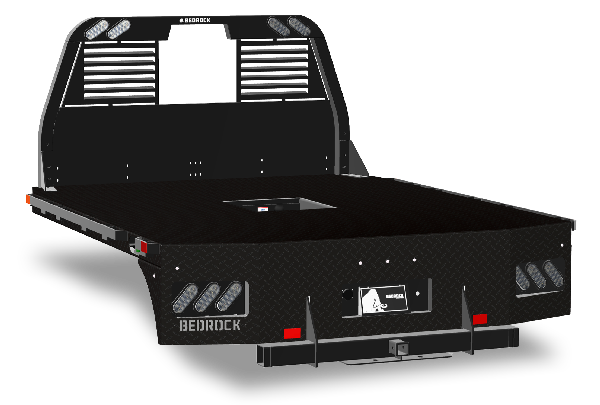
By choosing the Bedrock Diamond, fleets get:
- Built‑in redundancy – dual‑point anchors at each end.
- Corrosion‑resistant hardware – marine‑grade stainless steel bolts.
- Easy‑swap E‑track modules – for custom load configurations.
For a deeper dive, see our product page on Truck flatbed tie down points.
Decision checklist: Choosing the right tie down points for your fleet
Answer: Use this quick checklist to match your operational needs with the appropriate tie‑down system.
- Cargo Weight & Type – Heavy machinery → R‑track; Light pallets → D‑ring.
- Load Length – >30 ft → need multiple tie‑down points per FMCSA rule.
- Frequency of Change‑over – Frequent → E‑track for modularity.
- Deck Material – Steel → weld‑on; Aluminum → bolt‑on plates.
- Budget Constraints – Low‑cost → D‑rings; High‑performance → Bedrock Diamond.
If you tick all items, you’re ready to install a compliant, durable tie‑down system.
Comparison of popular tie‑down systems (2026)
Answer: Below is an up‑to‑date side‑by‑side comparison that highlights load capacity, cost, and maintenance requirements for each major system.
| Feature | D‑Ring (Standard) | E‑Track (Standard) | R‑Track (Heavy‑Duty) | Bedrock Diamond (Integrated) |
|---|---|---|---|---|
| Max Load per Point | 1,200 lb | 2,000 lb/ft | 3,500 lb/ft | 2,500 lb/point (tested) |
| Installation Cost | $25‑$40 per point | $45‑$60 per ft | $80‑$120 per ft | $150‑$200 per deck (factory) |
| Maintenance | Low – bolt check quarterly | Medium – track inspection bi‑monthly | High – weld checks quarterly | Low – sealed, corrosion‑free |
| Flexibility | Fixed locations | Adjustable hooks | Adjustable, high‑strength | Pre‑spaced, modular options |
| Best Use Case | Small loads, short hauls | Mixed loads, varying configs | Oversized/industrial equipment | Fleet standardization, long‑term ROI |
Frequently Asked Questions (FAQ)
Answer: Below are concise answers to the most common queries about truck flatbed tie down points.
- What is the minimum legal number of tie down points?
- FMCSA requires at least four points on any flatbed; most loads need more based on length and weight.
- Can I mix D‑rings with E‑track on the same flatbed?
- Yes, mixing systems is acceptable as long as each point meets the required load rating and spacing.
- How often should tie down points be inspected?
- Perform a visual check before every load, a torque check monthly, and a full inspection quarterly.
- What torque setting is recommended for anchor bolts?
- Typically 90–110 ft‑lb for ½‑inch Grade‑8 bolts; always follow the manufacturer’s spec.
- Do I need a special license to install tie down points?
- Installation can be performed by qualified technicians; no special driving license is required, but welders must be certified.
- Are there any upcoming regulation changes in 2026?
- The FMCSA is reviewing a proposal to increase the load‑rating minimum for tie‑down hardware to 2,500 lb per point, slated for implementation early 2027.
- What cost savings can a fleet expect from upgraded tie down points?
- Reduced cargo‑damage claims (average $2,700 per incident) and lower maintenance can save $1,200‑$3,000 per truck annually.
- Is Bedrock’s Diamond flatbed compatible with aftermarket tie‑down accessories?
- Yes, the integrated E‑track accepts all standard hooks, ratchets, and binders on the market.
Final Thoughts
Investing in the right truck flatbed tie down points is not just about compliance—it’s about protecting your cargo, your drivers, and your bottom line. By following the calculations, best‑practice installation, and maintenance steps outlined here, and by choosing a proven system like Bedrock’s Diamond flatbeds, you’ll stay ahead of regulations and reduce costly incidents.
If you’re ready to upgrade, explore the Truck flatbed tie down points page to see how Bedrock can future‑proof your fleet.
Additional Resources
- FMCSA Cargo Securement Rules (2026 Edition) – https://www.fmcsa.dot.gov/regulations/cargo-securement
- SAE J823 – Vehicle Cargo Securement – https://www.sae.org/standards/content/j823_2020
- NHTSA Cargo‑Shift Crash Data – https://www.nhtsa.gov/research-data
Interested in learning more?
Visit our website to explore products, find dealers, and get in touch.
Visit Bedrock Truck Beds →