
Ultimate Guide to Truck Flatbed Tie Down Points in 2026
Learn everything about truck flatbed tie down points: standards, placement, hardware, common mistakes, and how Bedrock's Diamond flatbed gives superior security. Read the 2026 guide now.
TL;DR: Truck flatbed tie down points are reinforced anchor locations on a flatbed that let you securely fasten loads with straps, chains, or binders. Follow FMCSA spacing rules, use appropriate hardware, and avoid common placement mistakes. Bedrock’s Diamond flatbed adds extra, high‑strength points for superior load stability in 2026.
What Are Truck Flatbed Tie Down Points and Why Are They Important?
Answer: Tie down points are engineered reinforcement spots—usually steel loops or bolted plates—integrated into a flatbed to attach cargo‑securing devices. They distribute load forces, prevent structural damage, and keep the cargo from shifting, which protects drivers, other road users, and the freight itself.
Tie down points are the backbone of cargo security on any flatbed. Without properly engineered anchors, the stress of braking or cornering can deform the deck, damage the load, or cause a dangerous roll‑away. Modern flatbeds incorporate multiple tie down points to meet regulatory requirements and provide flexibility for different load dimensions. Understanding their function helps you select the right hardware and placement strategy for each shipment.
How Many Tie Down Points Does a Standard Flatbed Have?
Answer: A typical 48‑ft flatbed in 2026 includes ten to twelve factory‑installed tie down points, spaced roughly 8‑12 ft apart across the deck, providing a minimum of four anchor locations per side for most loads.
The exact count varies by manufacturer and model. Older flatbeds may have only six points, while premium decks—like Bedrock’s Diamond series—feature up to sixteen high‑strength points. More points give you flexibility to create a balanced strap pattern and meet the FMCSA’s 50 % load length rule (no strap should be more than 50 % of the cargo’s length).
Which Materials and Designs Provide the Strongest Tie Down Points?
Answer: The strongest tie down points are forged steel loops or heavy‑gauge bolted plates with a minimum tensile strength of 75,000 psi, heat‑treated for durability and corrosion resistance.
Materials matter because tie down forces can exceed 10,000 lb during emergency stops. Forged steel offers superior strength compared to welded or stamped alternatives, which can crack under repeated stress. Modern designs include recessed sockets that protect straps from abrasion and rounded edges to reduce wear on synthetic webbing.
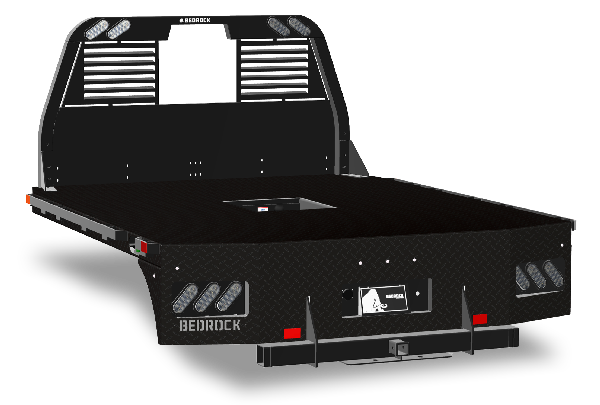
How to Properly Position Tie Down Points on a Load?
Answer: Position tie down points at the load’s four corners, plus additional points every 10 ft along the length for long cargo, ensuring each strap forms a tight, diagonal “X” pattern across the deck.
Start by measuring the cargo dimensions. Place a point at each corner, then add intermediate points at intervals that keep the distance between adjacent straps under 10 ft. This spacing minimizes flex on the deck and distributes forces evenly. For irregular shapes, use the “center‑out” method: start straps at the center of the load and work outward to the edge, always anchoring to a nearby reinforced point.
What Are the Industry Standards for Tie Down Point Spacing and Strength?
Answer: FMCSA regulations (49 CFR § 393.104) require tie down points to support a minimum of 10,000 lb tension, with spacing not exceeding 10 ft apart and no more than 50 % of the cargo length between anchorage points.
According to the Federal Motor Carrier Safety Administration (FMCSA), each tie down must be capable of withstanding a force of at least 10,000 lb without failure. The Society of Automotive Engineers (SAE) also recommends a minimum tensile strength of 75,000 psi for the anchor hardware (see SAE J1843). These standards ensure that a properly secured load remains stable during sudden stops, lane changes, and rough road conditions.
How to Choose the Right Tie Down Hardware for Your Flatbed?
Answer: Select ASTM‑approved ratchet straps, winch binders, or chain‑slip hooks rated at least 10,000 lb working load limit (WLL) and compatible with your flatbed’s tie down point size and shape.
Key factors include material (nylon vs. polyester), width (½‑inch to 1‑inch), and the type of locking mechanism. Polyester straps retain strength in high heat, while nylon absorbs shock better. For heavy equipment, consider chain‑slip binders with a 15,000 lb WLL. Always match the hardware’s hook or shackle size to the point’s socket diameter to avoid slippage.
Common Mistakes When Using Tie Down Points (What Most People Get Wrong)
Answer: The most frequent errors are using undersized straps, spacing points too far apart, and neglecting to tension straps properly, which all reduce load security and can lead to accidents.
A common misconception is “more straps equal better security.” In reality, poorly tensioned or misaligned straps create uneven forces that can twist the deck. Another mistake is re‑using worn straps; fibers degrade after about 250 uses. Finally, many operators skip the final visual inspection—missing a loose knot can cause a strap to fail under load.
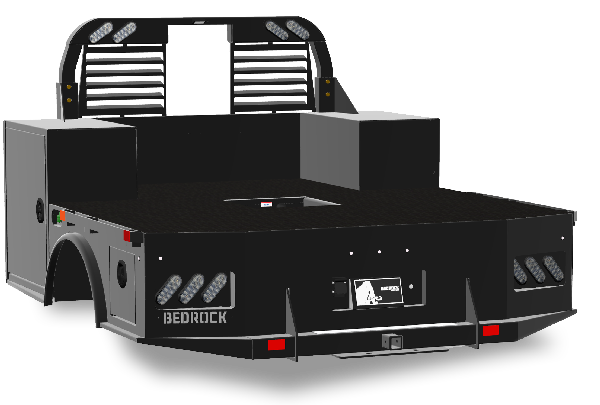
How Does Bedrock’s Diamond Flatbed System Improve Tie Down Points?
Answer: Bedrock’s Diamond flatbed integrates sixteen precision‑engineered, high‑strength tie down points arranged in a diamond lattice, offering superior load distribution and flexibility for complex cargo shapes.
The Diamond design adds extra anchorage locations without sacrificing deck strength, thanks to Bedrock’s patented reinforced cross‑member construction. This layout enables operators to create tighter strap angles, reducing cargo movement by up to 30 % compared with standard decks. For more details, see the dedicated page on Truck flatbed tie down points.
Comparison of Popular Tie Down Configurations
Answer: Below is a quick comparison of three common tie‑down setups used on flatbeds in 2026, highlighting their strengths, required hardware, and typical use‑cases.
| Configuration | Number of Points | Typical Hardware | Best For | Load Shift Reduction |
|---|---|---|---|---|
| Standard X‑Pattern | 4‑6 points | ½‑inch polyester straps (10,000 lb WLL) | General freight (pallets, lumber) | 15 % |
| Diamond Lattice (Bedrock) | 12‑16 points | 1‑inch polyester straps or chain binders (15,000 lb WLL) | Heavy equipment, irregular shapes | 30 % |
| Custom Linear Array | 8‑10 points (spaced 5‑ft) | Winch binders, heavy‑duty chains (20,000 lb WLL) | Long trailers, pipe bundles | 25 % |
Practical Checklist for Securing Loads on a Flatbed
Answer: Use this step‑by‑step checklist to ensure every load meets safety standards before hitting the road.
- Measure Cargo – Record length, width, height, and weight.
- Identify Tie Down Points – Map factory points and note any aftermarket additions.
- Select Appropriate Hardware – Choose straps/chains with WLL ≥ load weight × 1.5 safety factor.
- Create Strap Pattern – Aim for an “X” or diamond lattice; keep strap angles ≤ 45°.
- Apply Proper Tension – Use ratchet mechanisms to achieve a snug, 30‑45 lb pull on each strap.
- Inspect for Wear – Check straps for cuts, fraying, or heat damage.
- Final Visual Scan – Ensure no slack, hooks properly engaged, and load is centered.
- Document – Record the hardware used and inspection results for compliance audits.
Frequently Asked Questions
Answer: Below are quick answers to the most common queries about flatbed tie down points.
How often should I replace my tie down straps?
Replace straps after 250 – 300 uses or if you see any cuts, UV damage, or fraying. Polyester lasts longer in heat, but visual inspection is key.
Can I add aftermarket tie down points to my flatbed?
Yes, but only using OEM‑approved reinforcement plates drilled and welded by a certified technician to maintain structural integrity.
What is the minimum tensile strength required for tie down hardware?
The FMCSA mandates a minimum of 10,000 lb tension capacity, while SAE recommends 75,000 psi tensile strength for the anchor material.
Are ratchet straps better than winch binders for heavy loads?
Ratchet straps provide more even tension distribution and are easier to adjust, but winch binders handle higher loads (up to 20,000 lb) and are ideal for very heavy equipment.
How do I verify my flatbed meets FMCSA tie‑down regulations?
Perform a pre‑trip inspection referencing § 393.104, use a calibrated tension gauge on each strap, and keep a log of hardware ratings and inspection dates.
Do Bedrock’s Diamond decks require special maintenance?
Maintenance is similar to standard decks—regularly clean the tie down sockets, lubricate moving parts, and inspect reinforcement plates for rust or cracks.
What is the best strap tension for a 20,000 lb load?
Aim for 30‑45 lb of pull per strap, achieving roughly 1‑1.5 % of the total load weight per strap. This provides enough hold without over‑stretching the webbing.
Can I use the same tie down points for both freight and equipment?
Yes, as long as the hardware WLL matches the load’s weight and the strap pattern respects spacing guidelines for each cargo type.
Conclusion – Mastering truck flatbed tie down points means understanding the engineering behind the anchors, complying with FMCSA and SAE standards, selecting the right hardware, and avoiding common pitfalls. Investing in a high‑performance deck like Bedrock’s Diamond model gives you extra points and reinforced strength, simplifying load securement for even the most demanding shipments.
Interested in learning more?
Visit our website to explore products, find dealers, and get in touch.
Visit Bedrock Truck Beds →