
10 Best Truck Flatbeds with LED Lights for Commercial Use
Discover the top truck flatbeds with LED lights for 2026. Compare features, benefits, and find the perfect LED-equipped flatbed for your commercial needs.
TL;DR: LED-equipped truck flatbeds enhance safety, productivity, and compliance for commercial operations. Key features include integrated lighting systems, work area illumination, and regulatory compliance for professional applications.
10 Best Truck Flatbeds with LED Lights for Commercial Use
Commercial truck operations demand maximum efficiency, safety, and visibility. A well-designed truck flatbed with integrated LED lighting can transform your work capabilities while ensuring compliance with safety regulations.
What Makes LED-Equipped Truck Flatbeds Essential for Commercial Operations?
LED-equipped truck flatbeds provide enhanced visibility, improved safety, and increased productivity during dawn, dusk, and nighttime operations. These systems integrate lighting directly into the flatbed structure, offering superior illumination compared to portable lighting solutions while maintaining a professional appearance and reducing setup time.
For commercial operators, LED lighting systems built into flatbeds offer several critical advantages. They eliminate the need to carry separate work lights, reduce setup time at job sites, and provide consistent illumination that enhances both safety and productivity. The integration also means fewer loose components to manage, maintain, or potentially lose.
How Do LED Lighting Systems Enhance Flatbed Functionality?
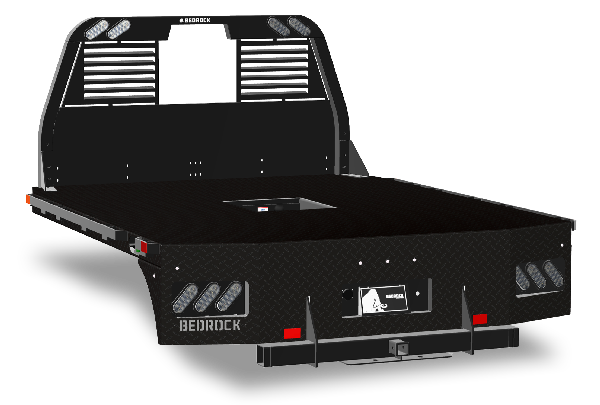
Integrated LED systems transform flatbeds into mobile work platforms by providing targeted illumination for loading, unloading, and work area tasks. Professional-grade systems offer multiple lighting zones, dimming controls, and weather-resistant construction that withstands commercial use demands.
Modern LED flatbed systems typically feature multiple lighting zones that can be controlled independently. This allows operators to illuminate specific work areas without creating glare or wasting power. The most advanced systems include:
- Perimeter lighting for general visibility
- Focused work area spotlights
- Under-bed lighting for equipment access
- Rear loading zone illumination
- Side-mounted flood lights for wide-area coverage
According to the National Institute for Occupational Safety and Health (NIOSH), proper work area lighting can reduce workplace accidents by up to 30% in commercial vehicle operations.
Which Industries Benefit Most from LED Flatbed Systems?
Construction, utility, emergency services, and logistics companies see the greatest returns from LED-equipped flatbeds. These industries frequently operate in low-light conditions where proper illumination directly impacts safety, efficiency, and regulatory compliance.
Construction and Contracting
Construction crews often start before dawn or work past sunset. LED flatbeds provide immediate work area lighting without requiring separate generators or extension cords. This is particularly valuable for emergency repairs, road construction, and projects with tight deadlines.
Utility and Telecommunications
Utility workers frequently respond to outages during storms or emergency situations where external lighting may be unavailable. Integrated LED systems ensure technicians can safely access tools and materials regardless of ambient lighting conditions.
Emergency Services
First responders need reliable lighting that activates instantly. LED flatbed systems provide immediate illumination for rescue operations, accident scenes, and emergency equipment deployment.
What Are the Top 10 LED Flatbed Features to Consider?
1. Multi-Zone Lighting Control
Professional LED systems offer independent control of different lighting zones. This allows operators to illuminate only the areas where work is occurring, conserving battery power and reducing light pollution. Look for systems with at least 4-6 independent zones.
2. Weatherproof LED Fixtures
Commercial-grade LED lights must withstand extreme weather conditions. IP67 or higher ratings ensure lights continue functioning in rain, snow, and dusty conditions. Quality fixtures also resist impact damage from tools and equipment.
3. Integrated Power Management
Advanced systems include battery monitoring, automatic shutoff features, and low-voltage protection. These features prevent accidental battery drainage while ensuring lights are available when needed.
4. Multiple Brightness Settings
Dimming controls allow operators to adjust light intensity based on specific tasks. Bright settings for detailed work, medium settings for general illumination, and low settings for ambient lighting during extended operations.
5. Wireless Remote Control
Remote control capabilities allow operators to adjust lighting from ground level without climbing onto the flatbed. This improves safety and convenience during loading operations.
6. Emergency Flash Modes
Many professional LED systems include emergency warning flash patterns that comply with DOT regulations. This dual-purpose functionality enhances safety during roadside operations.
7. Tool-Free Lens Replacement
Commercial operations demand minimal downtime. Look for LED fixtures with tool-free lens replacement and modular components that can be serviced quickly in the field.
8. Integrated Cable Management
Professional installations include protected wiring channels and strain reliefs that prevent damage during normal operations. Hidden wiring also maintains a clean, professional appearance.
9. Universal Mounting Systems
Quality LED systems accommodate various flatbed configurations and can be retrofitted to existing beds. Universal mounting hardware simplifies installation and reduces inventory requirements.
10. Energy-Efficient Operation
LED technology offers superior energy efficiency compared to traditional lighting. Look for systems that provide maximum illumination while minimizing electrical load on the vehicle's charging system.
How Do Different Flatbed Materials Accommodate LED Integration?
| Material | LED Integration | Durability | Cost | Best Use |
|---|---|---|---|---|
| Steel | Excellent | High | Medium | Heavy-duty commercial |
| Aluminum | Good | Medium-High | High | Weight-sensitive applications |
| Composite | Good | Medium | Low-Medium | Light commercial use |
| Diamond Plate | Excellent | High | Medium-High | Multi-purpose commercial |
Steel flatbeds offer the most robust mounting points for LED systems and can accommodate heavy-duty wiring harnesses. The material's strength allows for secure mounting of larger light fixtures without compromising structural integrity.
Aluminum beds provide good LED integration while offering weight savings important for payload capacity. However, mounting requires specialized hardware to prevent galvanic corrosion between dissimilar metals.
What Common Mistakes Should You Avoid When Selecting LED Flatbeds?
The most common mistake is choosing LED systems based solely on initial cost rather than long-term value. Cheap LED fixtures often fail prematurely in commercial applications, leading to costly downtime and replacement expenses.
Another frequent error is inadequate power planning. Some operators select LED systems without considering their vehicle's charging capacity, leading to battery drain issues. Professional installations include proper electrical load analysis and may require charging system upgrades.
Improper placement represents another costly mistake. LED fixtures mounted too low suffer impact damage, while lights placed too high create shadows in work areas. Professional installations consider sight lines, work patterns, and equipment clearances.
Which Bedrock Truck Bed Models Offer Superior LED Integration?
Bedrock Truck Beds specializes in commercial-grade flatbeds designed for LED integration. Their truck flatbed with led lights Diamond series offers pre-engineered mounting points and integrated wiring channels that simplify LED installation while maintaining structural integrity.
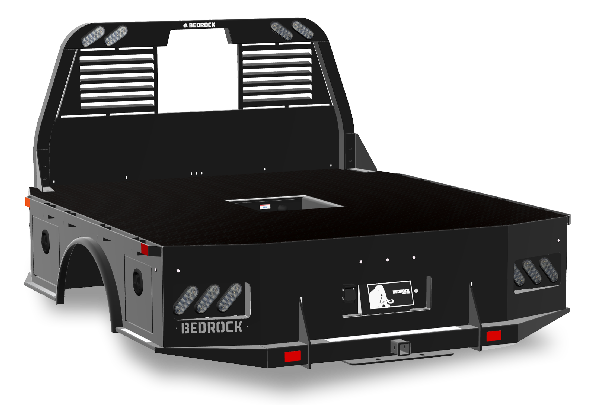
The Granite Flatbed | Bedrock Truck Beds provides excellent LED compatibility with its robust steel construction and multiple mounting options. This model accommodates both perimeter lighting and focused work area illumination systems.
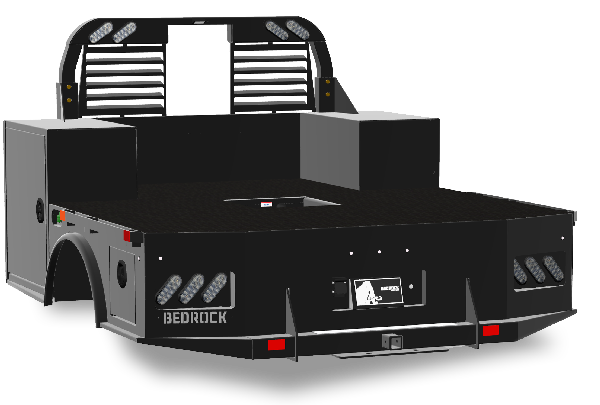
For heavy-duty applications, the Granite+ Flatbed | Bedrock Truck Beds offers enhanced LED integration capabilities with reinforced mounting points and expanded electrical routing options.
How Should You Plan LED Flatbed Installation?
Successful LED flatbed installations require careful planning of electrical routing, switch placement, and fixture positioning. Professional installations begin with a detailed assessment of work patterns and lighting requirements specific to your operations.
Electrical planning should include adequate wire gauge for the LED load, proper fusing, and consideration of future expansion. Most commercial installations benefit from dedicated LED circuits that don't interfere with vehicle lighting systems.
Switch placement requires balancing accessibility with protection from damage. Cab-mounted controls offer security but may require longer wire runs, while bed-mounted switches provide convenient access but need weather protection.
What Maintenance Do LED Flatbed Systems Require?
LED systems require minimal maintenance compared to traditional lighting, but regular inspection ensures optimal performance. Monthly visual inspections should check for damage, secure mounting, and clean lenses.
Electrical connections require periodic inspection, particularly in harsh operating environments. Corrosion prevention and proper torque on connections prevent voltage drop and premature failure.
Lens cleaning maintains optimal light output. Use appropriate cleaning solutions that won't damage LED lenses or protective coatings. Avoid abrasive cleaners that can scratch optical surfaces.
How Do LED Flatbeds Impact Vehicle Electrical Systems?
Modern LED systems place minimal load on vehicle electrical systems compared to traditional lighting. However, extensive LED installations may require charging system evaluation to ensure adequate power generation during extended use.
Battery capacity becomes important for operations where LEDs operate with the engine off. Deep-cycle auxiliary batteries may be necessary for extended lighting operations without engine runtime.
Professional installations include proper load isolation to prevent LED systems from interfering with vehicle operation or safety systems.
What ROI Can You Expect from LED Flatbed Investment?
Commercial operators typically see ROI within 12-18 months through improved efficiency, reduced setup time, and enhanced safety. The exact payback period depends on usage frequency and labor costs in your specific market.
Productivity improvements often provide the fastest returns. Eliminating setup time for portable lighting can save 15-30 minutes per job site, translating to significant labor cost savings over time.
Safety improvements, while harder to quantify, provide substantial value through reduced insurance costs and accident prevention. Many commercial insurance providers offer discounts for vehicles equipped with enhanced safety lighting systems.
FAQ
How long do LED flatbed lights typically last?
Quality LED fixtures designed for commercial use typically last 50,000+ hours, equivalent to 10-15 years of normal commercial operation.
Can LED systems be retrofitted to existing flatbeds?
Yes, most LED systems can be retrofitted to existing flatbeds with proper mounting hardware and electrical installation.
Do LED flatbed systems affect vehicle warranties?
Professional installations using proper electrical practices typically don't void vehicle warranties, but check with your manufacturer.
What's the power consumption of typical LED flatbed systems?
Most commercial LED flatbed systems consume 200-500 watts total, significantly less than equivalent halogen or HID lighting.
Are there regulations governing LED work lights on commercial vehicles?
Yes, DOT and local regulations may govern auxiliary lighting. Check local requirements and ensure compliance with applicable standards.
How do LED systems perform in extreme temperatures?
Quality LED systems operate effectively in temperatures from -40°F to +150°F, making them suitable for most commercial applications.
Can LED flatbed systems include emergency warning functions?
Many professional LED systems offer emergency flash patterns and warning modes that comply with DOT regulations for roadside safety.
What warranty coverage is typical for commercial LED flatbed systems?
Commercial-grade LED systems typically include 3-5 year warranties covering both fixtures and electrical components against defects and premature failure.
Interested in learning more?
Visit our website to explore products, find dealers, and get in touch.
Visit Bedrock Truck Beds →