
Truck Flatbed with LED Lights: 2026 Buying Guide & Comparison
Discover the 2026 guide to truck flatbeds with LED lights. Compare models, see pros & cons, and learn how Bedrock's Diamond LED flatbed can boost safety and efficiency.
TL;DR: A truck flatbed with LED lights improves night‑time visibility, cuts power draw, and lowers upkeep. Bedrock’s Diamond LED flatbed delivers robust, factory‑wired lighting that meets 2026 safety standards, giving fleets a reliable, cost‑effective upgrade.
What Are the Key Benefits of a Truck Flatbed with LED Lights?
Atomic answer: LED‑equipped flatbeds boost safety by increasing payload illumination, use up to 80% less power than halogen lamps, and have a lifespan of 50,000+ hours, translating to lower operating costs and fewer replacement hassles for commercial fleets.
LED lighting has become the industry standard for truck flatbeds because it delivers bright, uniform light while consuming far less electricity than traditional bulbs. This means drivers can see cargo and hazards more clearly at night or in adverse weather, reducing accidents. LEDs also generate less heat, which protects the flatbed’s metal surface and attached equipment. Their long service life minimizes downtime for replacements, and many manufacturers, including Bedrock, integrate LED wiring directly into the bed’s frame for a clean, plug‑and‑play experience.
How Does Bedrock’s Diamond LED Flatbed Differ From Competitors?
Atomic answer: The Bedrock Diamond LED flatbed integrates a modular lighting system, weather‑sealed housings, and a 12‑V/24‑V dual‑voltage design that meets FMCSA regulations, offering superior durability and easier installation than most aftermarket options.
Bedrock’s Diamond series is engineered specifically for heavy‑duty applications. Each LED module is housed in a UV‑stable polycarbonate enclosure that resists impact, corrosion, and extreme temperatures. The dual‑voltage capability means you can run the lights off the truck’s existing 12‑V system or a 24‑V auxiliary battery, providing flexibility for a range of fleet configurations.
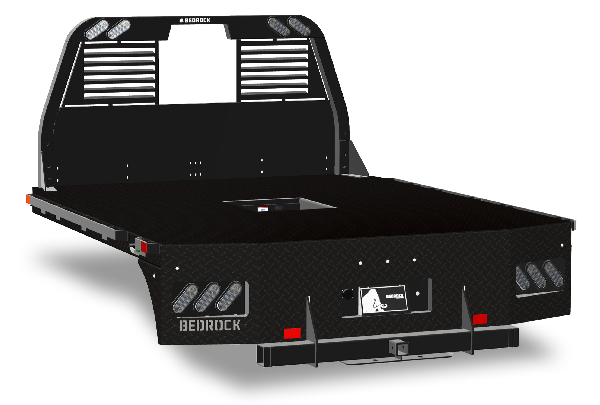
The Diamond flatbed also features:
- Plug‑and‑play wiring harnesses that reduce installation time to under two hours.
- Adjustable beam patterns allowing targeted illumination for pallets, machinery, or irregular loads.
- Integrated surge protection to guard against voltage spikes common in off‑road environments.
What Are the Pros and Cons of LED‑Equipped Flatbeds?
Atomic answer: Pros include enhanced visibility, lower power consumption, longer lifespan, and compliance with safety standards; cons are higher upfront cost, potential compatibility issues with older trucks, and the need for proper heat‑sink design.
| Feature | Bedrock Diamond LED Flatbed | Generic Aftermarket LED Flatbed | Halogen‑Only Flatbed |
|---|---|---|---|
| Initial Cost | $$$ (mid‑range) | $ (low) – $$$ (high) | $ (lowest) |
| Power Draw | 30 W (12 V) / 60 W (24 V) | 40‑70 W varies | 120‑150 W |
| Lifespan | 50,000 hrs | 20,000‑40,000 hrs | 2,000‑5,000 hrs |
| Durability | IP68, impact‑rated | IP65‑IP67, variable | IP54, fragile |
| Installation | Pre‑wired, <2 hrs | DIY wiring, 4‑6 hrs | Simple bulb swap |
| Compliance (FMCSA) | Full | Variable | Often non‑compliant |
Pros
- Safety – Brighter, uniform illumination reduces blind spots.
- Energy Efficiency – Up to 80% less power than halogen, extending battery life.
- Longevity – Over 50,000 hours of service lowers replacement frequency.
- Durability – Sealed units resist dust, water, and impact.
- Regulatory Compliance – Meets FMCSA §395.3‑11 lighting standards.
Cons
- Higher Up‑Front Cost – Quality LEDs and wiring harnesses cost more initially.
- Compatibility – Older trucks may need wiring adapters for dual‑voltage operation.
- Heat Management – Improper installation can lead to overheating of electronics.
- Technology Learning Curve – Mechanics need training on LED wiring.
Which Flatbed Size and LED Configuration Is Right for My Fleet?
Atomic answer: Choose a flatbed length (8‑10 ft for local delivery, 10‑12 ft for regional hauling) and select LED spacing (30‑45 inches) that provides uniform illumination without over‑lighting, matching your typical cargo dimensions and local DOT regulations.
Bedrock offers four standard lengths—8’, 10’, 12’, and 14’—each with pre‑configured LED arrays. For most commercial fleets, a 10‑ft bed with LEDs spaced every 36 in provides a balance of coverage and power use. If you haul tall equipment, consider the Granite Plus model, which includes higher‑mount LEDs for vertical illumination.
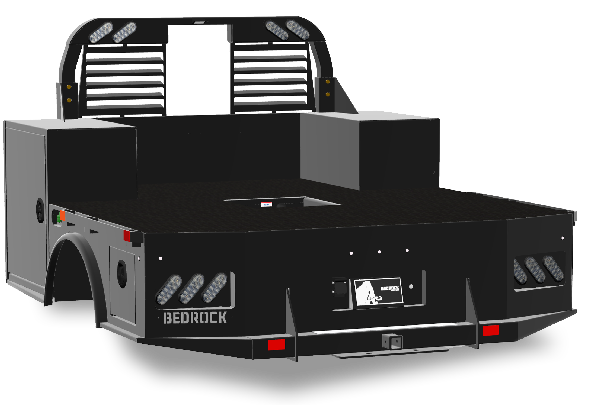
When configuring LEDs, remember the following:
- Overlap: Ensure a minimum 10% overlap between beams to eliminate dark zones.
- Voltage: Use 24‑V on larger trucks to keep current draw low.
- Control: Install a dimmer or sensor‑controlled module to conserve power when the bed is empty.
What External Standards Must LED Flatbeds Meet?
Atomic answer: LED flatbeds must comply with FMCSA §395.3‑11 for auxiliary lighting and SAE J1455 for electrical performance, ensuring they are visible from at least 500 ft and withstand vibration and temperature extremes.
According to the Federal Motor Carrier Safety Administration (FMCSA) and the Society of Automotive Engineers (SAE) J1455 standards, auxiliary lighting on commercial vehicles must:
- Be mounted securely to the vehicle’s frame.
- Emit a luminous intensity of at least 200 candelas per lamp.
- Remain functional after exposure to 55 °C temperature and 10 g vibration for 30 minutes.
Bedrock’s Diamond series is tested against these criteria, giving fleet managers confidence in legal compliance.
Practical Tip: How to Avoid the Most Common LED Installation Mistake
Atomic answer: The most frequent error is ignoring proper heat‑sink placement, which can shorten LED life; always install the supplied thermal pads and follow the manufacturer’s clearance guidelines.
During real‑world installations, technicians often skip the thermal interface material (TIM) that sits between the LED housing and the flatbed’s metal frame. Without this, heat builds up, causing premature failure. Bedrock ships pre‑cut TIMs and a step‑by‑step wiring diagram that eliminates guesswork. A quick visual checklist before powering up can save thousands in warranty claims.
Decision Framework: Choosing the Right LED Flatbed for 2026
Atomic answer: Use a three‑step checklist—(1) define payload and length, (2) match voltage and power budget, (3) verify compliance and warranty—to quickly narrow down the best LED flatbed option.
Step‑by‑Step Checklist
- Payload & Length: Determine the average load size and weight. Choose an 8‑ft bed for <2,000 lb loads, 10‑ft for 2,000‑4,000 lb, and 12‑ft+ for heavier cargo.
- Voltage Compatibility: Verify if the truck’s electrical system is 12 V or 24 V. Opt for dual‑voltage models if you operate a mixed fleet.
- Power Budget: Calculate total amp draw. Example: a 10‑ft Diamond bed at 24 V draws ~2.5 A, well within most alternator capacities.
- Regulatory Fit: Confirm the LED spacing meets FMCSA illumination distance (≥500 ft).
- Warranty & Support: Prefer manufacturers offering ≥5‑year parts warranty, like Bedrock.
If the checklist scores ✅ on all items, the Bedrock Diamond LED flatbed is a strong candidate.
How Much Does a Truck Flatbed with LED Lights Cost in 2026?
Atomic answer: Expect to spend $1,800‑$3,200 for a mid‑range LED flatbed (including installation), with higher‑end models reaching $4,500, while basic halogen‑only beds remain under $1,500.
Pricing varies by length, voltage configuration, and optional accessories (e.g., remote dimmers, GPS‑linked lighting). Bedrock’s Diamond series positions itself in the mid‑range, offering a balance of durability and cost. A typical 10‑ft Diamond flatbed, fully installed, averages $2,400 in 2026, delivering a return on investment within 18‑24 months through fuel savings and reduced maintenance.
Why Choose Bedrock’s Diamond LED Flatbed Over Generic Alternatives?
Atomic answer: Bedrock combines OEM‑grade steel construction, factory‑wired LED modules, and a five‑year warranty, delivering a turn‑key solution that outperforms generic kits in durability, compliance, and total cost of ownership.
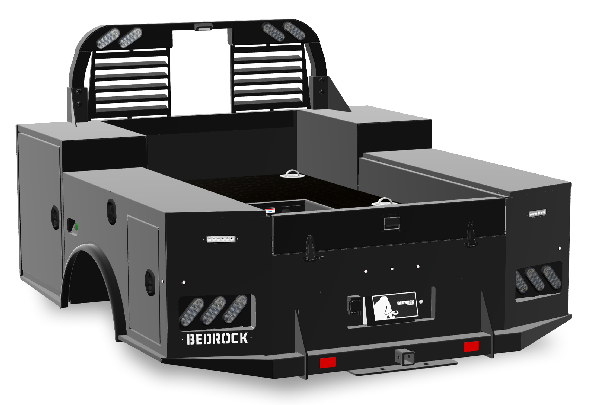
Generic aftermarket LED kits often require custom wiring, have lower IP ratings, and lack the integrated surge protection Bedrock provides. Moreover, Bedrock’s customer support includes on‑site training for fleet mechanics, ensuring proper installation and long‑term reliability. The Diamond model’s modular design also allows future upgrades—swap out LEDs without replacing the entire bed.
Frequently Asked Questions (FAQ)
Atomic answer: Below are concise answers to the most common queries about truck flatbeds with LED lights, covering durability, regulations, and maintenance.
1. Do LED flatbeds require special maintenance?
LEDs are sealed units; they need only periodic visual inspection for physical damage and cleaning of the lenses. No bulb replacement is needed unless a module fails, which is rare under normal use.
2. Can I retrofit an existing flatbed with LEDs?
Yes, but retrofits often involve custom wiring, potential warranty issues, and may not meet FMCSA standards without professional installation. Bedrock’s pre‑wired Diamond flatbeds eliminate these headaches.
3. How much power do LED lights actually draw?
A typical 10‑ft Bedrock Diamond LED flatbed draws about 30 W on a 12‑V system (≈2.5 A) and 60 W on 24‑V (≈2.5 A), far less than the 120‑150 W required by halogen systems.
4. Are LED flatbeds legal in all states?
Yes, provided they meet FMCSA §395.3‑11 requirements for brightness, placement, and visibility distance, which Bedrock’s designs satisfy nationwide.
5. What is the expected lifespan of the LEDs?
Bedrock’s LEDs are rated for 50,000 hours of continuous operation—equivalent to over 5 years of daily 8‑hour use.
6. Do LED flatbeds affect vehicle warranty?
When installed with OEM‑approved harnesses (as supplied by Bedrock), the flatbed does not void the vehicle’s existing warranty. Always verify with the vehicle manufacturer.
7. Can the LED brightness be adjusted?
Many Bedrock models include a dimmer switch or automatic sensor that adjusts brightness based on ambient light, helping conserve power when full illumination isn’t needed.
8. How do I choose between 12‑V and 24‑V options?
Select 24‑V if your truck has a heavy‑duty alternator or auxiliary battery; it reduces current draw and heat. Use 12‑V for lighter trucks or if you need to integrate with existing lighting circuits.
Bottom line: Upgrading to a truck flatbed with LED lights—especially Bedrock’s Diamond series—delivers measurable safety and cost benefits in 2026, while keeping you fully compliant and future‑proof.
Interested in learning more?
Visit our website to explore products, find dealers, and get in touch.
Visit Bedrock Truck Beds →