
Truck Flatbed for Construction Work: 2026 Buying Guide
Looking for the best truck flatbed for construction work in 2026? Compare top Bedrock models, pros/cons, features, and get expert tips to choose the right flatbed today.
TL;DR: A truck flatbed for construction work should match your payload, material type, and durability needs. Bedrock’s Diamond flatbed delivers maximum strength for heavy steel and concrete, while Granite and Onyx give solid performance at lower cost. Review load ratings, deck material, and safety features to select the right flatbed and stay compliant with 2026 OSHA regulations.
What Exactly Is a "Truck Flatbed for Construction Work"?
Answer: A truck flatbed for construction work is a heavy‑duty trailer with an open, reinforced deck designed to transport building materials, equipment, and oversized loads securely and efficiently on job sites.
Flatbeds differ from box trailers because they expose cargo for easy loading/unloading with cranes, forklifts, or winches. In construction, they must handle rough terrain, heavy steel beams, concrete slabs, and modular components while meeting DOT and OSHA safety standards.
How Do I Choose the Right Size Flatbed for My Projects?
Answer: Start by calculating the maximum weight and dimensions of your typical loads, then select a flatbed whose deck length, width, and GVWR exceed those figures by at least 10% for a safety margin.
Practical Steps
- List Your Top 5 Load Types (e.g., 20‑ton steel beams, 5‑ton concrete panels).
- Measure Length, Width, Height and total weight for each.
- Add a 10‑15% Buffer to account for dynamic forces during transport.
- Match to Bed Dimensions – most Bedrock flatbeds range from 12‑ft to 24‑ft decks and support 10‑30 k lb GVWR.
Pro Tip: Use a spreadsheet to track load dimensions; this simple tool prevents ordering an undersized flatbed that could cost you downtime and fines.
Which Bedrock Flatbed Model Offers the Best Value for Construction Companies?
Answer: The Bedrock Diamond model provides the highest load capacity and corrosion‑resistant steel, making it the premium choice for heavy, abrasive construction loads, while the Granite series balances cost and durability for medium‑range projects.
Feature Comparison Table
| Model | Deck Length (ft) | Max GVWR (lb) | Deck Material | Reinforcement | Approx. Cost (2026 USD) |
|---|---|---|---|---|---|
| Diamond | 20‑24 | 30,000 | 3‑mm steel plate + anti‑corrosion coating | Heavy‑duty cross‑beams, welded gussets | $28,500 |
| Granite | 16‑20 | 24,000 | 2.5‑mm steel plate | Standard cross‑beams | $22,300 |
| Granite Plus | 18‑22 | 26,000 | 2.5‑mm steel + composite overlay | Added side rails | $24,600 |
| Onyx | 12‑16 | 20,000 | 2‑mm steel | Light‑weight frame | $18,900 |
| Marble | 14‑18 | 22,000 | 2‑mm steel + polyurethane coating | Reinforced corners | $20,400 |
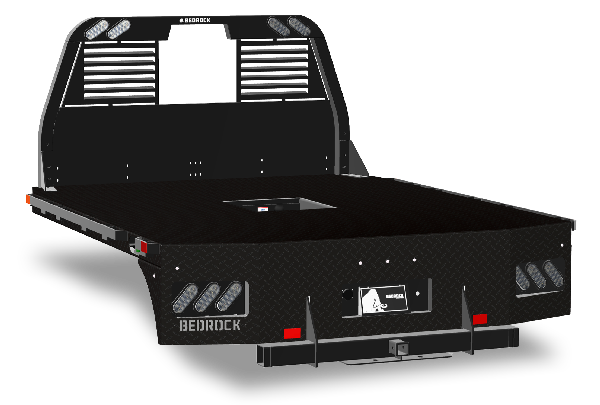
The Diamond’s higher GVWR and corrosion‑resistant deck make it ideal for coastal construction sites where salt exposure can accelerate rust.
What Are the Key Pros and Cons of a Steel‑Deck Flatbed vs. Aluminum‑Deck?
Answer: Steel decks provide greater load capacity and durability but are heavier, while aluminum decks reduce tare weight, improving fuel efficiency but may limit max payload and be prone to denting.
Steel‑Deck Pros
- Higher tensile strength (up to 30,000 lb GVWR)
- Excellent resistance to impact and abrasion
- Better for carrying heavy steel, masonry, and equipment
Steel‑Deck Cons
- Heavier tare weight reduces payload margin
- Prone to corrosion if not properly coated
Aluminum‑Deck Pros
- Lighter, increasing usable payload by 10‑15 %
- Naturally corrosion‑resistant
- Improves fuel economy on long hauls
Aluminum‑Deck Cons
- Lower maximum load rating (typically <20,000 lb GVWR)
- May dent under heavy impact loads
Common Mistake: Selecting an aluminum deck for heavy‑duty concrete loads, then exceeding the deck’s safe weight limit, leading to deck deformation and costly repairs.
How Do Safety Regulations Influence Flatbed Selection in 2026?
Answer: Federal DOT and OSHA guidelines require flatbeds to meet specific load securement, lighting, and reflection standards, influencing deck construction, tie‑down points, and visibility features.
According to the OSHA Standard 1926.550, every flatbed must have at least four securement points per 10 ft of deck length and appropriate reflective markings. Additionally, the Federal Motor Carrier Safety Administration (FMCSA) 2026 cargo securement rules mandate pre‑trip inspections and weight distribution checks.
Compliance Checklist (Use this before each trip)
- Verify all tie‑down straps are rated ≥ (Load × 1.5).
- Confirm reflective tape is intact on deck edges.
- Perform a pre‑trip weight distribution check using a certified scale.
- Ensure side rails or edge guards are installed on decks over 18 ft.
- Check that all lighting (tail, brake, side marker) functions.
When Is It Worth Upgrading to a “Diamond” Flatbed?
Answer: Upgrade to a Diamond flatbed when you regularly haul loads exceeding 24,000 lb, operate in corrosive environments, or need the strongest deck for repeated heavy‑impact material handling.
Indicators for Upgrade
- Average load weight > 20,000 lb
- Frequent transport of steel girders, prefabricated walls, or heavy machinery
- Job sites near coastlines, mining operations, or high‑humidity zones
- Need for longer deck (22‑24 ft) to accommodate oversized modules without a second trailer
If your fleet primarily moves light‑weight drywall, lumber, or insulation, a Granite or Onyx model will likely meet your needs at a lower total cost of ownership.
What Maintenance Practices Extend the Life of a Construction Flatbed?
Answer: Regular inspection, cleaning, and targeted protective treatments keep flatbeds performing longer, preventing rust, fatigue cracks, and premature deck wear.
Maintenance Routine (Quarterly)
- Inspect welds and cross‑beams for cracks or fatigue signs.
- Pressure‑wash the deck to remove grit, then apply a rust inhibitor (e.g., zinc‑rich primer).
- Lubricate pivot points on side rails and tie‑down hardware.
- Check tire pressure and wheel bearings on the trailer axle.
- Record load charts after each major haul to monitor any deformation.
Real‑World Tip: Crews that schedule a 30‑minute post‑job deck wipe‑down report a 15% reduction in corrosion‑related repairs over three years.
How Does Bedrock’s Customization Process Work?
Answer: Bedrock works directly with contractors to specify deck length, load capacity, and optional accessories like integrated winches, loading ramps, and GPS tracking, delivering a tailored flatbed that fits exact job requirements.
Customization Steps
- Consultation Call – Discuss load types, frequency, and site conditions.
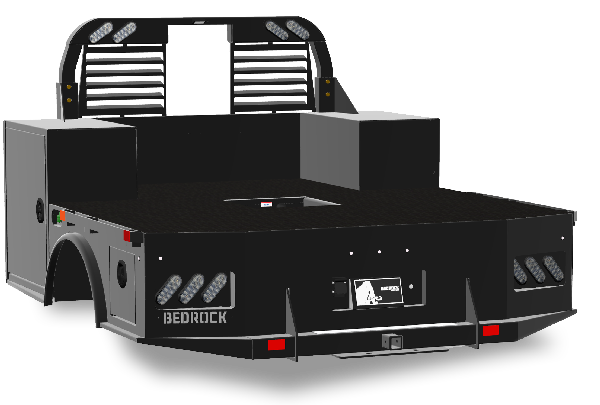
- Quote & CAD Review – Receive a 3‑D model (e.g., Diamond) for visual approval.
- Fabrication – Bedrock’s factory builds the flatbed to spec, using laser‑cut steel for precision.
- Delivery & Installation – Trailer is shipped, then a certified technician installs any accessories on‑site.
You can explore Bedrock’s full lineup with the Truck flatbed for construction work page, which showcases the Diamond series in detail.
Decision Framework: Which Flatbed Should You Buy?
Answer: Use the following three‑step decision matrix to match your project needs to the most suitable Bedrock flatbed model.
| Criteria | Low‑Priority (Onyx/Granite) | Medium‑Priority (Granite Plus/Marble) | High‑Priority (Diamond) |
|---|---|---|---|
| Typical Load Weight | ≤ 15,000 lb | 15‑24,000 lb | > 24,000 lb |
| Environment | Dry, inland | Mixed, occasional moisture | Coastal, high‑corrosion |
| Budget | <$20k | $20k‑$25k | > $25k |
| Deck Length Needed | ≤ 16 ft | 18‑22 ft | 20‑24 ft |
| Frequency of Heavy Loads | Rare | Moderate | Daily/weekly |
How to Use: Rate each criterion for your operation (Low, Medium, High). The column with the most matches indicates the optimal model.
Frequently Asked Questions
Answer: Below are concise answers to the most common queries about construction flatbeds.
1. What is the typical lifespan of a steel‑deck flatbed?
A well‑maintained steel deck can last 12‑15 years, depending on exposure to corrosive elements and load frequency.
2. Can I add a hydraulic lift to a Bedrock flatbed?
Yes, Bedrock offers factory‑integrated hydraulic lifts as an optional accessory on Diamond and Granite Plus models.
3. How many tie‑down points are required by OSHA?
OSHA requires at least four securement points per 10 ft of deck length, evenly spaced across the width.
4. Are Bedrock flatbeds compatible with 2026 EPA emissions standards?
The trailers themselves are emissions‑neutral; Bedrock ensures that the axle and brake components meet the latest EPA regulations.
5. What financing options are available for large fleets?
Bedrock works with major equipment lenders to provide flexible lease‑to‑own programs, typically 36‑60 month terms with option to upgrade.
6. Do Bedrock flatbeds come with a warranty?
All new flatbeds include a 2‑year limited warranty covering structural defects and coating failures.
7. How do I secure irregularly shaped loads?
Use a combination of ratchet straps, edge protectors, and adjustable load bars; Bedrock’s side rails include built‑in tie‑down anchors for odd shapes.
8. Is GPS tracking mandatory for construction flatbeds?
Not mandatory, but many contractors install GPS for route optimization and compliance with FMCSA’s electronic logging requirements.
Bottom Line: Selecting the right truck flatbed for construction work hinges on load capacity, environmental exposure, and budget. Bedrock’s Diamond series offers unmatched strength for heavy, corrosive jobs, while Granite and Onyx provide cost‑effective solutions for lighter loads. Follow the safety checklist, maintain your deck regularly, and use the decision framework to make an informed purchase that maximizes ROI in 2026 and beyond.
Interested in learning more?
Visit our website to explore products, find dealers, and get in touch.
Visit Bedrock Truck Beds →