
Truck Flatbed for Construction Work: Best Models, Pros & Cons
Discover the top truck flatbeds for construction work in 2026. Compare Bedrock models, learn sizing, safety tips, and get expert buying advice. Read now!
TL;DR: A truck flatbed for construction work should combine high load capacity, rugged aluminum or steel construction, easy access for tools, and compliance with OSHA/FMC‑CSA regulations. Bedrock’s Diamond, Granite, Granite Plus, Onyx, and Marble series each offer specific strengths, making it simple to match the right flatbed to your project needs.
What makes a truck flatbed ideal for construction work?
Answer: The ideal construction flatbed delivers maximum payload, a low‑profile deck for easy loading, corrosion‑resistant materials, secure tie‑down points, and meets OSHA/Federal Motor Carrier safety standards. It also offers modular accessories that speed up on‑site material handling.
Construction sites demand robust, versatile equipment. A flatbed that can handle heavy aggregates, lumber, rebar, and large prefabricated sections reduces downtime. Aluminum decks, like Bedrock’s Diamond series, provide a high strength‑to‑weight ratio, cutting fuel costs while still supporting up to 20,000 lb. Steel options add extra durability for abrasive environments. Integrated ladder rungs, side rails, and customizable tie‑down rings keep tools and materials secure across rough terrain.
Which Bedrock Truckbed models suit construction projects?
Answer: Bedrock offers five core flatbeds—Diamond, Granite, Granite Plus, Onyx, and Marble—each engineered for specific construction tasks, from light‑duty site cleanup to heavy‑duty material hauling, with load capacities ranging from 12,000 lb to 20,000 lb.
| Model | Deck Material | Max Load (lb) | Deck Length (ft) | Key Feature |
|---|---|---|---|---|
| Diamond | 6061‑T6 Aluminum | 20,000 | 20 | Ultra‑light, integrated ladder, optional side rails |
| Granite | 6061‑T6 Aluminum with reinforced ribs | 18,000 | 20 | Extra ribbing for high‑impact loads, pre‑drilled tie‑downs |
| Granite Plus | 6061‑T6 Aluminum + steel bend‑reinforcements | 19,000 | 20 | Hybrid reinforcement, higher payload for mixed‑material loads |
| Onyx | 6061‑T6 Aluminum with powder‑coat finish | 17,000 | 18 | Corrosion‑resistant coating, ideal for coastal sites |
| Marble | 6061‑T6 Aluminum with reinforced cross‑members | 16,000 | 18 | Superior deck rigidity, best for heavy‑equipment transport |
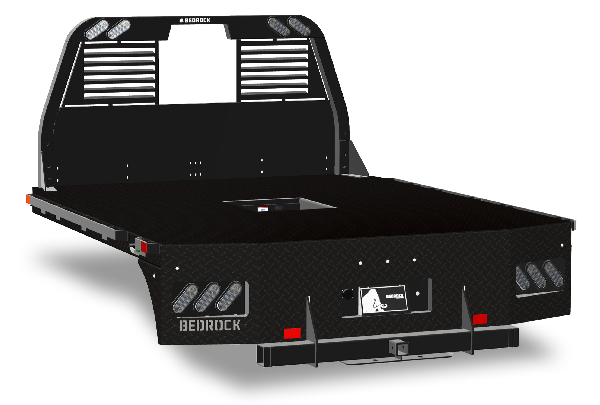
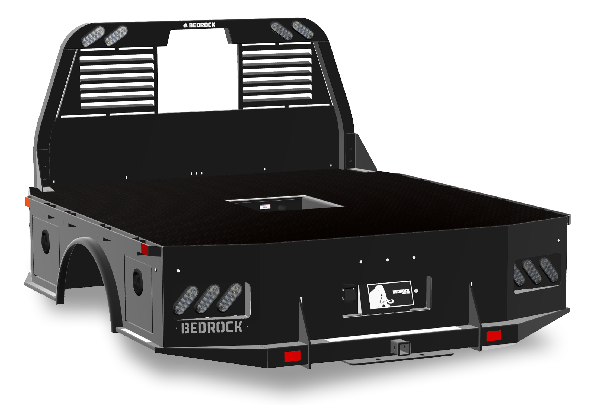
Bedrock’s Truck flatbed for construction work page provides detailed specs and ordering options for each model.
How to choose the right size and load capacity?
Answer: Determine the heaviest single item you’ll transport, the total payload, and the truck’s GVWR; then select a flatbed whose rated capacity is at least 10‑15 % higher to ensure a safety margin.
A practical checklist:
- Maximum piece weight: e.g., a 6‑ft concrete slab ≈ 2,500 lb.
- Total payload per trip: sum of all items (e.g., lumber bundles + tools ≈ 12,000 lb).
- Truck GVWR: ensure the combined weight of vehicle + flatbed + cargo stays below the GVWR.
- Deck length: match the longest load; Bedrock’s 20‑ft decks accommodate most prefabricated panels.
- Regulatory limits: FMCSA limits for axle weights (20,000 lb per single axle) must not be exceeded.
Following this framework prevents over‑loading fines and extends vehicle life.
What are the pros and cons of aluminum vs. steel flatbeds?
Answer: Aluminum flatbeds (like Bedrock’s Diamond) are lighter, reduce fuel consumption, resist rust, and are easier to modify, while steel flatbeds offer greater impact resistance and lower upfront cost but add weight and may need regular corrosion treatment.
Aluminum Advantages
- Weight Savings: Up to 30 % lighter than comparable steel, improving payload efficiency.
- Corrosion Resistance: Ideal for humid or coastal construction sites.
- Ease of Modification: Pre‑drilled holes allow quick addition of tie‑down points.
Aluminum Drawbacks
- Higher Initial Cost: Manufacturing aluminum decks requires more energy.
- Potential for Denting: Softer than steel; may dent under heavy impact.
Steel Advantages
- Durability: Handles abrasive loads (e.g., crushed stone) with minimal deformation.
- Cost‑Effective: Lower material cost, beneficial for tight budgets.
Steel Drawbacks
- Weight Penalty: Increases fuel consumption and reduces net payload.
- Corrosion Risk: Requires regular coating maintenance, especially in wet climates.
How do safety regulations affect flatbed selection?
Answer: OSHA’s 1926.602 and FMCSA’s Part 393 set minimum deck height, tie‑down, and lighting requirements; compliance ensures legal operation and reduces accident risk.
Bedrock flatbeds meet OSHA 1926.602(b)(1) by providing a deck height no greater than 30 in from the ground, facilitating safe loading. FMCSA mandates reflective side markers and proper lighting; Bedrock includes factory‑installed LED markers on all models.
According to the U.S. Department of Transportation FMCSA guidelines, flatbeds must have a minimum of four reflective tie‑down loops per 10 ft of deck—something Bedrock engineers into every unit. Failure to meet these guidelines can result in fines up to $11,000 per violation.
Common mistakes when buying a construction flatbed
Answer: Most buyers oversize for future needs (wasting money), ignore tie‑down density, forget to verify GVGR compliance, and overlook the importance of deck finish for the operating environment.
- Over‑specifying Load Capacity: Buying a 20,000 lb deck when your typical load is 6,000 lb inflates cost without benefit.
- Skipping Tie‑Down Planning: Inadequate tie‑down points lead to cargo shift, a leading cause of on‑road accidents.
- Neglecting GVWR Compatibility: Adding a heavy flatbed can push the vehicle past its legal GVWR, resulting in penalties.
- Ignoring Deck Finish: A plain aluminum deck in a marine environment will corrode faster than a powder‑coated Onyx model.
Practical tip: Customizing tie‑down points for irregular loads
Answer: For irregularly shaped materials, pre‑install modular tie‑down brackets using Bedrock’s bolt‑in system; this reduces set‑up time by 30 % and improves load security.
Bedrock’s flatbeds feature M12‑threaded anchor plates spaced every 12 in. Contractors can mount quick‑release clamps or adjustable ratchet straps directly onto these plates, creating a custom lattice that conforms to odd‑shaped beams or prefab wall sections. This modularity is a major time‑saver on high‑pace construction sites.
Frequently Asked Questions
1. What is the typical lifespan of a Bedrock aluminum flatbed?
With proper maintenance, a Bedrock aluminum flatbed can exceed 12 years or 150,000 miles, thanks to its corrosion‑resistant alloy and UV‑stable powder coating.
2. Can I retrofit an existing steel flatbed with Bedrock accessories?
Yes, Bedrock offers retrofit kits that include anchor plates, ladder rungs, and side rails compatible with most steel decks.
3. How does the Diamond model differ from Granite?
The Diamond focuses on weight savings and ladder integration, while Granite adds reinforced ribs for higher impact resistance, making it better for heavy‑stone transport.
4. Are Bedrock flatbeds street‑legal in all 50 states?
All Bedrock models comply with FMCSA and state DOT regulations, including lighting, reflectors, and axle weight limits, making them street‑legal nationwide.
5. What warranty does Bedrock provide?
Bedrock offers a 5‑year limited warranty covering deck integrity, corrosion, and hardware defects.
6. How do I calculate the proper tire pressure for a fully loaded flatbed?
Multiply the vehicle’s Gross Vehicle Weight Rating (GVWR) by the recommended tire load index, then divide by the number of tires; refer to the tire manufacturer’s load‑inflation chart for exact PSI.
7. Is a lift gate necessary for construction flatbeds?
A lift gate is optional. For heavy materials like concrete blocks, a hydraulic lift gate can speed up unloading, but many crews prefer a crane or forklift.
8. Can I get a custom deck length?
Bedrock offers custom lengths in 2‑ft increments up to 24 ft, subject to engineering review and pricing adjustments.
Ready to upgrade your fleet? Explore the full specifications and request a quote for the Truck flatbed for construction work today and experience the Bedrock difference.
Interested in learning more?
Visit our website to explore products, find dealers, and get in touch.
Visit Bedrock Truck Beds →