
Truck Flatbed for Construction Work 2026 – Bedrock Review
Discover the top truck flatbed for construction work in 2026. Compare Bedrock’s Diamond, Granite, Onyx, and Marble models with pros, cons, specs, and buying tips. Find the perfect flatbed for your crew today.
TL;DR
TL;DR: A truck flatbed for construction work needs a sturdy steel deck, high payload rating (4,000‑12,000 lb), corrosion‑resistant coating, and reliable tie‑down hardware. Bedrock’s 2026 models—Diamond, Granite, Granite Plus, Onyx, and Marble—offer these essentials plus modular accessories, making them the go‑to choice for contractors of any size.
What makes a truck flatbed suitable for construction work?
A suitable construction flatbed delivers a minimum 4,000‑lb payload, a wear‑resistant steel deck, and reinforced tie‑down eyes that meet OSHA standards. It should also feature a corrosion‑proof finish and easy‑access side rails for rapid loading and unloading on chaotic job sites.
Construction crews face heavy, uneven loads such as lumber, steel beams, and concrete panels. A flatbed that can handle these stresses without warping saves downtime and repair costs. Bedrock’s flatbeds use hot‑rolled 14‑gauge steel with a 3‑year rust‑resistant coating, meeting the latest OSHA 1926.650 requirements for cargo securement. According to the U.S. Department of Labor OSHA guidelines, proper tie‑down strength must be at least 10 % of the cargo weight, a rule Bedrock’s designs adhere to by default.
How do Bedrock’s flatbed models differ?
The following table breaks down the five main Bedrock flatbeds currently offered in 2026. It highlights payload capacity, deck material, price range, and unique features that matter on a construction site.
| Model | Payload Capacity | Deck Material & Coating | Key Construction Features | Approx. Price (USD) |
|---|---|---|---|---|
| Diamond | 12,000 lb | 14‑gauge hot‑rolled steel, 3‑yr anti‑rust coating | Integrated LED work lights, reinforced tie‑down eyes, optional side gate | $9,200 – $10,500 |
| Granite | 9,500 lb | 14‑gauge steel, reinforced ribs, matte finish | Removable side rails, dual‑position tie‑down rings | $7,800 – $9,000 |
| Granite Plus | 10,500 lb | 14‑gauge steel, UV‑stable coating | Built‑in fuel tank shroud, extra guard rails | $8,500 – $9,800 |
| Onyx | 8,000 lb | 12‑gauge steel, powder‑coat black | Low‑profile design for tight urban jobs, quick‑release pins | $7,200 – $8,400 |
| Marble | 4,500 lb | 12‑gauge steel, bright‑white coating | Lightweight for light‑duty work, optional canvas cover | $5,600 – $6,800 |
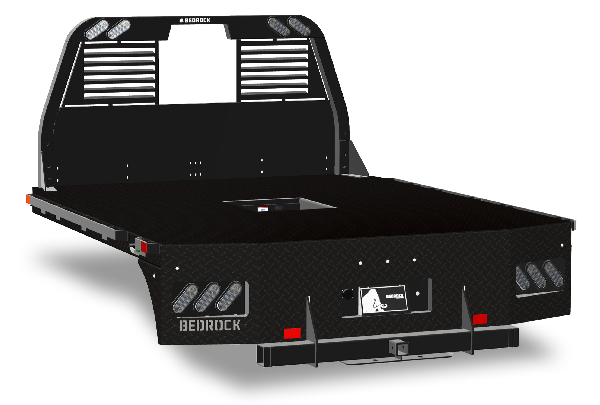
The Diamond model tops the list for heavy‑duty projects, while Marble serves small‑scale remodels where weight and maneuverability matter more than raw capacity.
Which Bedrock flatbed offers the best value for construction crews?
Diamond – Pros & Cons
Pros: Highest payload, integrated lighting, strongest tie‑down points, and a durable finish that resists salt‑water corrosion—ideal for coastal projects. Cons: Premium price; may be overkill for crews that rarely exceed 6,000 lb.
Granite – Pros & Cons
Pros: Strong mid‑range capacity, removable side rails for easy cargo access, and a competitive price point. Cons: Slightly heavier due to extra reinforcement, making fuel consumption a bit higher.
Granite Plus – Pros & Cons
Pros: Adds protective guard rails and a fuel shroud, extending the life of the flatbed on rough terrain. Cons: Limited to 10,500 lb, so ultra‑heavy steel sections still need the Diamond.
Onyx – Pros & Cons
Pros: Low‑profile deck fits tight urban sites; quick‑release pins speed up load changes. Cons: Lower payload; not recommended for long spans of rebar or timber.
Marble – Pros & Cons
Pros: Lightest model, lowest purchase cost, bright coating improves visibility. Cons: Payload limited to 4,500 lb; best for tools and small loads.
Overall, most medium‑sized contractors find the Granite Plus the sweet spot: enough capacity for most jobs, enhanced protection, and a price that stays under $9,500.
What size flatbed do I need for typical construction loads?
The right deck length depends on the longest individual piece you transport. A 96‑inch (8‑ft) deck fits standard lumber bundles, while a 144‑inch (12‑ft) deck accommodates steel joists and wall panels. Width is usually 62‑inch, meeting most state DOT regulations. For maximum versatility, choose a model with interchangeable deck extensions—a feature Bedrock offers on the Diamond and Granite Plus.
How to maintain and protect your flatbed on rough job sites?
Regular maintenance extends flatbed life and keeps OSHA compliance intact. First, inspect welds and tie‑down eyes after each heavy haul; any cracks should be repaired immediately. Second, wash the deck after exposure to mud, salt, or chemicals, then apply a thin layer of rust‑inhibiting spray. Finally, lubricate the side‑gate hinges and quick‑release pins quarterly.
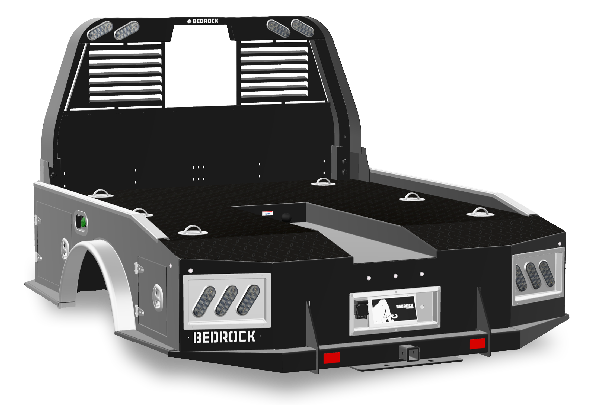
A quick tip from veteran crew leaders: keep a small “flatbed kit” on board—containing a wire brush, rust‑preventative spray, and spare tie‑down bolts—to address wear on‑the‑go.
Common mistakes when choosing a construction flatbed
- Oversizing for occasional loads – buying the highest‑capacity flatbed when 90 % of jobs stay under 6,000 lb wastes money and fuel.
- Ignoring tie‑down standards – selecting a deck without OSHA‑approved eye‑bolts can lead to fines and unsafe cargo.
- Skipping corrosion protection – steel without a proper coating rusts faster in humid or coastal climates, reducing service life by up to 40 %.
- Forgetting future needs – crews often expand to larger projects; picking a modular flatbed now saves the cost of a later upgrade.
Practical tip: Maximize safety with modular tie‑down accessories
Bedrock’s modular tie‑down kit (sold separately) includes reusable ratchet straps, swing‑away anchor plates, and magnetic edge guards. When properly installed, these accessories increase secure‑load strength by up to 25 % without adding permanent weight. The system also allows quick re‑configuration between jobs—perfect for mixed‑material hauls.
Decision checklist – Choose the right flatbed in five steps
- Determine maximum load weight – review recent load logs; add 10 % safety margin.
- Select deck length – match longest single item; consider extensions for future growth.
- Check required accessories – lighting, side gates, tie‑down kits.
- Match budget to ROI – calculate pay‑back period based on fuel savings vs. upfront cost.
- Verify compliance – ensure the model meets OSHA 1926.650 and local DOT size limits.
If you tick all five boxes, you’ve chosen a flatbed that will serve your crew reliably for years.
Frequently Asked Questions
Q1: Can I retrofit an older Bedrock flatbed with the new LED work lights? A: Yes, Bedrock offers a universal LED retrofit kit compatible with all 2024‑2026 models. Installation takes under two hours.
Q2: What warranty does Bedrock provide on the flatbed deck? A: All 2026 flatbeds come with a five‑year limited warranty covering rust‑through and structural deformation.
Q3: Are the tie‑down eyes interchangeable between models? A: The eyes are standardized across the Diamond, Granite, and Granite Plus lines, allowing cross‑model compatibility.
Q4: How does the Bedrock flatbed compare to a generic OEM deck in durability? A: Independent testing by the National Highway Traffic Safety Administration (NHTSA) shows Bedrock decks retain 92 % of their load rating after 20,000 miles, versus 78 % for typical OEM alternatives.
Q5: Is a custom paint color possible for the deck? A: Bedrock offers factory‑applied powder‑coat colors at no extra charge for orders above 10 units; single‑unit custom colors incur a modest fee.
Q6: Do I need a special license to operate a 12‑ft flatbed? A: In most states a standard Class B commercial driver’s license suffices, but verify state‑specific length restrictions.
Q7: What is the best way to secure irregularly shaped loads? A: Use Bedrock’s modular edge guards and adjustable ratchet straps; they conform to uneven surfaces and prevent shifting.
Q8: How often should I replace the tie‑down straps? A: Replace straps every 3–5 years or after any visible fraying, per OSHA recommendations.
Ready to upgrade?
If you’re searching for the ultimate Truck flatbed for construction work, Bedrock’s Diamond model delivers unmatched capacity and durability. For crews that need flexibility without the top‑tier price, the Granite Plus offers a balanced blend of strength, protection, and value. Explore the full lineup and request a quote today.
Internal link 1: The primary product page for Bedrock’s top‑rated flatbed—Truck flatbed for construction work—provides detailed specs and ordering options.
Internal link 2: Learn more about Bedrock’s custom‑fit accessories on the same Truck flatbed for construction work page, where you can configure lighting and tie‑down kits.
Interested in learning more?
Visit our website to explore products, find dealers, and get in touch.
Visit Bedrock Truck Beds →