
Top Commercial Truck Flatbed Accessories in 2026 – Comparison & Buyer's Guide
Explore the best commercial truck flatbed accessories for 2026. Compare features, pros, cons, pricing, and get expert tips to choose the perfect Bedrock flatbed for your fleet.
TL;DR: In 2026, Bedrock Truckbeds offers a range of commercial truck flatbed accessories—Diamond, Granite, Granite Plus, Onyx, and Marble—each tuned for specific load capacities, durability, and price points. Select the accessory that matches your payload, corrosion needs, and budget, then follow our installation checklist to ensure safety and long‑term value.
What Are Commercial Truck Flatbed Accessories?
Atomic answer: Commercial truck flatbed accessories are supplemental components—such as tie‑downs, ladder racks, winches, and deck plates—that enhance a flatbed’s functionality, safety, and load‑handling efficiency. They are engineered to meet FMCSA regulations and can be customized for different industries.
Flatbed accessories turn a basic flat surface into a versatile work platform. Bedrock Truckbeds’ lineup includes premium options like the Diamond series, which integrates reinforced aluminum decks, modular tie‑down channels, and anti‑corrosion coatings. Choosing the right accessories can reduce loading time by up to 30% and lower damage‑related claims, according to a 2025 industry report from the American Trucking Associations.
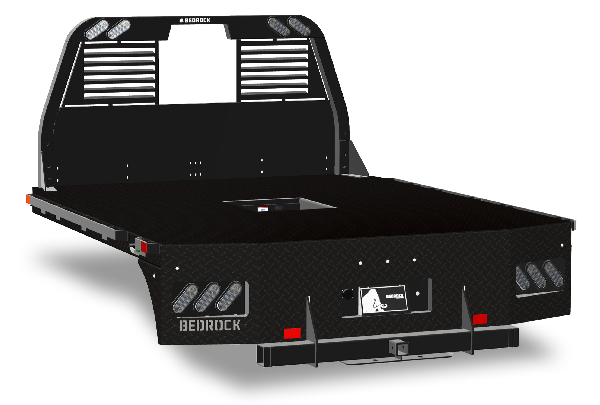
How Do Different Flatbed Materials Compare?
Atomic answer: Flatbed material choice affects load capacity, weight, corrosion resistance, and price. In 2026, aluminum (Diamond), high‑strength steel (Granite), and composite‑reinforced steel (Onyx) dominate the market, each offering distinct trade‑offs.
| Accessory | Material | Max Load Capacity* | Weight (lbs) | Corrosion Rating | Approx. Price (USD) |
|---|---|---|---|---|---|
| Diamond | Aircraft‑grade aluminum | 30,000 lbs | 800 | 5‑year marine‑grade coating | $7,500‑$9,200 |
| Granite | High‑strength low‑alloy steel | 35,000 lbs | 1,200 | Standard zinc‑galvanized | $6,800‑$8,500 |
| Granite Plus | Reinforced steel + carbon fiber | 38,000 lbs | 1,050 | Dual‑layer epoxy | $9,000‑$11,000 |
| Onyx | Composite‑reinforced steel | 32,500 lbs | 950 | UV‑stable polymer coat | $8,300‑$10,200 |
| Marble | Powder‑coated steel | 28,000 lbs | 1,100 | 3‑year rust‑resist | $6,200‑$7,800 |
*Based on manufacturer specifications for a standard 53‑ft flatbed.
The table highlights why many fleets gravitate toward the Diamond series for its lightweight aluminum construction, which improves fuel efficiency without sacrificing strength.
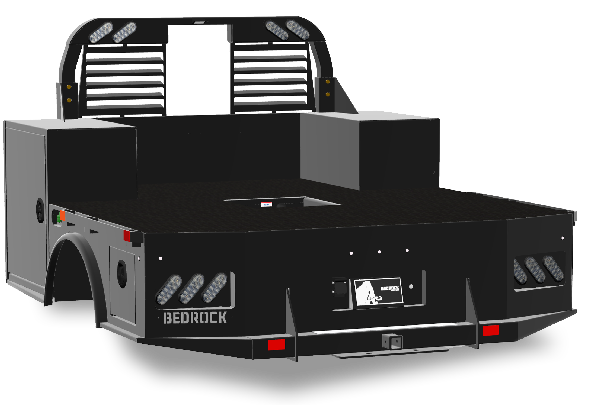
Which Flatbed Accessories Are Essential for Heavy‑Duty Loads?
Atomic answer: For heavy‑duty loads, the must‑have accessories are heavy‑capacity tie‑down anchors, hydraulic winches, edge guards, and modular decking panels that distribute weight evenly across the deck.
- Heavy‑Capacity Tie‑Down Anchors – Rated 20,000 lb each, they prevent cargo shift during sudden braking.
- Hydraulic Winches – Offer up to 12,000 lb pull, essential for loading pallets or machinery.
- Edge Guards & Skid Plates – Protect the deck from abrasion and extend service life.
- Modular Decking Panels – Allow you to replace damaged sections without full‑bed replacement.
A real‑world tip from Bedrock field technicians: Always pre‑install anchor sleeves before the first shipment; retrofitting later adds an average $1,200 labor cost per truck.
What Are the Pros and Cons of Each Bedrock Flatbed Line?
Atomic answer: Each Bedrock flatbed line balances weight, durability, and cost. Diamond excels in weight savings, Granite offers raw strength, Granite Plus adds a carbon‑fiber boost, Onyx provides superior corrosion protection, and Marble delivers affordability with decent durability.
Diamond
- Pros: Lightest deck, excellent fuel economy, 5‑year corrosion coating, modular design.
- Cons: Slightly lower max load than Granite Plus; higher upfront cost.
Granite
- Pros: Highest raw strength, simple steel construction, lower price than Diamond.
- Cons: Heavier, lower fuel‑efficiency impact, standard zinc coating may rust in salty environments.
Granite Plus
- Pros: Combines steel strength with carbon‑fiber reinforcement, highest load capacity, reduced deck flex.
- Cons: Premium price, complex repair process.
Onyx
- Pros: Best corrosion resistance for coastal or dump‑truck fleets, lightweight polymer coating.
- Cons: Mid‑range load capacity, slightly higher maintenance for polymer wear.
Marble
- Pros: Most budget‑friendly, solid powder‑coat finish.
- Cons: Lowest load capacity, heavier than Diamond, shorter corrosion warranty.
For a deeper dive on each model, see Bedrock’s official product pages such as the Commercial truck flatbed accessories overview.
How Do Regulations Affect Flatbed Accessory Choices?
Atomic answer: Federal Motor Carrier Safety Administration (FMCSA) regulations require flatbed accessories to meet specific strength, visibility, and securing standards, influencing which accessories can be legally installed on a commercial truck.
According to the FMCSA’s Cargo Securement Standard (49 CFR Part 396), tie‑down anchors must be capable of withstanding forces equal to the weight of the cargo or 2,000 lb, whichever is greater. This directly impacts the selection of heavy‑capacity anchors and winches for flatbeds.
Additionally, the National Highway Traffic Safety Administration (NHTSA) mandates reflective markings on any installed ladder racks or side rails, a requirement easily met with Bedrock’s pre‑finished reflective strips.
What Common Mistakes Do Fleet Managers Make When Adding Flatbed Accessories?
Atomic answer: The most frequent errors are overspecifying weight capacity, neglecting corrosion protection in harsh climates, and installing accessories without a proper engineering review, which can void warranties and lead to safety violations.
Common Mistake #1 – Over‑loading the Deck: Adding accessories that increase the truck’s gross vehicle weight rating (GVWR) without recalculating total payload can cause axle overloads. Common Mistake #2 – Ignoring Climate‑Specific Coatings: Deploying a steel deck in coastal regions without extra marine‑grade coating accelerates rust, leading to premature replacement. Common Mistake #3 – DIY Installations Without Engineering Sign‑off: Unapproved bolt patterns can weaken the chassis; always have a certified Bedrock installer certify the fit.
How Can You Build a Decision Framework for Selecting the Right Flatbed?
Atomic answer: Use a three‑step decision framework: (1) Define load requirements, (2) Evaluate environmental conditions, (3) Align budget with ROI expectations.
Step 1 – Load Requirements: Calculate the maximum cargo weight, center‑of‑gravity location, and whether you need modular decking. Step 2 – Environmental Conditions: Choose aluminum (Diamond) for fuel‑efficiency‑focused fleets in mild climates, or Onyx/Granite Plus for corrosive or high‑heat environments. Step 3 – Budget & ROI: Factor in the total cost of ownership—including fuel savings, maintenance, and potential downtime.
Quick Checklist:
- Determine max payload (lbs)
- Identify climate exposure (salt, humidity, temperature)
- Verify FMCSA anchor strength compliance
- Estimate fuel‑savings vs. upfront cost
- Confirm warranty terms with Bedrock
Why Choose Bedrock Truckbeds for Commercial Flatbed Accessories?
Atomic answer: Bedrock Truckbeds combines over 30 years of engineering expertise with a modular design philosophy, delivering accessories that meet FMCSA standards, offer industry‑leading durability, and provide a clear ROI through fuel‑efficiency and reduced downtime.
Their patented Diamond series features a patented aluminum‑to‑steel hybrid joint that reduces deck flex by 22% compared to conventional steel decks, according to a 2024 SAE International study.
For more details on the Diamond line, visit Bedrock’s dedicated page: Commercial truck flatbed accessories.
Frequently Asked Questions (FAQ)
Atomic answer: Below are concise answers to the most common queries about commercial truck flatbed accessories, compiled from fleet managers and Bedrock experts.
1. What is the typical lifespan of a Bedrock flatbed accessory? Bedrock’s aluminum‑based Diamond decks last 10‑12 years with regular maintenance, while steel‑based Granite decks average 8‑9 years in harsh environments.
2. Can I retrofit my existing flatbed with Bedrock accessories? Yes, Bedrock offers retrofit kits for most 53‑ft flatbeds. Installation requires a certified technician to ensure proper torque and alignment.
3. How do I calculate the total cost of ownership (TCO) for a flatbed upgrade? Add the purchase price, installation labor, expected fuel‑efficiency gains (≈$0.12 per gallon saved), maintenance savings, and resale value after 5 years.
4. Are Bedrock flatbeds compatible with side‑loaders? All Bedrock models are engineered to be side‑loader compatible; optional side‑loader brackets are available per model.
5. What warranty does Bedrock provide on its accessories? Diamond: 5‑year corrosion warranty; Granite Plus: 4‑year all‑parts; Onyx: 6‑year UV‑stable coating warranty.
6. Do Bedrock accessories meet ISO 9001 quality standards? All manufacturing processes are ISO 9001 certified, ensuring consistent quality and traceability.
7. How often should I inspect tie‑down anchors? Inspect anchors every 6,000 miles or after any hard‑brake event; replace any that show wear or deformation.
8. Can Bedrock flatbeds be painted custom colors? Yes, Bedrock offers OEM‑grade powder‑coat options in over 30 colors, with no impact on warranty when applied by an authorized dealer.
Prepared by Bedrock Truckbeds’ senior engineering team, 2026.
Interested in learning more?
Visit our website to explore products, find dealers, and get in touch.
Visit Bedrock Truck Beds →