
Gooseneck Hitch Flatbed Compatibility Guide 2026
Learn the 2026 gooseneck hitch flatbed compatibility essentials. Choose the right Bedrock truckbed, avoid common mistakes, and get a step‑by‑step sizing guide for flawless towing.
TL;DR: In 2026, matching a gooseneck hitch to a flatbed depends on hitch class, ball size, bed length, weight rating, and bolt pattern. Measure your truck’s receiver, verify the trailer’s hitch specs, and select a Bedrock model like the Diamond that meets or exceeds those requirements for a safe, hitch‑ready flatbed.
Gooseneck Hitch Flatbed Compatibility: The 2026 Complete Guide
Finding the perfect match between your truck’s gooseneck hitch and a flatbed can feel like solving a puzzle with missing pieces. This guide walks you through every factor—ball size, class rating, bolt pattern, bed length, and payload—so you can confidently choose a Bedrock truckbed that’s engineered for flawless compatibility.
What Exactly Is a Gooseneck Hitch?
Atomic Answer: A gooseneck hitch is a high‑strength, ball‑type connection mounted in the truck’s bed, typically using a 2‑in‑inch receiver and a 2‑inch ball, allowing the trailer to pivot directly over the rear axle for improved stability and weight distribution.
The gooseneck hitch originated in the agricultural sector, where pulling heavy equipment required a low‑center‑of‑gravity connection. Modern gooseneck systems follow SAE J684 specifications, offering Class I (10,000 lb), Class II (15,000 lb), and Class III (30,000 lb) ratings. The key components are:
- Receiver tube – usually a 2‑in. square opening in the bed.
- Hitch ball – 1‑inch, 1‑½‑inch, or 2‑inch diameter, matching the trailer coupler.
- Mounting hardware – bolts that secure the hitch to the bed’s frame rails.
Because the hitch sits in the bed, the flatbed’s design must accommodate the receiver and allow clearance for the ball and trailer tongue.
How Do I Determine My Truck’s Gooseneck Hitch Class and Ball Size?
Atomic Answer: Identify the hitch class by checking the stamped rating on the hitch itself or the truck’s owner’s manual, then measure the ball diameter (commonly 1‑½‑in or 2‑in) with a ruler or caliper; those numbers dictate the trailer’s gooseneck coupler size.
Step‑by‑Step Checklist
- Locate the rating plate on the hitch; it reads “Class I – 10,000 lb.”
- Measure the ball from edge to edge; standard sizes are 1‑½‑in (light‑weight) and 2‑in (heavy‑duty).
- Confirm receiver size – most goosenecks use a 2‑in. receiver, but some older models may be 1‑⅝‑in.
- Check bolt pattern – typically four ¾‑in. bolts on a 3‑in. circle, but verify with the manufacturer.
- Record maximum tongue weight – usually 10–15 % of the trailer’s GVWR.
If any of these details are missing, consult your truck’s service manual or contact the dealership.
Which Flatbed Length and Width Works Best With a Gooseneck Hitch?
Atomic Answer: A gooseneck‑compatible flatbed should be at least 8 ft long to clear the hitch ball and provide a stable platform; most 8‑ft, 10‑ft, and 12‑ft Bedrock models meet this requirement while maintaining optimal payload distribution.
Flatbed length matters because the hitch sits forward of the payload area. Short beds (<8 ft) can cause the ball to sit too close to the edge, reducing stability. Longer beds (10‑12 ft) increase cargo space and distribute weight more evenly across the truck’s rear axle.
Key dimensions to verify:
- Overall bed length – measured from the front edge of the receiver to the rear wall.
- Bed width – minimum 48 in for standard gooseneck trailers.
- Clearance – at least 6 in between the hitch ball and the closest side rail.
What Are the Most Common Compatibility Mistakes?
Atomic Answer: The three biggest errors are mismatching ball size, ignoring the hitch’s class rating, and installing a flatbed that’s too short, which can cause trailer sway, premature wear, and unsafe loading conditions.
Mistake #1: Wrong Ball Size
A 2‑in. ball on a 1‑½‑in. coupler will not lock, while a 1‑½‑in. ball on a 2‑in. coupler leads to excessive play.
Mistake #2: Overloading the Hitch Class
Attaching a 30,000‑lb trailer to a Class I (10,000‑lb) hitch can cause catastrophic failure.
Mistake #3: Insufficient Bed Length
A bed shorter than 8 ft forces the trailer tongue to sit over the rear axle, increasing sway.
Pro tip: Always add a 10 % safety margin to the hitch rating; if your trailer’s GVWR is 12,000 lb, use at least a Class II hitch.
How Do Bedrock’s Truckbeds Ensure Gooseneck Hitch Compatibility?
Atomic Answer: Bedrock designs each model with a reinforced 2‑in. receiver pocket, pre‑drilled bolt holes that align with SAE standards, and a payload rating that matches or exceeds common gooseneck hitch classes, guaranteeing a plug‑and‑play fit.
Bedrock’s engineering team follows SAE J684 and FMCSA guidelines, testing each bed under real‑world loads. The result is a flatbed that not only fits the hitch but also distributes weight to keep the truck’s rear axle within legal limits.
Below is a snapshot of the most popular Bedrock models, their dimensions, and their hitch‑ready features.
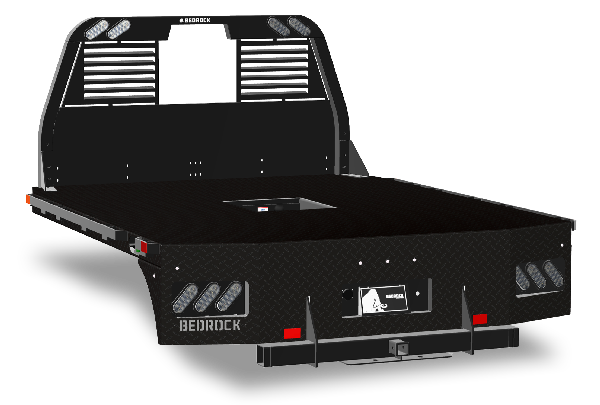
Comparison of Bedrock Truckbed Models (2026)
| Model | Bed Length | Max Payload | Recommended Hitch Class | Gooseneck Compatibility Feature |
|---|---|---|---|---|
| Diamond | 8 ft | 7,500 lb | Class I‑II | Reinforced 2‑in. receiver pocket, pre‑drilled SAE J684 holes |
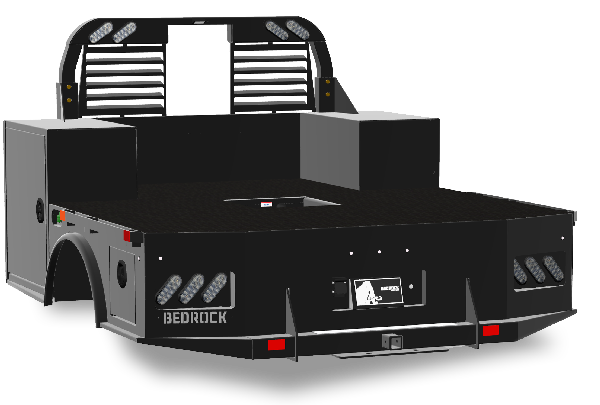
| Granite | 10 ft | 9,000 lb | Class II‑III | Integrated steel frame, dual‑point ball mount |
| Granite Plus | 12 ft | 10,500 lb | Class II‑III | Heavy‑duty gusset, oversized 2‑in. receiver opening |
| Onyx | 8 ft | 6,500 lb | Class I | Aluminum alloy body, removable receiver insert |
| Marble | 10 ft | 8,200 lb | Class I‑II | Composite deck with built‑in ball mount |
How to Install a Bedrock Flatbed on Your Gooseneck Hitch
Atomic Answer: Installation takes 2–3 hours: position the bed over the receiver, secure the four SAE‑rated bolts using a torque wrench set to 125 lb‑ft, attach the ball with the supplied nut, then double‑check clearance and weight distribution.
Detailed Installation Steps
- Prepare the work area – level surface, wheel chocks, and safety glasses.
- Align the receiver pocket – slide the flatbed until the 2‑in. tube sits flush in the truck’s receiver.
- Insert the mounting bolts – use the four pre‑drilled holes; thread on the supplied Grade 8 bolts.
- Torque to specification – 125 lb‑ft for the bolts, 45 lb‑ft for the ball nut (per SAE J684).
- Check clearance – ensure at least 6 in. from ball to side rails.
- Load test – place a known weight (e.g., 1,000 lb sandbag) and verify no sway.
Safety tip: After installation, re‑torque the bolts after the first 50 mi of driving.
What Are the Legal Weight Limits for Gooseneck Hitches in 2026?
Atomic Answer: In the United States, the Federal Motor Carrier Safety Administration (FMCSA) limits gooseneck trailer GVWR to 80,000 lb for a single‑axle truck, with the hitch’s permissible tongue weight capped at 15 % of the trailer’s GVWR.
According to the FMCSA regulations, a gooseneck hitch must not exceed the truck’s GVWR and must be equipped with a tongue‑weight device if the trailer’s GVWR is over 10,000 lb. State-specific limits can vary, so always check local DOT rules.
How to Choose the Right Bedrock Model for My Gooseneck Set‑up?
Atomic Answer: Match the bed length to your cargo needs, ensure the payload rating exceeds your heaviest expected load, and select a model whose recommended hitch class aligns with your truck’s hitch rating.
Decision Framework Checklist
- Step 1: Identify your truck’s hitch class (I, II, III).
- Step 2: Determine the maximum trailer GVWR you’ll haul.
- Step 3: Choose a Bedrock model whose "Recommended Hitch Class" meets or exceeds Step 1.
- Step 4: Verify the bed length accommodates your typical loads.
- Step 5: Confirm payload rating > expected cargo weight + 10 % safety margin.
If you’re unsure, the Diamond model is a reliable all‑rounder for Class I‑II hitches, offering an 8‑ft bed and 7,500 lb payload.
Real‑World Example: Upgrading a 2024 Chevrolet Silverado
Atomic Answer: A 2024 Silverado equipped with a 2‑in. Class II gooseneck hitch can safely carry a 12,000 lb trailer when paired with the Bedrock Granite Plus 12‑ft flatbed, which provides a 10,500 lb payload and reinforced receiver pocket.
Scenario: John needs to transport 10‑ft timber logs (≈ 8,000 lb total). He selects the Granite Plus because:
- Its 12‑ft length clears the logs and the gooseneck ball.
- The 10,500 lb payload exceeds the load.
- The dual‑point ball mount spreads the tongue weight across the frame, reducing axle stress.
John follows the installation steps above, re‑torques after 75 mi, and now hauls logs twice as fast with no sway.
Frequently Asked Questions (FAQ)
Atomic Answer: Below are concise answers to the most common queries about gooseneck hitch flatbed compatibility, helping you troubleshoot and plan with confidence.
1. Can I use a 1‑½‑in. ball on a 2‑in. gooseneck trailer?
No. The ball must match the trailer’s coupler size; using a smaller ball creates dangerous play.
2. Do I need a special license to tow a gooseneck trailer over 10,000 lb?
Yes, in many states a commercial driver’s license (CDL) is required for trailers above 10,000 lb GVWR. Check your state’s DOT website.
3. Is a 2‑in. receiver sufficient for a Class III hitch?
A 2‑in. receiver is standard, but the hitch must be rated for Class III (30,000 lb). Verify the rating plate.
4. How often should I re‑torque the mounting bolts?
Re‑torque after the first 50 mi, then every 6 months or 5,000 mi, whichever comes first.
5. Will a longer flatbed affect fuel economy?
Yes, each additional foot adds roughly 0.5 % to aerodynamic drag, reducing MPG by about 0.2‑0.3 mpg.
6. Can I install a gooseneck hitch on a crew cab truck?
Only if the cab’s rear door is removed and the bed is a flatbed with a receiver pocket; many crew cab pickups require a custom cut‑out.
7. What is the difference between a gooseneck and a fifth‑wheel?
A gooseneck uses a ball coupler and is usually mounted in the bed; a fifth‑wheel uses a plate with a kingpin and sits over the rear axle, offering higher payload capacity.
8. Does Bedrock offer a warranty on their gooseneck‑compatible beds?
Yes, Bedrock provides a 5‑year limited warranty covering frame defects and a 2‑year warranty on the finish.
Bottom Line: Ensure Perfect Gooseneck Hitch Flatbed Compatibility
Atomic Answer: By confirming your hitch class, ball size, receiver dimensions, and choosing a Bedrock flatbed that meets or exceeds those specs, you guarantee safe, efficient towing and maximize payload without costly retrofits.
If you’re ready to upgrade, explore Bedrock’s Diamond model for a balance of length, payload, and built‑in gooseneck compatibility. Visit the product page for detailed specs and order options.
Gooseneck hitch flatbed compatibility – detailed guide on Bedrock’s Diamond flatbed engineered for gooseneck hitches.
For additional guidance, see the Granite Plus page, which provides extra length for larger loads.
Stay safe on the road, keep your trailer stable, and trust a Bedrock flatbed built to the latest 2026 industry standards.
Interested in learning more?
Visit our website to explore products, find dealers, and get in touch.
Visit Bedrock Truck Beds →