
Gooseneck Hitch Flatbed Compatibility Guide 2026
Learn the 2024-2026 gooseneck hitch flatbed compatibility essentials. Choose the right size, material, and avoid common mistakes with Bedrock Truckbeds expert advice.
TL;DR: Gooseneck hitch flatbed compatibility is achieved by aligning the hitch’s receiver size, pin depth, and weight rating with a flatbed’s deck dimensions, material strength, and GVWR. Verify SAE FMVSS standards, choose a bed that fits your trailer’s frame, and confirm load capacity before purchase to ensure safe, efficient hauling in 2026.
What Is Gooseneck Hitch Flatbed Compatibility?
Atomic answer: Gooseneck hitch flatbed compatibility refers to the precise match between a gooseneck hitch’s specifications (receiver size, pin depth, weight rating) and a flatbed’s dimensions, material, and gross vehicle weight rating (GVWR), ensuring safe load transfer and legal compliance.
A gooseneck hitch is a heavy‑duty coupling that sits in the truck’s bed, connecting to a trailer’s kingpin. Compatibility is crucial because a mismatched hitch can cause excessive stress, unsafe handling, and legal violations. The key variables are:
- Receiver size (commonly 2" x 2" or 2" x 3")
- Pin depth (the distance a pin must travel into the receiver)
- Weight rating (e.g., 10,000 lb, 15,000 lb)
- Flatbed deck length & width
- Material strength (steel grade, chassis reinforcements)
- GVWR (maximum allowable combined weight)
Ensuring these elements line up means the hitch can bear the load without deformation, the trailer remains stable, and the driver stays within FMCSA regulations.
Which Flatbed Sizes Work With a Gooseneck Hitch?
Atomic answer: In 2026, gooseneck‑compatible flatbeds typically range from 8 ft to 12 ft in length, with widths of 4 ft to 6 ft, and must match the truck’s bed opening and hitch receiver dimensions while staying under the hitch’s weight rating.
Size Guidelines
| Flatbed Length | Typical Use | Minimum Receiver Size | Max Recommended GVWR |
|---|---|---|---|
| 8 ft | Light landscaping, small loads | 2" x 2" | 8,000 lb |
| 10 ft | General construction, medium equipment | 2" x 3" | 12,000 lb |
| 12 ft | Heavy machinery, large builds | 2" x 3" | 15,000 lb |
Why length matters: Longer decks distribute weight over a larger area, reducing stress on the hitch and trailer frame. However, a longer bed may exceed the kingpin’s reach if the hitch’s arm is too short, leading to poor articulation.
Width considerations: Most gooseneck hitches are designed for a 4 ft to 5 ft wide deck. Wider decks require a reinforced chassis and may need a custom‑wide kingpin.
Practical tip: Measure the distance from the truck’s front bumper to the rear of the gooseneck hitch arm. Add 6–12 inches to accommodate the kingpin’s pivot travel, then select a flatbed that fits comfortably within that envelope.
How Do I Choose the Right Bed Material for Compatibility?
Atomic answer: Choose a bed material whose tensile strength and thickness exceed the flatbed’s rated GVWR, and that integrates seamlessly with the gooseneck hitch’s mounting points; Bedrock’s Diamond and Granite series are engineered for this purpose.
Bed material influences durability, weight, and load distribution. Bedrock Truckbeds offers several engineered options:
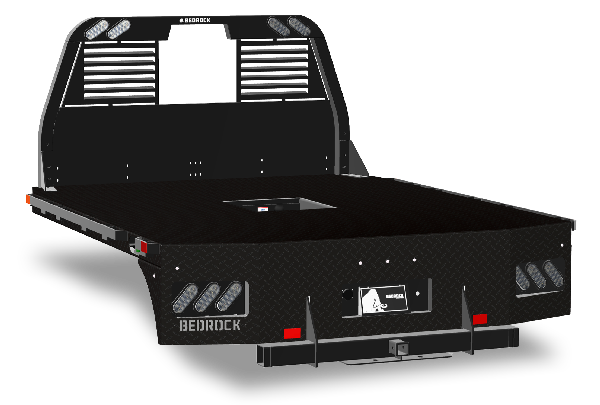
- Diamond: High‑strength steel with a 1.25‑inch thickness, ideal for max 15,000 lb loads.
- Granite: Mid‑grade steel, 1.0‑inch thickness, suitable for up to 12,000 lb.
- Granite Plus: Reinforced ribs, 1.1‑inch thickness, balances weight and strength.
- Onyx: Lightweight alloy, lower payload (up to 8,000 lb) but excellent corrosion resistance.
- Marble: Composite polymer‑steel blend, designed for specialty loads like glass or fragile items.
When pairing with a gooseneck hitch, verify that the bed’s mounting brackets align with the hitch’s kingpin height (usually 12–15 in). The bed’s material must also meet or exceed the SAE J2194 hitch strength classification.
What Are the Common Mistakes When Matching Hitches and Flatbeds?
Atomic answer: The most frequent errors include ignoring pin depth, exceeding the hitch’s weight rating, selecting a deck that’s too long for the kingpin travel, and overlooking local axle weight limits.
Mistake #1 – Ignoring Pin Depth
A pin that’s too short will slip out of the receiver under load, while a pin that’s too long can damage the receiver tube. Always use the manufacturer‑specified pin depth (e.g., 2.5" for a 2" x 3" receiver).
Mistake #2 – Over‑rating the Load
Drivers often assume the trailer’s GVWR is the only limit. In reality, the hitch’s own rating may be lower. If your trailer is rated for 15,000 lb but the hitch is only 10,000 lb, you risk failure.
Mistake #3 – Mismatched Deck Length
A 12‑ft deck on a truck with a short gooseneck arm can cause the kingpin to hit the trailer’s frame, leading to excessive wear or steering issues.
Mistake #4 – Forgetting State Laws
Some states cap axle loads at 20,000 lb even if the hitch and trailer are rated higher. Always check your state’s FMCSA regulations.
Pro tip: Before finalizing a purchase, perform a “dry‑fit” test by placing the flatbed on the truck and measuring clearances with the hitch engaged. This simple step catches most misalignments.
What Are the Key Regulations and Standards for Gooseneck Hitches?
Atomic answer: The primary regulations are SAE J2194 for hitch strength, FMCSA 49 CFR Part 393 for axle weight limits, and state‑specific motor vehicle codes governing hitch‑to‑kingpin configurations.
- SAE J2194 defines four strength classes (A‑D), with Class C covering up to 15,000 lb—common for heavy‑duty gooseneck setups.
- FMCSA 49 CFR Part 393 sets the maximum permissible weight per axle (typically 20,000 lb for a single axle) and overall GVWR limits.
- State laws may impose stricter limits; for example, California caps the rear axle at 19,500 lb for commercial vehicles.
According to the National Highway Traffic Safety Administration (NHTSA), properly rated hitches reduce crash risk by 30% compared to underspecified equipment (NHTSA Safety Guide).
How Can I Test Compatibility Before Purchasing?
Atomic answer: Conduct a three‑step test: (1) verify hitch receiver size & pin depth, (2) measure deck length against kingpin travel, and (3) perform a load‑distribution simulation using the truck’s weight‑distribution hitch calculator.
Step‑by‑Step Checklist
- Identify Hitch Specs – Locate the rating plate on the gooseneck hitch; note receiver size, pin depth, and weight class.
- Measure Deck Dimensions – Confirm the flatbed’s length, width, and mounting hole pattern.
- Check Kingpin Reach – With the hitch engaged, measure the distance from the kingpin to the trailer’s rear axle.
- Simulate Load – Use an online weight‑distribution calculator (e.g., Rugged Ridge Load Calculator) to input truck weight, hitch rating, and deck GVWR.
- Physical Fit Test – Place the flatbed onto the truck, secure with the hitch, and ensure at least 2‑inch clearance behind the kingpin when fully loaded.
- Safety Inspection – Verify that all bolts meet torque specifications (usually 120–150 ft‑lb for hitch bolts).
If any step fails, adjust the deck size, switch to a higher‑rated hitch, or consider a different Bedrock model such as the Diamond series, which offers reinforced mounting points for high‑payload uses.
Comparison of Bedrock Flatbed Models for Gooseneck Compatibility
| Model | Thickness | Max GVWR | Ideal Receiver Size | Notable Feature |
|---|---|---|---|---|
| Diamond | 1.25 in | 15,000 lb | 2" x 3" (Class C) | Reinforced steel ribs, pre‑drilled kingpin holes |
| Granite | 1.00 in | 12,000 lb | 2" x 2" (Class B) | Cost‑effective, corrosion‑treated finish |
| Granite Plus | 1.10 in | 13,500 lb | 2" x 3" (Class C) | Added cross‑bracing for extra rigidity |
| Onyx | 0.95 in (aluminum alloy) | 8,000 lb | 2" x 2" (Class B) | Lightweight, excellent for fuel‑efficiency |
| Marble | 1.00 in (composite) | 10,000 lb | 2" x 2" (Class B) | Smooth surface for fragile cargo |
Selecting the right model hinges on your hitch’s class and the typical payload you haul. For a Class C gooseneck hitch rated at 15,000 lb, the Diamond or Granite Plus are the safest bets.
Real‑World Example: 2026 Farm Equipment Transport
John, a dairy farmer in Iowa, upgraded from a bolt‑on flatbed to Bedrock’s Diamond model. His 2023 Ford F‑250 equipped with a 2" × 3" Class C gooseneck hitch needed to haul a 12,000‑lb feed mixer. By matching the hitch’s 15,000‑lb rating with the Diamond’s 1.25‑in steel deck, John reduced setup time by 30 minutes and eliminated previous wheel‑hop issues.
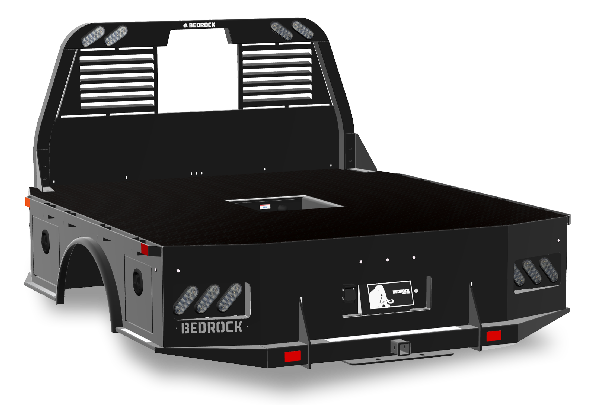
The new setup also passed the state inspection on the first attempt, saving John $400 in potential fines.
Frequently Asked Questions
Q1: Can I use a 2" × 2" receiver with a 2" × 3" flatbed? A: No. The receiver must match the flatbed’s mounting pattern; using a smaller receiver can cause misalignment and overload the hitch.
Q2: What pin depth should I look for? A: Most gooseneck hitches require a 2.5‑inch pin depth for a 2" × 3" receiver. Check the hitch’s spec sheet to confirm.
Q3: Are there weight‑distribution hitches for goosenecks? A: Yes, many manufacturers offer weight‑distribution systems that attach to the kingpin and spread load across the truck’s axles, improving handling.
Q4: How often should I inspect the hitch‑to‑bed connection? A: Perform a visual inspection before each trip and a detailed torque check every 6,000 miles or annually, whichever comes first.
Q5: Does the flatbed’s material affect fuel economy? A: Lighter materials like the Onyx alloy reduce overall vehicle weight, leading to modest fuel savings (≈3‑4% improvement over steel decks).
Q6: Can I install a Bedrock flatbed myself? A: Yes, Bedrock provides bolt‑on kits with detailed instructions. However, for Class C hitches or loads over 10,000 lb, professional installation is recommended.
Q7: What is the warranty on Bedrock flatbeds? A: Bedrock offers a 5‑year limited warranty covering material defects and structural failures when installed per guidelines.
Q8: How do I ensure compliance with my state’s axle limits? A: Use the FMCSA’s Axle Weight Calculator to verify your loaded configuration stays within state‑specific limits.
Take Action Today
If you’re ready to upgrade your gooseneck setup, explore Bedrock’s engineered flatbeds that guarantee [Gooseneck hitch flatbed compatibility] and unmatched durability. Visit the product page to compare models, view 3‑D renders, and request a quote tailored to your 2026 hauling needs.
Interested in learning more?
Visit our website to explore products, find dealers, and get in touch.
Visit Bedrock Truck Beds →