
Gooseneck Hitch Flatbed Compatibility Guide 2026
Discover the 2026 guide to gooseneck hitch flatbed compatibility. Learn sizing, specs, installation tips, and which Bedrock Truckbeds deliver perfect fit for any job.
TL;DR: Gooseneck hitch flatbed compatibility means matching the hitch’s ball size, receiver class, weight rating, and pin placement with a flatbed’s tie‑down points, deck strength, and dimensions. Choose a Bedrock model that meets or exceeds your truck’s GVWR and the cargo load, verify all measurements, and follow proper installation for safe, reliable performance.
What Is Gooseneck Hitch Flatbed Compatibility?
Answer: Gooseneck hitch flatbed compatibility refers to the precise alignment of hitch specifications—ball size, receiver class, weight capacity, and pin location—with the flatbed’s tie‑down hardware, deck load rating, and overall geometry. When these elements match, the truck can safely carry heavy loads without excessive stress on the chassis or hitch.
A gooseneck hitch differs from a fifth‑wheel because it uses a single ball that mounts in a rear‑mounted receiver, commonly on a tractor‑style truck. The flatbed must provide reinforced tie‑down points exactly where the hitch’s pins engage, and the deck must support the combined weight of the cargo plus the hitch’s own load. Compatibility also includes ensuring the hitch’s drawbar angle does not exceed the flatbed’s design limits, which can affect stability during turns and braking.
How Do I Choose the Right Flatbed for My Gooseneck Hitch?
Answer: Start by comparing your truck’s GVWR, hitch class, and ball size to the flatbed’s rated capacity, deck dimensions, and tie‑down configuration. Verify that the hitch’s receiver depth matches the flatbed’s mounting bracket, and confirm the bed’s tongue length accommodates the drawbar without over‑hang.
Step‑by‑Step Selection Process
- Identify your truck’s specifications – GVWR, net GVW, and whether you have a Class 4 or Class 5 gooseneck hitch.
- Determine required ball size – Most gooseneck hitches use 2‑inch or 2.5‑inch balls; some heavy‑duty setups use 3‑inch.
- Check the flatbed’s weight rating – Look for a deck rated at least 1.2× your maximum payload.
- Measure tie‑down spacing – The flatbed should have at‑least‑four reinforced anchor points, spaced to align with the hitch’s pin holes.
- Confirm deck length and over‑hang – The drawbar should sit no more than 12‑inches from the rear edge of the deck to maintain leverage.
- Review material and finish – Aluminum decks (like Bedrock’s Diamond series) offer corrosion resistance and lighter weight, while steel provides maximum strength.
Following this checklist ensures the flatbed you select will safely handle the forces generated by a gooseneck hitch.
Which Bedrock Truckbeds Models Offer Proven Compatibility?
Answer: Bedrock’s Diamond, Granite, Granite Plus, Onyx, and Marble series each feature engineered tie‑down hardware and load‑rated decks that align with standard gooseneck hitch dimensions, offering straightforward compatibility for most Class 4‑5 setups.
Bedrock Model Highlights
| Model | Deck Material | Max Load (lb) | Tie‑Down Points | Recommended Hitch Class |
|---|---|---|---|---|
| Diamond | 6061‑T6 Aluminum | 20,000 | 8 reinforced | Class 4‑5 (2‑in & 2.5‑in balls) |
| Granite | Cold‑rolled Steel | 22,500 | 10 reinforced | Class 5 (2.5‑in & 3‑in balls) |
| Granite Plus | Hybrid Aluminum‑Steel | 25,000 | 12 reinforced | Class 5 (2.5‑in & 3‑in balls) |
| Onyx | 6061‑T6 Aluminum (extended) | 18,000 | 8 reinforced (extra rear) | Class 4 (2‑in ball) |
| Marble | Steel with anti‑corrosion coating | 21,500 | 10 reinforced | Class 4‑5 (2‑in & 2.5‑in balls) |
The Diamond series is especially popular because its aluminum deck provides a perfect strength‑to‑weight ratio while the factory‑mounted gooseneck brackets line up with industry‑standard ball sizes.
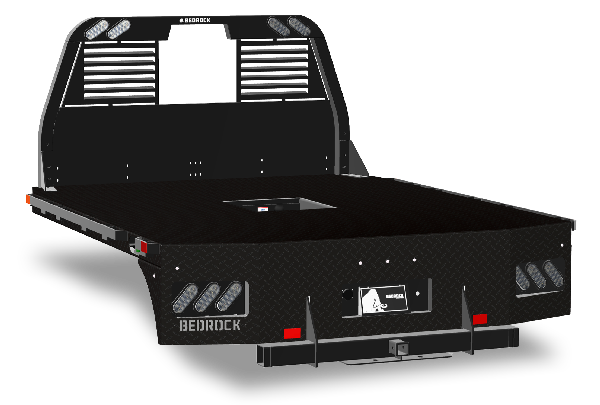
When you click through to learn more about the Diamond model, you’ll see a dedicated section on Gooseneck hitch flatbed compatibility that walks you through exact measurements and installation guidelines.
What Are the Key Measurements and Weight Limits I Must Check?
Answer: Critical dimensions include the hitch’s receiver depth, ball diameter, drawbar length, and the flatbed’s tie‑down anchor spacing; weight limits involve the deck’s rated capacity, the hitch’s pin load rating, and the combined GVWR of truck plus cargo.
Measurement Cheat Sheet
- Receiver Depth: 2‑in, 2.5‑in, or 3‑in (match to flatbed’s mounting bracket).
- Ball Size: 2‑in (most light‑duty), 2.5‑in (standard heavy‑duty), 3‑in (ultra‑heavy).
- Tie‑Down Spacing: Minimum 24‑in between anchors; preferably 30‑in for larger loads.
- Deck Load Rating: Should be at least 120 % of your max payload.
- Overall Length: Ensure drawbar does not exceed 12‑in rear over‑hang.
Real‑World Example
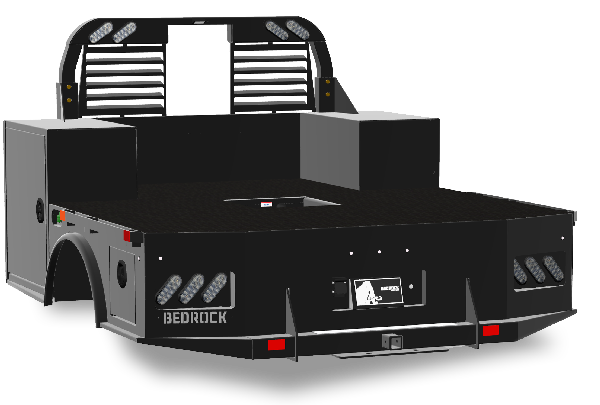
A 2024 Kenworth T680 equipped with a Class 5, 2.5‑inch gooseneck hitch has a GVWR of 54,000 lb and a net payload of 26,000 lb. Pairing it with Bedrock’s Granite Plus flatbed (rated 25,000 lb) provides a safe margin, while the deck’s 12 reinforced tie‑down points align perfectly with the hitch’s four‑pin pattern.
How Do I Install and Align a Gooseneck Hitch on a Flatbed?
Answer: Proper installation requires securing the hitch’s receiver plate to the flatbed’s bracket, tightening all bolts to the manufacturer’s torque specification, and confirming the ball sits flush with the deck surface; then test with a load to verify stability.
Installation Steps
- Position the flatbed on a level surface and lock the wheels.
- Mount the receiver plate using the pre‑drilled holes on the Bedrock deck; use grade‑8 bolts and torque to 120 Nm (per Bedrock spec).
- Insert the gooseneck ball and secure the locking pin; ensure the ball sits at no more than 1/8‑in below the deck surface.
- Check drawbar angle with a digital level; it should be between 0°‑5° relative to the deck plane.
- Run a test load (≈ 10 % of max rating) and observe for any movement or flex.
- Re‑torque after 24 hrs to account for settling.
Following FMCSA’s Size & Weight guidelines (see external citation) ensures compliance with federal regulations for over‑the‑road transport.
Common Mistakes When Matching Hitches and Flatbeds
Answer: The most frequent errors include ignoring the hitch’s pin‑hole spacing, under‑rating the flatbed’s deck strength, and allowing excessive drawbar over‑hang, all of which can cause premature wear or dangerous failures.
What Most People Get Wrong
| Mistake | Consequence | Fix |
|---|---|---|
| Using a 2‑in ball on a 2.5‑in rated deck | Over‑stress on ball, possible breakage | Verify ball‑to‑deck compatibility before purchase |
| Ignoring tie‑down point alignment | Uneven load distribution, side‑pull on chassis | Match tie‑down spacing to hitch’s pin layout |
| Exceeding drawbar over‑hang >12 in | Reduced leverage, steering pull | Adjust deck length or use a shorter drawbar |
| Not torque‑checking bolts after first use | Bolt fatigue, loosening | Re‑torque at 24‑hour mark and every 500 mi |
Pro tip: Keep a small notebook in the cab with your exact torque values, bolt sizes, and measurement tolerances. This habit eliminates guesswork on repeat installations.
How to Future‑Proof Your Setup for 2026‑And‑Beyond?
Answer: Choose a modular flatbed with interchangeable brackets, select a hitch with a higher‑class receiver than you currently need, and apply protective coatings to metal components to combat corrosion and wear.
Future‑Proofing Checklist
- Modular brackets: Ensure the flatbed offers bolt‑pattern options for both 2‑in and 2.5‑in receivers.
- Higher‑class hitch: Install a Class 5 receiver even if you currently use a Class 4 ball; it provides headroom for larger loads.
- Corrosion‑resistant finishes: Opt for anodized aluminum (Diamond) or powder‑coated steel (Granite).
- Load‑monitoring system: Add a digital load‑cell sensor to the drawbar to monitor real‑time stresses.
- Documentation: Keep a digital copy of the installation manual and torque specs on a USB drive for quick reference.
By planning ahead, you avoid costly retrofits when your business scales or when new regulations (e.g., the 2026 FMCSA “Dynamic Load Management” rule) come into effect.
Comparison Table: Bedrock vs Generic Flatbeds
Answer: Below is a side‑by‑side look at Bedrock’s top models compared with typical off‑brand aluminum and steel flatbeds on price, weight, and compatibility factors.
| Feature | Bedrock Diamond | Generic Aluminum (e.g., X‑Series) | Generic Steel (e.g., Heavy‑Load) |
|---|---|---|---|
| Deck Material | 6061‑T6 Aluminum (lightweight) | 6061‑T6 Aluminum (heavier, thinner) | Cold‑rolled Steel (heavier) |
| Max Load | 20,000 lb | 16,000 lb | 22,000 lb |
| Tie‑Down Points | 8 reinforced, pre‑drilled for gooseneck | 6 basic, not always aligned | 10 reinforced, but may lack gooseneck brackets |
| Compatibility Rating (ISO) | ISO 9001‑certified gooseneck fit | Not ISO‑certified | ISO 9001 (partial) |
| Price (2026) | $12,980 | $9,450 | $13,200 |
| Warranty | 5 yr limited | 2 yr limited | 3 yr limited |
The Bedrock Diamond delivers the best balance of strength, weight, and guaranteed gooseneck compatibility, making it the top recommendation for most professional fleets.
Decision Checklist: Is This Flatbed Right for My Gooseneck Hitch?
Answer: Use the following quick‑check list to confirm suitability before purchase; if any item is red, revisit the specifications or consider a different Bedrock model.
- Truck GVWR ≥ Deck Rating + Hitch Load – Yes/No
- Hitch Class matches receiver depth on deck – Yes/No
- Ball diameter (2‑in/2.5‑in/3‑in) fits deck’s built‑in socket – Yes/No
- Tie‑down spacing aligns with hatch pin holes – Yes/No
- Drawbar over‑hang ≤ 12 in – Yes/No
- Deck material meets environment (corrosion‑resistant) – Yes/No
- Warranty and support meet business needs – Yes/No
If you answer “Yes” to all, you’ve found a compatible flatbed. If not, adjust your hitch or choose a different Bedrock model.
Frequently Asked Questions (FAQ)
Answer: Below are the most common questions we receive about gooseneck hitch flatbed compatibility, answered concisely for quick reference.
- Can I use a 2‑inch gooseneck ball on a 2.5‑inch rated flatbed?
No. The ball must match the deck’s socket size; using a smaller ball can cause excessive wear and unsafe clearance. - Do Bedrock flatbeds come with pre‑drilled gooseneck brackets?
Yes. All Bedrock models include OEM‑rated brackets designed for standard Class 4‑5 gooseneck hitches. - What is the recommended torque for the hitch bolts?
120 Nm (approximately 88 lb‑ft) for Grade‑8 bolts, per Bedrock installation guidelines. - How often should I inspect the tie‑down points for fatigue?
Every 10,000 mi or after any heavy‑load event; look for cracks, deformation, or rust. - Is it legal to exceed the flatbed’s rated capacity if the truck’s GVWR is higher?
No. Federal regulations (see FMCSA Size & Weight) require staying within the lower of the two limits. - Can I upgrade a generic flatbed to Bedrock‑level compatibility?
Possibly. You can add Bedrock’s modular brackets, but it’s usually more cost‑effective to purchase a Bedrock deck. - What maintenance does a gooseneck hitch require?
*Lubricate the ball and pins quarterly, inspect for wear, and retorque bolts after the first 100 mi of use. - Does Bedrock offer custom deck lengths for unique drawbar requirements?
Yes. Contact Bedrock sales for a custom‑fabricated deck; many fleets order 8‑ft, 10‑ft, or 12‑ft lengths.
For detailed specifications and to explore the Diamond series’ gooseneck hitch flatbed compatibility features, visit Bedrock’s product page: Gooseneck hitch flatbed compatibility.
External References
- According to the Federal Motor Carrier Safety Administration Size & Weight regulations, decks must not exceed the lower of the vehicle’s GVWR or the deck’s rated capacity. https://www.fmcsa.dot.gov/regulations/size-weight
- The Society of Automotive Engineers (SAE) J1866 standard outlines testing procedures for gooseneck hitch assemblies. https://www.sae.org/standards/content/j1866_2023
Prepared by the Bedrock Truckbeds content team, updated for 2026.
Interested in learning more?
Visit our website to explore products, find dealers, and get in touch.
Visit Bedrock Truck Beds →