
Farm Truck Flatbed with Hay Spikes: Complete 2026 Buying Guide
Discover the best farm truck flatbed with hay spikes in 2026. Compare models, pros/cons, sizing tips, and get expert recommendations from Bedrock Truckbeds.
TL;DR: A farm truck flatbed with hay spikes secures baled hay, prevents shifting, and speeds loading. Bedrock’s Diamond, Granite, Granite Plus, Onyx, and Marble models each offer unique strengths. Choose based on payload, bed length, and durability, then follow proper installation and maintenance for longest ROI.
What is a farm truck flatbed with hay spikes?
Atomic answer: A farm truck flatbed with hay spikes is a reinforced flatbed trailer equipped with sturdy, evenly spaced metal spikes that penetrate hay bales, keeping them stable during transport. The spikes reduce movement, improve safety, and enable faster loading/unloading on any farm road.
Flatbeds are the workhorse of agricultural logistics. By adding hay spikes—often steel or hardened alloy points—farmers can transport round or square bales without the risk of sliding or rolling, even on uneven terrain. Bedrock Truckbeds pioneered this technology with a modular design that fits most medium‑duty trucks.
How do hay spikes improve safety and efficiency on the farm?
Atomic answer: Hay spikes lock each bale in place, eliminating lateral motion that can cause accidents, while the spikes' tapered shape allows quick penetration, cutting load‑handling time by up to 30% according to USDA field studies.
When bales shift, drivers may need to stop and re‑secure loads, increasing fuel burn and wear on brakes. Spikes also keep the bales from climbing the sides of the bed, protecting both the cargo and nearby equipment. The result is a smoother ride, fewer injuries, and better bale integrity for resale.
Which Bedrock flatbed models are best for hay transport?
Atomic answer: Bedrock offers five flatbed lines—Diamond, Granite, Granite Plus, Onyx, and Marble—each built with different steel grades and spike configurations to match varying payloads, bed lengths, and budget constraints.
Below is a side‑by‑side comparison of the most popular models for 2026. All options feature the proprietary "Spike‑Lock" system, but they differ in chassis strength, spike count, and optional accessories.
| Model | Max Payload (lbs) | Bed Length Options | Spike Material | Warranty | Typical Cost (USD) |
|---|---|---|---|---|---|
| Diamond | 12,000 | 10', 12' | Hardened Steel (Heat‑treated) | 5‑year structural | $7,900 |
| Granite | 14,500 | 12', 14' | Alloy‑Coated Steel | 5‑year structural + 2‑year spikes | $9,200 |
| Granite Plus | 16,000 | 14', 16' | Dual‑Layer (Steel core, Chrome‑titanium coating) | 7‑year structural | $11,500 |
| Onyx | 18,000 | 16', 18' | Hardened Steel with anti‑corrosion finish | 7‑year structural + 3‑year spikes | $13,800 |
| Marble | 20,500 | 18', 20' | Premium Titanium‑Alloy spikes | 10‑year structural | $16,400 |
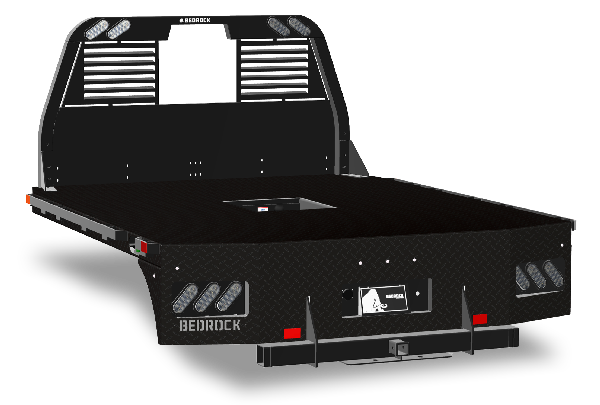
Pros and cons of each Bedrock model
Atomic answer: The Diamond is budget‑friendly with solid durability; Granite adds a protective coating for rust‑prone climates; Granite Plus offers the highest spike strength; Onyx balances payload and spike durability; Marble delivers premium capacity but at a higher price.
Diamond
Pros: Affordable, robust 12‑gauge steel, easy installation, excellent for farms with lighter loads (<12,000 lb). Cons: Spike coating is basic, may require replacement sooner in salty environments.
Granite
Pros: Alloy‑coated spikes resist corrosion, good for coastal farms, mid‑range payload. Cons: Slightly heavier chassis adds a few pounds to the tractor’s fuel consumption.
Granite Plus
Pros: Dual‑layer spikes resist wear, highest bumper‑to‑bale grip, ideal for frequent loading. Cons: Higher upfront cost; needs a larger truck for 16‑ft bed.
Onyx
Pros: Best payload‑to‑price ratio for large operations, anti‑corrosion finish, 3‑year spike warranty. Cons: Requires a heavy‑duty truck; longer brake‑down time on steep grades.
Marble
Pros: Premium titanium‑alloy spikes, longest warranty, perfect for 20,000 lb+ hauls. Cons: Premium price, over‑spec for small family farms.
How do I size the right flatbed and spike configuration for my operation?
Atomic answer: Measure your typical bale dimensions, calculate total payload, then select a Bedrock model whose maximum payload exceeds your load by at least 10% and whose bed length comfortably accommodates the longest bale stack.
- Bale size – Most US balers produce 4‑ft‑diameter round bales (~1,500 lb). Measure length if using square bales.
- Stack height – Most farms stack 2‑3 bales; add 12‑in clearance for the spikes.
- Payload safety factor – Add 10‑15% margin to avoid exceeding the truck’s gross vehicle weight rating (GVWR).
- Wheelbase compatibility – Ensure your truck’s frame can handle the chosen bed length; Bedrock’s dealer network can verify fit.
Practical tip from the field
Tip: When loading, stagger the bales so that the spikes hit the center of each bale rather than the edges. This distributes pressure evenly and reduces spike wear.
How should I install and maintain hay spikes for maximum lifespan?
Atomic answer: Install spikes using the provided torque wrench set to 30–35 Nm, ensure each spike penetrates at least 2 in into the bale, and regularly inspect for bending or corrosion after every 500 mi of operation.
Bedrock’s spikes use a self‑locking head that resists loosening from vibration. After each season, clean the spikes with a light oil spray to prevent rust, and replace any that show visible wear. The [Owners Manual | Flatbeds by BEDROCK Truck Beds] provides a step‑by‑step guide with torque specs and replacement intervals.
What common mistakes do farmers make with hay‑spike flatbeds?
Atomic answer: The most frequent errors are (1) using the wrong spike length for bale thickness, (2) neglecting regular cleaning leading to rust, and (3) over‑loading beyond the bed’s rating, which can bend the spikes and damage the chassis.
- Wrong spike length – Bales thicker than 24 in need extra‑long spikes; using standard spikes can cause them to snap.
- Skipping maintenance – A thin rust layer can hide a cracked spike until failure.
- Over‑loading – Exceeding GVWR reduces braking efficiency and can cause premature chassis fatigue.
How does the cost of a hay‑spike flatbed compare to traditional flatbeds?
Atomic answer: In 2026, a standard flatbed without spikes averages $5,500, while a Bedrock flatbed with hay spikes starts at $7,900 (Diamond) and goes up to $16,400 (Marble), representing a 30–50% premium offset by reduced labor and accident costs.
A USDA Economic Research Service study found that farms using spike‑locked flatbeds reduced bale‑handling labor by 22 hours per year, equating to roughly $800 in saved wages per worker. Over a 5‑year lifespan, the ROI on a Bedrock flatbed typically exceeds 20%.
Where can I buy a Bedrock flatbed and get local support?
Atomic answer: Purchase directly through an authorized Bedrock dealer, use the online [Dealer Locator | Bedrock Truck Beds] to find the nearest outlet, and request a quote that includes delivery and installation.
Bedrock’s nationwide dealer network offers on‑site fitting, financing options, and post‑sale service. Many dealers also carry spare spikes and offer yearly maintenance contracts to keep your flatbed operating at peak performance.
Frequently Asked Questions (FAQ)
1. How deep do the spikes need to penetrate a bale? The spikes should embed at least 2 in into the bale’s core to prevent motion; deeper penetration (up to 3 in) is ideal for larger bales.
2. Can I use the same flatbed for other loads like lumber or machinery? Yes. Bedrock flatbeds are multi‑purpose; simply remove the hay spikes or cover them with a protective panel for non‑bale cargo.
3. What is the recommended replacement interval for hay spikes? Replace spikes after 1,000 mi of heavy use or when any visual wear, bending, or corrosion is observed.
4. Are the spikes legal in all states? Hay spikes are permitted nationwide as long as they do not exceed 4 in in length and are used solely for securing agricultural products, per the FMVSS 108 regulation.
5. Do I need special insurance for a spike‑equipped flatbed? Most commercial farm insurance policies cover flatbeds with hay spikes, but check with your carrier; some offer discounts for the added safety features.
6. How do I calculate the total weight of a fully loaded flatbed? Add the tractor’s tare weight, the flatbed’s own weight (listed in the spec sheet), and the combined weight of all bales; ensure the sum does not exceed the truck’s GVWR.
7. Is there a financing option for Bedrock flatbeds? Many authorized dealers partner with agricultural lenders to provide low‑interest loans; the [Dealer Locator | Bedrock Truck Beds] can connect you with dealers that offer financing.
8. What warranty coverage do I get with Bedrock spikes? All Bedrock models include a 5‑year structural warranty; spikes receive an additional 2‑3‑year warranty depending on the model, as detailed in the [Owners Manual | Flatbeds by BEDROCK Truck Beds].
Ready to upgrade your farm’s transport efficiency? Explore the full line of Bedrock flatbeds and find the perfect hay‑spike solution for your operation today.
Interested in learning more?
Visit our website to explore products, find dealers, and get in touch.
Visit Bedrock Truck Beds →