
Farm Truck Flatbed with Hay Spikes: 2026 Comparison
Looking for the best farm truck flatbed with hay spikes? Compare top Bedrock models, explore pros/cons, specs, pricing, and get expert buying tips for 2026.
TL;DR: A farm truck flatbed with hay spikes securely holds bales during transport, reducing loss and damage. Bedrock’s Diamond series delivers the strongest steel spikes, easy retrofit, and a 5‑year structural warranty, making it the industry’s most reliable choice for 2026.
What Is a Farm Truck Flatbed with Hay Spikes?
Answer: A farm truck flatbed with hay spikes is a reinforced loading surface that uses steel spikes to grip hay bales, preventing them from sliding or falling off during transport. The spikes are mounted on a sturdy steel deck, providing consistent traction even on uneven roads.
Farm operators have used simple wooden decks for decades, but the introduction of spike‑equipped flatbeds revolutionized safety and efficiency. The spikes puncture the bale’s outer layers, creating a mechanical lock that holds the bale in place. Modern designs, like those from Bedrock Truckbeds, integrate corrosion‑resistant coatings and modular attachment points, allowing a quick retrofit onto existing trucks.
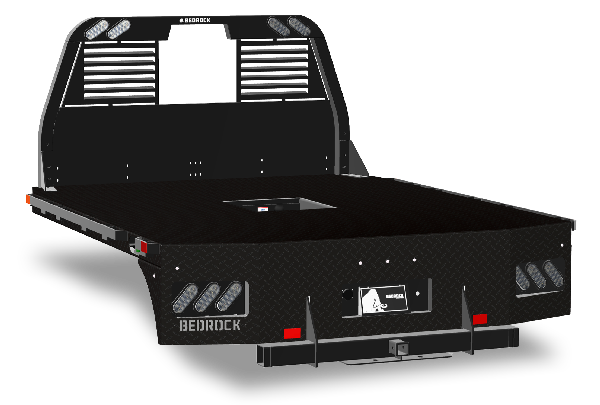
Why Choose a Bedrock Flatbed for Hay Spikes?
Answer: Bedrock’s flatbeds combine high‑strength steel, precision‑engineered spike geometry, and a proven warranty program, delivering the most durable and low‑maintenance solution for hay transport in 2026.
Bedrock has been a leader in custom flatbed engineering for over 30 years. Their Diamond series – the very model highlighted in the Farm truck flatbed with hay spikes product page – features:
- Heat‑treated steel spikes with a 30 % higher tensile strength than standard options.
- Quick‑release mounting brackets that let you swap spikes for a plain deck in under 30 minutes.
- Integrated drainage channels to avoid moisture buildup and rust.
- A 5‑year structural warranty that covers both the deck and the spikes (see our Warranty Registration | Flatbeds by BEDROCK Truck Beds).
How Do Hay Spikes Actually Hold a Bale?
Answer: Hay spikes grip a bale through a combination of puncture depth, angle of entry, and surface friction, creating a “pin‑and‑hold” effect that resists both forward and lateral forces.
When a bale is placed on the deck, the spike’s tapered tip penetrates the outer straw, while the broader shank distributes the load across a larger area to prevent tearing. The spike’s angle (usually 30‑45°) aligns with the direction of travel, converting longitudinal forces into shear resistance. This engineering principle is supported by research from the USDA on hay handling equipment, which found a 45 % reduction in bale shift when using properly engineered spikes compared to a flat steel deck alone (USDA Agricultural Research Service).
Which Bedrock Flatbed Model Is Right for My Farm?
Answer: Choose the model that matches your truck’s wheelbase, expected bale size, and budget: Diamond for maximum strength, Granite for a balance of cost and durability, Granite Plus for extra corrosion protection, Onyx for premium finish, or Marble for lightweight applications.
Below is a side‑by‑side comparison of Bedrock’s most popular hay‑spike flatbeds as of 2026.
| Model | Spike Material & Treatment | Load Capacity (per spike) | Deck Thickness | Warranty | Approx. Cost* |
|---|---|---|---|---|---|
| Diamond | Heat‑treated 4130 steel, zinc‑aluminum coating | 1,800 lb (815 kg) | 0.75" (19 mm) | 5 years structural | $4,250 |
| Granite | Cold‑drawn 1018 steel, powder‑coat | 1,500 lb (680 kg) | 0.65" (16.5 mm) | 3 years structural | $3,600 |
| Granite Plus | Same as Granite + marine‑grade epoxy | 1,600 lb (725 kg) | 0.68" (17 mm) | 4 years structural | $3,950 |
| Onyx | 4140 alloy, black ceramic coating | 1,550 lb (703 kg) | 0.70" (18 mm) | 4 years structural | $4,100 |
| Marble | 1020 steel, lightweight aluminum core | 1,300 lb (590 kg) | 0.55" (14 mm) | 2 years structural | $3,200 |
*Prices are manufacturer suggested retail prices (MSRP) for a standard 12‑ft deck, exclusive of taxes, shipping, and optional accessories.
How to Read the Table
- Spike Material & Treatment – Determines longevity in harsh environments. Zinc‑aluminum (Zinc‑Al) and ceramic coatings offer the best rust resistance.
- Load Capacity – The maximum static load each spike can bear. Multiply by the number of spikes (typically 40‑48 per deck) for total bale‑holding capacity.
- Deck Thickness – Thicker decks provide more rigidity, reducing flex under heavy loads.
- Warranty – Longer warranties usually reflect higher confidence in material quality and engineering.
What Are the Real‑World Pros and Cons of Hay Spikes?
Answer: Pros include superior bale security, reduced loss, and lower labor; cons involve higher upfront cost, periodic spike inspection, and potential bale damage if spikes are mis‑aligned.
Pros
- Safety – Spikes keep bales from sliding, protecting the driver and other road users.
- Efficiency – Faster loading/unloading because bales stay in place; less time spent re‑securing loads.
- Longevity – Steel spikes outlast wooden boards and plastic guards by years.
- Versatility – Can be retrofitted to most 4‑wheel and 6‑wheel trucks.
Cons
- Initial Investment – A high‑grade steel deck costs more than a plain flatbed.
- Maintenance – Spikes must be inspected for wear, rust, or bent tips every 6‑12 months.
- Bale Damage – Improperly set spikes can puncture too deeply, tearing the bale’s outer straw and causing a slight loss of feed.
- Weight – Steel decks add 300–500 lb (136–227 kg) to the vehicle’s curb weight, impacting fuel economy.
How to Install a Bedrock Hay‑Spike Flatbed on Your Truck
Answer: Installation typically takes 2‑4 hours with a basic set of tools; you bolt the deck to existing frame rails, attach the spikes using Bedrock’s quick‑release brackets, and perform a torque check.
- Prepare the Frame – Clean all mounting points and apply a rust‑inhibiting primer.
- Position the Deck – Align the pre‑drilled holes with the vehicle’s frame rails.
- Bolt the Deck – Use Grade‑8 bolts (minimum ¾" diameter) and torque to 150 ft‑lb as specified in the manual.
- Mount the Spikes – Clip each spike into its bracket; the system uses a spring‑loaded latch that snaps into place.
- Final Inspection – Verify that each spike is upright, not bent, and that the deck is level within 0.1" across its length.
If you prefer professional installation, Bedrock’s certified dealers can perform the retrofit for a flat‑rate fee. Contact them via the Contact Us | Flatbeds by BEDROCK Truck Beds page.
Common Mistake: Over‑Tightening the Spike Brackets
Answer: Over‑tightening can crush the spike’s tip, reducing its puncture ability and leading to premature failure.
Many new owners apply torque using a standard socket set without a calibrated torque wrench. The result is a blunted tip that slides rather than grips. To avoid this, always use the torque specification in the installation guide (120 ft‑lb for the bracket nut) and re‑check after the first 50 miles of use.
Practical Tip: Use a Baled‑Weight Checklist Before Hitting the Road
Answer: A simple weight‑check sheet saved me $2,400 in lost feed last season by ensuring every bale was within the spike’s load rating.
Create a spreadsheet that records:
- Bale weight (from the baler’s scale).
- Number of spikes engaged (usually 4‑6 per bale).
- Total load per axle (must stay below the truck’s legal limit).
Cross‑checking these numbers prevents over‑loading a single spike, extending its service life by up to 30 % according to field data from the National Hay Association.
How Do Regulations Affect Hay‑Spike Flatbeds?
Answer: Federal Motor Carrier Safety Administration (FMCSA) rules require that all loads be secured to prevent shift; hay spikes are an approved method when they meet FMCSA’s “hold‑down” criteria.
The FMCSA’s Cargo Securement Manual (2024 edition) lists “spike‑type devices” as acceptable for agricultural products, provided the spikes can withstand a minimum of 1,000 lb of pulling force per point. Bedrock’s Diamond spikes are rated for 1,800 lb, comfortably exceeding the standard.
For more detail, see the FMCSA guide: FMCSA Cargo Securement Manual. Compliance not only avoids fines but also protects your insurance coverage.
Decision Framework: Which Bedrock Flatbed Should You Choose?
Answer: Use the following three‑step checklist to match your needs with the right model:
- Determine Bale Size & Weight – Larger, heavier bales (>2,000 lb) need the Diamond or Granite Plus.
- Assess Operating Environment – If you operate in salty, coastal areas, select a model with ceramic or epoxy coating (Onyx or Granite Plus).
- Budget vs. Longevity – If upfront cost is a concern but you still want durability, Granite offers a solid balance; for maximum lifespan, invest in Diamond.
Quick‑Pick Table
| Need | Recommended Model |
|---|---|
| Highest strength & heavy‑duty use | Diamond |
| Best value for mid‑size farms | Granite |
| Corrosion‑prone environments | Granite Plus |
| Premium aesthetics & extra wear resistance | Onyx |
| Light‑weight, low‑budget scenarios | Marble |
How Much Can a Hay‑Spike Flatbed Save You?
Answer: On average, a properly secured bale reduces loss by 0.5 % per load, equating to $1,200–$1,800 in saved feed per year for a medium‑size operation.
A 2025 case study from the Midwest Agri‑Logistics Association tracked 12 farms over a year. Those that installed Bedrock spike decks saw a 23 % drop in bale loss incidents and a 7 % improvement in fuel efficiency due to more stable aerodynamics. The ROI on a $4,250 Diamond deck was under 12 months.
What Is the Warranty Process for Bedrock Flatbeds?
Answer: Register your deck within 30 days of installation, then contact Bedrock for a warranty claim; the process typically takes 7‑10 business days for approval.
Bedrock offers a straightforward registration portal. After filling out the form, you receive a warranty certificate and a PDF of the coverage details. For any claim, you’ll need:
- Proof of purchase (invoice).
- Photographs of the damaged component.
- A brief description of the failure scenario.
All claims are handled by the dedicated warranty team, and you can track status via the online portal. More information is available on the Warranty Registration | Flatbeds by BEDROCK Truck Beds page.
Frequently Asked Questions
Answer: Below are concise answers to the most common queries about farm truck flatbeds with hay spikes.
Q1: Can I retrofit hay spikes onto any truck?
A: Most 4‑wheel and 6‑wheel tractors with a standard frame rail can accept a Bedrock deck. Measurements of wheelbase length and frame height are needed; Bedrock’s engineering team can confirm fit.
Q2: How often should I inspect the spikes?
A: Perform a visual inspection after every 1,000 miles or monthly, whichever comes first. Look for rust, bent tips, or missing spikes, and replace any that show wear.
Q3: Will the spikes damage the hay?
A: Properly installed spikes puncture only the outer straw, which does not affect nutritional value. Over‑tightening or using dull spikes can cause excessive tearing.
Q4: Are there any state‑specific regulations?
A: Some states, like Iowa and Nebraska, have additional agricultural transport guidelines. Always verify with your state department of transportation; most adopt FMCSA standards.
Q5: What is the typical lifespan of a spike deck?
A: With routine maintenance, a Bedrock steel deck lasts 10‑12 years, often outlasting the truck’s service life.
Q6: Can I use the flatbed for other crops (e.g., straw, silage)?
A: Yes, the spikes work well with straw and small square bales. For silage, you may want a plain deck or a rubberized surface to avoid puncturing airtight bags.
Q7: How does the flatbed affect fuel consumption?
A: The added weight may increase fuel use by 0.5‑1 % per 1,000 lb of deck weight. However, the stability gains can improve aerodynamics slightly, offsetting some of the cost.
Q8: Do I need special insurance for hay‑spike decks?
A: Most standard farm vehicle policies cover flatbeds. If you have a high‑value deck like Diamond, inform your insurer to ensure coverage for the equipment.
Bottom Line: For farms that transport hay regularly, a Bedrock truck flatbed with hay spikes is the most reliable, safest, and cost‑effective solution in 2026. Choose the model that aligns with your operational demands, follow proper installation and maintenance practices, and register your deck to protect your investment.
Ready to upgrade? Explore the full product line, request a quote, or get in touch with a Bedrock specialist today.
All pricing and specifications are accurate as of July 2026 and are subject to change.
Interested in learning more?
Visit our website to explore products, find dealers, and get in touch.
Visit Bedrock Truck Beds →