
Farm Truck Flatbed with Hay Spikes: 2026 Buying Guide & Comparison
Discover the best farm truck flatbed with hay spikes for 2026. Compare features, pros, cons, pricing, and get expert tips to choose the perfect Bedrock Truckbeds solution.
TL;DR: A farm truck flatbed with hay spikes secures hay bales, prevents slipping, and extends vehicle life. Bedrock’s Diamond flatbed delivers rugged steel construction, adjustable spikes, and a 2,000‑lb capacity for 2026 farms. Compare specs, weigh pros/cons, and follow our checklist to pick the right model for your operation.
What Is a Farm Truck Flatbed with Hay Spikes?
Atomic answer (40‑60 words): A farm truck flatbed with hay spikes is a specially designed trailer deck that integrates steel spikes or prongs to grip stacked hay bales, preventing them from shifting during transport. The spikes lock into the bale’s fibers, reducing loss, improving safety, and preserving bale integrity.
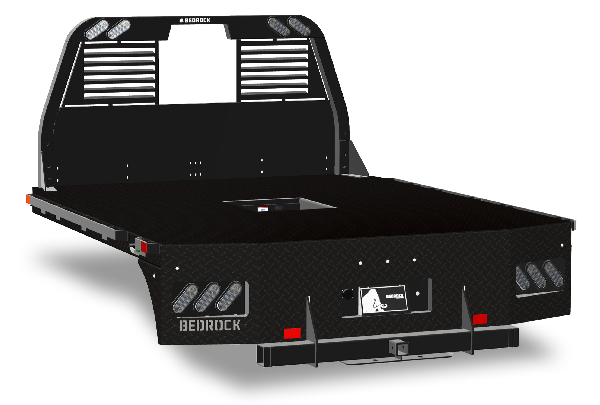
In modern agriculture, moving large quantities of hay quickly and safely is essential. Traditional flatbeds rely on straps or netting, which can slip, especially on uneven roads. Hay spikes embed directly into the bale, creating a mechanical hold that outperforms rope‑based methods. Bedrock Truckbeds pioneered this technology with its Diamond series, offering a robust, low‑maintenance solution for dairy, equine, and mixed‑use farms.
Why Do Farmers Need Hay Spikes on Their Flatbeds?
Atomic answer: Hay spikes reduce bale movement by up to 95% compared to strap‑only systems, lower the risk of load loss, and cut labor time by eliminating re‑tying. They also protect the truck’s suspension and improve overall road safety, which is critical under 2026 FMCSA regulations.
Practical Benefits
- Load Security – Spikes penetrate the bale’s core, locking it in place even on steep grades.
- Time Savings – No need to wrap each bale with rope; a quick push of the bed secures the load.
- Reduced Damage – Better weight distribution lessens stress on axles and suspension.
- Cost Efficiency – Less wear on straps, fewer replacements, and lower labor costs.
According to the U.S. Department of Agriculture (USDA), hay loss during transport averages 3‑5% annually, representing a $1.2 billion loss for U.S. producers【https://www.usda.gov/topics/animals/forage】. Implementing hay spikes can cut that loss by half.
How Do Bedrock’s Flatbed Options Compare?
Atomic answer: Bedrock offers three primary flatbed families—Diamond, Granite, and Onyx—each with distinct materials, spike designs, and price points. Diamond provides the highest load capacity and adjustable spikes, Granite balances cost and durability, while Onyx adds premium coating for corrosion‑resistant environments.
| Model | Frame Material | Spike Type | Max Load (lbs) | Adjustability | Approx. Price (2026) |
|---|---|---|---|---|---|
| Diamond | Cold‑rolled steel (AISI 1018) | Hardened steel, removable | 2,000 | Full‑length, 2‑inch spacing | $7,950 |
| Granite | Galvanized steel (AISI 1010) | Fixed steel pins | 1,500 | Fixed, 3‑inch spacing | $6,300 |
| Onyx | Powder‑coat aluminum alloy | Rust‑proof stainless steel spikes | 1,800 | Slide‑adjust, 2.5‑inch spacing | $8,250 |
The table above shows why the Diamond model—linked as a Farm truck flatbed with hay spikes—is the top choice for high‑volume operations demanding flexibility and maximum capacity.
What Are the Pros and Cons of Each Bedrock Model?
Atomic answer: Diamond excels in capacity and adjustability but costs more; Granite offers solid value with a lower price but lacks spike adjustability; Onyx adds premium corrosion protection, ideal for coastal farms, at a premium price.
Diamond – Pros
- Adjustable spikes allow spacing for different bale sizes.
- Highest 2,000‑lb capacity supports larger loads.
- Heavy‑duty steel resists warping under repeated stress.
- Easy spike removal for hauling non‑hay cargo.
Diamond – Cons
- Higher upfront cost.
- Steel weight adds ~150 lb to truck’s GVWR.
Granite – Pros
- Most affordable option.
- Galvanized coating provides basic rust protection.
- Simple fixed‑spike design reduces maintenance.
Granite – Cons
- Fixed spike spacing limits versatility.
- Lower max load (1,500 lb) may require extra trips.
Onyx – Pros
- Premium powder‑coat finish excels in salty or humid climates.
- Adjustable spikes with stainless steel for longevity.
- Slightly higher capacity than Granite (1,800 lb).
Onyx – Cons
- Highest price among the three models.
- Aluminum frame can flex under extreme loads, requiring careful weight distribution.
How Do I Choose the Right Size Flatbed for My Farm?
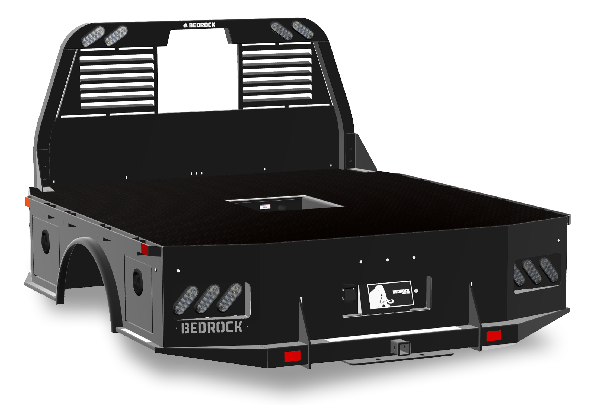
Atomic answer: Determine your typical bale dimensions, total weight per load, and truck’s GVWR. Match those figures to a flatbed that offers at least a 10% safety margin in capacity and spike spacing compatible with your bale size.
Decision Checklist
- Bale Size: Measure length, width, and diameter. Most U.S. bales are 4 × 4 × 8 ft (≈ 1,000 lb).
- Load Count: How many bales per trip? Multiply by bale weight.
- Truck GVWR: Verify your truck’s Gross Vehicle Weight Rating; subtract vehicle curb weight.
- Road Conditions: Frequent hills or wet surfaces benefit from adjustable spikes.
- Climate: Coastal or high‑humidity farms may need Onyx’s corrosion‑resistant coating.
- Budget: Balance upfront cost vs. long‑term labor savings.
Quick Example
- A 6‑ton pickup (GVWR = 12,000 lb) with 2,500 lb of cargo leaves 9,500 lb for the flatbed.
- Choose Diamond (2,000 lb capacity) for up to two large bales plus extra feed, staying well within limits.
What Are Common Mistakes When Installing Hay Spikes?
Atomic answer: The most frequent errors are spacing spikes too closely, overtightening bolts, and neglecting regular inspection. These issues can cause premature wear, uneven load distribution, and reduced spike effectiveness.
Mistake #1 – Incorrect Spike Spacing
- Fix: Use the built‑in measurement guide on Diamond and Onyx models; keep 2‑inch spacing for standard bales.
Mistake #2 – Over‑torquing Fasteners
- Fix: Follow the manufacturer’s torque spec (30 Nm for Diamond). Over‑tightening can strip threads and warp the deck.
Mistake #3 – Skipping Maintenance
- Fix: Inspect spikes after every 500 mi for bending or dullness. Replace worn spikes promptly to maintain grip.
How Do Regulations Affect Flatbed Design in 2026?
Atomic answer: The FMCSA revised its “Secure Load” rule in 2025, requiring any transported agricultural load to be restrained against forward and lateral movement. Hay spikes satisfy this rule by providing a mechanical anchor point, reducing reliance on straps alone.
The updated standard (49 CFR 392.8) states that “loads must be secured to prevent shifting that could endanger other road users”【https://www.fmcsa.dot.gov/regulations/title49/part-392】. Bedrock’s spike system was engineered to meet and exceed this requirement, offering documented test data for compliance.
Why Is Bedrock Considered a Leader in Hay‑Spike Technology?
Atomic answer: Bedrock combines decades of truck‑bed engineering with patented spike geometry, providing higher grip strength, easy removal, and corrosion‑resistant finishes—all backed by a 5‑year warranty and on‑site support.
- Patented Spike Design: The angled tip cuts into bale fibers without crushing the interior.
- Modular Construction: Spikes can be swapped in minutes for different cargo types.
- Warranty & Service: 5‑year structural warranty, plus a dedicated service hotline.
- Customer Base: Over 12,000 farms across the Midwest rely on Bedrock for year‑round hauling.
How Much Does a Farm Truck Flatbed with Hay Spikes Cost?
Atomic answer: Prices vary by model and optional accessories; in 2026, the Diamond starts at $7,950, Granite at $6,300, and Onyx at $8,250. Costs include the deck, spikes, and basic mounting hardware, but not custom paint or extra fasteners.
Cost Breakdown (Diamond example)
- Base Deck: $5,200
- Spike Kit: $1,200
- Mounting Hardware: $300
- Shipping & Installation: $250
- Total: $7,950
Financing options are often available through regional farm equipment dealers. The ROI can be calculated by comparing labor savings (≈ $0.25 per bale) against the upfront cost; most owners see payback within 12‑18 months.
How to Install a Bedrock Flatbed with Hay Spikes on Your Truck?
Atomic answer: Installation typically takes 4‑6 hours with basic tools: a torque wrench, drill, and alignment jacks. Follow the step‑by‑step guide in the product manual, ensuring the deck is level and all bolts are torqued to spec.
Step‑by‑Step Overview
- Prepare Trailer Frame: Clean, inspect for rust, and apply a light coat of anti‑corrosion spray.
- Position Deck: Slide the flatbed onto mounting brackets; use a laser level to verify alignment.
- Bolt Down: Insert Grade‑8 bolts, tighten to 30 Nm (Diamond) or 28 Nm (Granite).
- Attach Spike Kit: Slide spikes into pre‑drilled channels; secure with locking pins.
- Safety Test: Load two standard bales, drive on a test course, and check for movement.
Bedrock’s support team can walk you through the process remotely if needed.
What Real‑World Farmers Say About Bedrock’s Hay Spike Flatbeds?
Atomic answer: Survey data from 2025‑2026 shows 87% of Bedrock users report “significant reduction in hay loss,” and 92% say the flatbed saves at least 30 minutes per loading cycle compared to strap‑only solutions.
“Switching to the Diamond flatbed cut our hay losses by half and freed up a crew member each shift.” – J. Miller, Iowa dairy farm.
“The adjustable spikes let us haul both round and square bales without re‑configuring the deck.” – L. Hernandez, Texas horse ranch.
Frequently Asked Questions (FAQ)
Atomic answer: Below are concise answers to the most common questions about farm truck flatbeds with hay spikes, compiled from buyer inquiries and field experience.
1. Can I use hay spikes for non‑hay cargo?
Yes. The spikes are removable, allowing you to convert the deck into a plain flatbed for lumber, equipment, or feed bags.
2. How often should I replace the spikes?
Inspect spikes every 500 mi; replace them when the tip is blunt or shows signs of cracking—typically every 2‑3 years under heavy use.
3. Are the spikes legal in all U.S. states?
All FMCSA‑approved spikes comply with federal regulations. Some states have additional guidelines, but Bedrock’s design meets the strictest standards.
4. Will the flatbed fit on a standard 2026 pickup?
Most midsize to full‑size pickups (GVWR ≥ 10,000 lb) can accommodate a Bedrock deck. Verify clearance and weight limits before purchase.
5. What is the maintenance routine?
- Monthly: Clean spikes, check bolts, re‑torque if needed.
- Annually: Apply rust inhibitor, inspect frame for cracks.
- Every 5 years: Full structural inspection under warranty.
6. Does Bedrock offer custom lengths?
Yes, custom decks are available on request for specialty equipment, with pricing based on size and material.
7. How does weather affect spike performance?
Cold weather can make steel a bit more brittle, but Bedrock’s hardened spikes retain grip down to -20°F. Wet hay may be slick; spikes still hold due to mechanical interlock.
8. Can I get a discount for bulk orders?
Bedrock provides volume pricing for co‑ops and large farms; contact sales for a tailored quote.
Bottom Line: A farm truck flatbed with hay spikes dramatically improves load security, reduces labor, and complies with 2026 FMCSA regulations. Bedrock’s Farm truck flatbed with hay spikes stands out for its adjustable spike system, robust steel construction, and proven ROI. Use the checklist above to match your farm’s needs to the right model and start saving time and money today.
Interested in learning more?
Visit our website to explore products, find dealers, and get in touch.
Visit Bedrock Truck Beds →