
Commercial Truck Flatbed Accessories: 2026 Guide
Discover the best commercial truck flatbed accessories in 2026. Compare features, costs, and top picks to maximize your work truck's productivity and payload.
Commercial Truck Flatbed Accessories: The Complete 2026 Buyer's Guide
TL;DR: The best commercial truck flatbed accessories—toolboxes, headache racks, tie-down systems, and lighting kits—boost payload efficiency, safety, and jobsite versatility. Prioritize steel construction, payload ratings, and compatibility with your flatbed model. Budget $200–$3,000+ depending on the accessory type and configuration.
If your work truck is the backbone of your business, your flatbed accessories are the muscles. The right setup transforms a bare flatbed into a purpose-built hauling machine—organized, safe, and built to handle whatever the job throws at it. But with hundreds of products on the market, choosing the right combination of accessories can feel overwhelming.
This guide cuts through the noise. We'll break down every major category of commercial truck flatbed accessories, compare top options side by side, flag common buying mistakes, and give you a clear framework for building out your rig in 2026.
What Are the Most Essential Commercial Truck Flatbed Accessories?
The most essential commercial truck flatbed accessories fall into five categories: cargo management (tie-downs, stake pockets, and cargo nets), storage (toolboxes and underbody boxes), cab protection (headache racks), lighting (LED work and marker lights), and load support (ramps and winches). Together, these systems cover safety, organization, and operational efficiency on every job.
Each category serves a specific operational need. Below, we'll dig into each one with real-world recommendations, cost estimates, and feature comparisons.
How Do You Choose the Right Flatbed Toolbox?
Choosing the right flatbed toolbox comes down to three variables: mounting style (side-mount, underbody, or chest), material (aluminum vs. steel), and weather sealing. For commercial use, look for a minimum 14-gauge steel or 0.063-inch aluminum construction, weather-resistant piano-hinges, and stainless-steel locking mechanisms that won't corrode on job sites.
Side-Mount Toolboxes
Side-mount boxes bolt directly to the side rails of your flatbed and are ideal for tradespeople who need frequent access to hand tools, small power tools, or hardware. They keep gear off the deck and accessible without climbing into the bed.
Underbody Toolboxes
Mounted beneath the flatbed frame, underbody boxes maximize deck space while protecting heavy equipment like chains, binders, and hydraulic tools. They're a favorite for towing contractors and oilfield operators.
Chest-Style Toolboxes
Chest boxes sit on the deck near the headache rack. They offer the most storage volume but sacrifice some payload space. Best for plumbers, electricians, and contractors who carry a high volume of equipment daily.
Cost Range: $250–$900 for aluminum; $300–$1,200 for heavy-duty steel.
Headache Racks: Do You Really Need One?
Yes—for most commercial applications, a headache rack is non-negotiable. A headache rack protects the cab from shifting cargo during hard stops or collisions, creates a mounting surface for lights and antennas, and often serves as the anchor point for ladder racks. According to the Federal Motor Carrier Safety Administration (FMCSA), cargo must be prevented from moving forward into the cab—making a structural barrier a practical compliance measure.
Headache Rack Feature Comparison
| Feature | Economy Steel Rack | Mid-Range Pipe Rack | Premium Fabricated Rack |
|---|---|---|---|
| Material | 11-gauge steel | 2" square tube steel | 3/16" plate + tube steel |
| Weight Capacity | 500 lbs | 800 lbs | 1,200+ lbs |
| Ladder Rack Compatible | Sometimes | Yes | Yes |
| LED Light Mounting | No | Optional | Built-in |
| Price Range | $200–$450 | $450–$900 | $900–$2,500 |
| Powder Coat Finish | Basic | Yes | Yes |
| Cab Clearance Adjustable | No | Limited | Yes |
For fleet operators and owner-operators running daily routes, the mid-range pipe rack hits the sweet spot of durability and cost. Premium fabricated racks make sense for specialty haulers—equipment dealers, pipeline contractors, or anyone carrying tall or irregular loads regularly.
What Tie-Down Systems Work Best on a Commercial Flatbed?
The best tie-down systems for commercial flatbeds combine E-track rails, recessed D-rings, and cam buckle or ratchet straps rated to at least 3,333 lbs working load limit (WLL) per the cargo securement standards outlined by the FMCSA. E-track systems offer the most versatility because anchor points slide and lock anywhere along the rail, adapting to different load shapes and sizes.
Tie-Down System Options
- Stake Pockets: Factory-standard on most flatbeds. Compatible with bolt-on D-rings and chain anchors. Low cost, moderate versatility.
- E-Track Rails: Weld-on or bolt-on aluminum or steel tracks running the length of the bed. Accept standard E-fittings for straps, load bars, and chain anchors. Best for mixed loads.
- Recessed D-Rings: Flush-mounted rings that don't catch on cargo. Ideal for flatbeds carrying equipment with smooth undersides.
- Bulkhead Rails: Vertical rails at the front of the bed for securing tall, unstable loads like pipe bundles or lumber.
Pro Tip: Install E-track in pairs along both sides of the bed at 16-inch spacing. This matches the standard spacing for furniture dollies, equipment skids, and pallet jack forks—giving you maximum flexibility without custom rigging on every load.
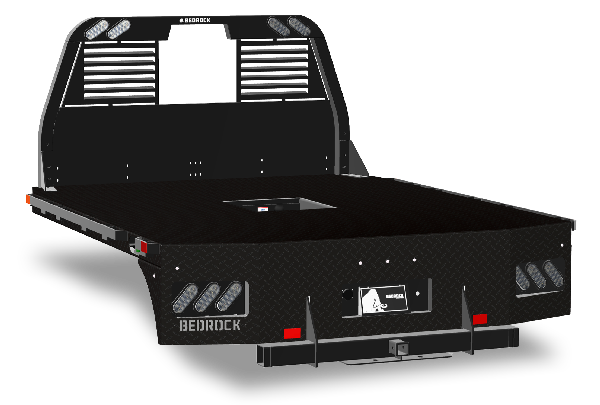
The Diamond flatbed platform from Bedrock features integrated stake pockets and reinforced side rails designed to work seamlessly with E-track and D-ring tie-down systems.
For a complete look at how Bedrock's flatbed models are engineered for accessory compatibility, browse the full lineup of Commercial truck flatbed accessories starting with the Diamond series.
How Do LED Work Lights and Marker Lights Improve Safety?
LED work lights and marker lights improve commercial flatbed safety by increasing visibility in low-light jobsite conditions, satisfying DOT lighting requirements for wide loads, and reducing eye fatigue for operators during nighttime loading and unloading. Modern LED fixtures draw 60–80% less power than halogen equivalents and last 50,000+ hours under commercial use.
LED Lighting Categories for Flatbeds
Work Lights: High-lumen pods or light bars mounted to the headache rack or underside of the bed. Illuminate the cargo area and immediate surroundings during night operations. Look for IP67 or IP68 waterproof ratings for all-weather durability.
Marker and Clearance Lights: Required by the FMCSA for commercial vehicles over 80 inches wide. Amber front, red rear. LED versions are more vibration-resistant than incandescent, a critical advantage on rough jobsite roads.
Strobe and Warning Lights: For utility, construction, and emergency service vehicles. Magnetic-mount or hard-wired options available depending on your fleet's needs.
Cost Range: $40–$200 per work light pod; $80–$600 for full light bar setups; $10–$40 per marker light.
What Ramp and Winch Options Are Available for Flatbeds?
Flatbed ramps and winches are essential for operators loading ATVs, skid steers, tractors, and heavy equipment without a loading dock. Slide-in ramps offer portability, while bolt-on flip-up ramps save time on high-frequency loading operations. Electric winches rated at 8,000–12,000 lbs are standard for commercial flatbed use.
Ramp Comparison Table
| Ramp Type | Weight Capacity | Weight (per pair) | Storage | Best For | Price Range |
|---|---|---|---|---|---|
| Slide-In Aluminum | 3,000–5,000 lbs | 28–45 lbs | Under bed or side box | Occasional equipment loading | $180–$400 |
| Bolt-On Steel Flip Ramps | 5,000–10,000 lbs | 60–100 lbs | Folds to bed edge | Daily equipment haulers | $500–$1,200 |
| Arched Bi-Fold Ramps | 4,000–6,000 lbs | 35–55 lbs | Folds flat | ATVs, mowers, compact skids | $300–$700 |
| Heavy-Duty Dovetail Ramps | 10,000–20,000 lbs | 150–250 lbs | Permanent mount | Heavy equipment dealers | $1,200–$3,000 |
Winch Selection Tip: Size your winch at 1.5x your maximum expected load weight. For a 6,000 lb payload, a 9,000 lb winch provides the safety margin needed for incline loading and stuck equipment recovery.
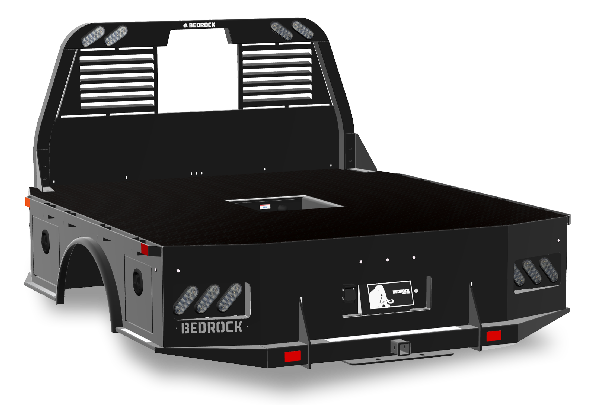
The Granite flatbed platform offers a low deck height and rear dovetail design that pairs naturally with slide-in and bolt-on ramp systems for efficient equipment loading.
What Do Most Buyers Get Wrong About Flatbed Accessories?
The most common mistake commercial buyers make is purchasing accessories before confirming compatibility with their specific flatbed model, frame rail spacing, and payload capacity. A headache rack or toolbox engineered for one platform may not bolt cleanly onto another without custom fabrication—adding cost and downtime.
The 4-Step Accessory Compatibility Checklist
Before ordering any accessory, run through this quick checklist:
- Confirm your flatbed's frame rail width and stake pocket dimensions. Most flatbeds use either 2"×4" or 2"×6" stake pockets, but this varies by manufacturer.
- Check your truck's GVWR and remaining payload capacity. Adding 500 lbs of accessories reduces your available cargo weight accordingly.
- Verify bolt patterns and mounting hole locations match the accessory's spec sheet, not just the generic truck year/make/model designation.
- Ask about powder coat or finish compatibility if you're matching existing equipment to prevent galvanic corrosion between aluminum accessories and steel flatbeds.
Bedrock Truckbeds builds their platforms with accessory integration in mind from the ground up. You can find answers to common compatibility questions at the Frequently Asked Questions | Flatbeds by BEDROCK Truck Beds page before you buy.
How Much Should You Budget for a Complete Flatbed Accessory Package?
A complete commercial flatbed accessory package—including a headache rack, side toolboxes, tie-down system, LED lighting, and a ramp set—typically costs between $2,500 and $8,500 installed in 2026, depending on material quality and brand tier. Fleet buyers purchasing multiple units can often negotiate 10–20% volume discounts from accessory suppliers.
Sample Build-Out Budget
| Accessory | Economy | Mid-Range | Premium |
|---|---|---|---|
| Headache Rack | $250 | $650 | $1,800 |
| Side Toolboxes (pair) | $400 | $700 | $1,400 |
| E-Track Tie-Down System | $150 | $300 | $550 |
| LED Work Lights | $120 | $280 | $600 |
| Ramp Set | $250 | $500 | $1,200 |
| Marker Lights (full set) | $80 | $150 | $300 |
| Total Estimated | $1,250 | $2,580 | $5,850 |
Prices are estimates for 2026 and do not include installation labor, which typically runs $150–$500 depending on complexity and shop rates.
Which Bedrock Flatbed Models Are Best for Accessory Integration?
Bedrock Truckbeds engineers each of their flatbed platforms with commercial accessory compatibility as a design priority. The Diamond, Granite, Granite Plus, Onyx, and Marble series all feature reinforced stake pockets, consistent rail spacing, and structural mounting points that eliminate the guesswork from accessory installation.
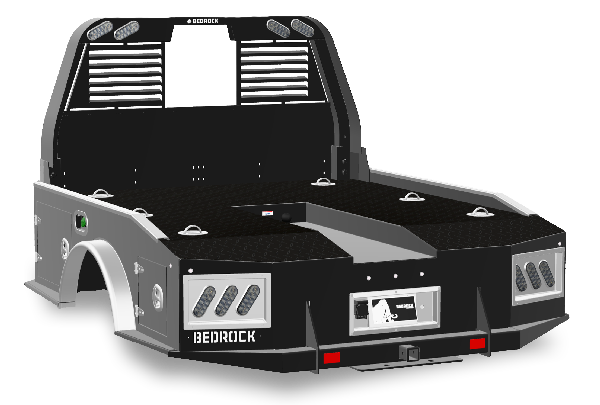
The Onyx series flatbed is built for heavy-duty commercial use, with structural anchor points and a clean deck profile designed to accept headache racks, toolboxes, and lighting systems without custom fabrication.
For a full overview of available platforms and specifications, visit Truck Beds & Flatbeds | Bedrock Truck Beds to compare models side by side.
Frequently Asked Questions About Commercial Truck Flatbed Accessories
What is the most important flatbed accessory for safety?
A headache rack is the single most important safety accessory. It prevents cargo from entering the cab during sudden stops or accidents, and it's a practical measure for FMCSA cargo securement compliance. Combine it with a rated tie-down system for complete load control.
Can I add accessories to any flatbed, or only certain models?
Most accessories are designed around standard stake pocket dimensions and rail widths, but fit varies by manufacturer. Always verify stake pocket size, rail spacing, and mounting bolt patterns before purchasing. Bedrock flatbed platforms are built with consistent dimensions that simplify accessory integration.
Are aluminum accessories better than steel for commercial use?
Aluminum is lighter and corrosion-resistant, making it ideal for toolboxes and ramps where weight savings matter. Steel is stronger under impact and better for structural components like headache racks and winch mounts. Many operators use both—aluminum for storage, steel for structural accessories.
How do I secure heavy equipment on a flatbed legally?
According to FMCSA cargo securement regulations, equipment must be secured with tie-downs whose combined WLL equals at least half the weight of the cargo. Use a minimum of four tie-down points for equipment over 10,000 lbs, and always use properly rated chains, binders, or straps.
Do LED work lights require any special wiring on a commercial flatbed?
Most LED work light kits include a standard 12V wiring harness compatible with truck electrical systems. Hard-wired installations should be routed through a dedicated relay and fuse to avoid overloading factory circuits. Plug-and-play magnetic-mount lights are available for temporary or multi-vehicle use.
How much payload capacity do accessories add or remove?
Accessories add weight that counts against your truck's payload rating. A full accessory package (headache rack, toolboxes, ramps, lighting) typically adds 400–900 lbs. Always calculate your total accessory weight and subtract it from your GVWR-minus-curb-weight figure to determine true remaining payload capacity.
What's the best way to prevent toolbox and accessory corrosion on a work truck?
Use powder-coated steel or anodized aluminum accessories. Apply a dielectric grease to mounting bolts where dissimilar metals contact each other to prevent galvanic corrosion. Rinse the underside of the flatbed and accessory mounting points monthly if the truck operates in road-salt environments.
Are there flatbed accessories specifically designed for fleet use?
Yes. Many manufacturers offer fleet-friendly accessories with standardized mounting hardware, replaceable parts, and volume pricing. Underbody toolboxes with master-key locking systems, fleet-spec LED lighting, and bolt-pattern-consistent headache racks all reduce maintenance time across multi-truck fleets.
Ready to build out your commercial flatbed? Start with a platform engineered for accessory integration. Explore the full lineup at Truck Beds & Flatbeds | Bedrock Truck Beds and find the right foundation for your business.
Interested in learning more?
Visit our website to explore products, find dealers, and get in touch.
Visit Bedrock Truck Beds →