
How to Choose Truck Flatbed Size: 2026 Complete Guide
Learn how to choose truck flatbed size in 2026 with our step-by-step guide. Get expert tips, comparison tables, financing resources, and avoid common mistakes for a perfect fit.
TL;DR: Choosing the right truck flatbed size starts with measuring your typical load, understanding weight limits, and matching bed length to your truck’s wheelbase. Consider cargo type, regulatory limits, and budget, then compare standard sizes (48‑72") to find the most efficient, cost‑effective option for 2026.
What size flatbed do I need?
Atomic answer: The ideal flatbed size balances your longest regular load length with the wheelbase of your truck, while staying within the legal total length (usually 80‑95 ft for tractor‑trailer combos). Most owners find a 60"‑72" bed covers 90‑95% of jobs without sacrificing maneuverability.
Choosing a flatbed starts with a clear picture of the cargo you haul most often. If you regularly transport construction equipment, a 72" bed may be required. For landscaping or municipal services, a 48"‑60" bed often suffices. Measure the longest item you expect to load, add 12‑18 inches for safety, and verify the truck's overall length complies with state and federal limits (see FMCSA regulations).
How to measure your typical load
- Length: Measure the longest dimension of the equipment, including any attachments.
- Width: Ensure the load fits within the standard width limit of 8.5 ft (101.6 in) for highway travel.
- Height: Consider over‑hang limits; many states allow up to 13.5 ft.
- Weight: Verify the GVWR (gross vehicle weight rating) of both truck and flatbed.
Real‑world example
A landscaping company transports backhoes (average length 10 ft). Adding the safety margin gives 12 ft, which translates to a 60" flatbed (5 ft) when combined with the tractor’s 30‑ft wheelbase, staying under the 80‑ft total length limit.
How do I calculate load dimensions and weight limits?
Atomic answer: To calculate load dimensions, add the cargo length to the tractor’s wheelbase and compare against legal total vehicle length; for weight, subtract the truck’s curb weight from its GVWR, then ensure the flatbed’s payload rating exceeds the remaining capacity.
For length, use the formula: Total Length = Tractor Wheelbase + Flatbed Length. Most U.S. highways cap total length at 80 ft for standard tractor‑trailer combos; some states allow up to 95 ft with permits. Weight is calculated by Payload Capacity = GVWR – Curb Weight. A typical 26,000‑lb GVWR truck with a 12,000‑lb curb weight leaves 14,000 lbs for cargo and flatbed combined.
Sample calculation
- Truck GVWR: 26,000 lbs
- Curb weight: 12,000 lbs
- Flatbed weight (Diamond model): 2,200 lbs
- Available payload: 26,000 – 12,000 – 2,200 = 11,800 lbs
You can safely haul loads up to 11,800 lbs on this setup.
Which flatbed material suits my business?
Atomic answer: The best flatbed material depends on durability needs, load type, and budget: Diamond aluminum offers lightweight strength for general use, Granite steel provides heavy‑duty durability for high‑weight jobs, while Onyx composite balances corrosion resistance with moderate weight.
Bedrock Truckbeds offers a range of patented materials. Aluminum (Diamond) reduces overall vehicle weight, improving fuel efficiency—ideal for contractors who haul lighter loads frequently. Steel (Granite or Granite Plus) handles abrasive or extremely heavy cargo, though it adds weight. Composite (Onyx, Marble) resists rust and is perfect for coastal or high‑moisture environments.
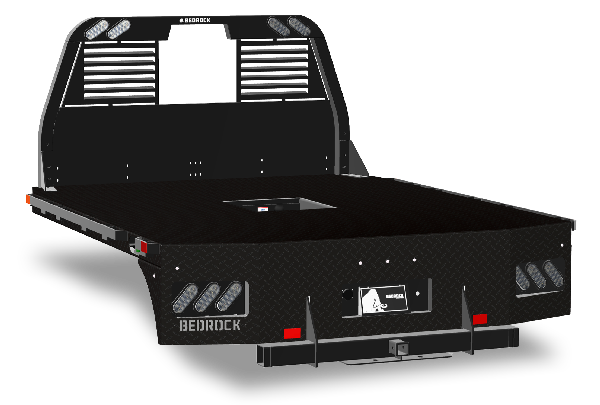
Material comparison
| Material | Approx. Weight (lb/ft) | Max Payload (lb) | Corrosion Resistance | Ideal Use |
|---|---|---|---|---|
| Diamond Aluminum | 12 | 12,000 | High (powder‑coat) | Light‑to‑medium loads, fuel‑efficiency focus |
| Granite Steel | 18 | 14,500 | Medium (galvanized) | Heavy‑duty, abrasive loads |
| Granite Plus Steel | 20 | 15,500 | High (dual‑coat) | Extreme weight, frequent overloads |
| Onyx Composite | 14 | 13,200 | Very High (UV‑stable) | Coastal, chemical‑exposed jobs |
| Marble Composite | 13 | 13,000 | High | Mixed load profiles |
What are the cost considerations and ROI for different sizes?
Atomic answer: Flatbed cost rises with length and material; a 48" Diamond bed starts around $3,500, while a 72" Granite Plus can exceed $9,200. Calculate ROI by factoring fuel savings from lighter beds, increased payload, and reduced downtime.
Pricing varies:
- 48" Diamond: $3,500‑$4,200
- 60" Granite: $5,800‑$6,500
- 72" Granite Plus: $8,900‑$9,800
Lighter beds lower fuel consumption by roughly 0.5‑1% per 1,000 lbs shed, per the U.S. Department of Energy. Over a 5‑year lifespan, a 2,200‑lb lighter Diamond bed can save $1,200‑$1,800 in fuel for a driver averaging 30,000 miles/year.
How can I finance my flatbed purchase?
Atomic answer: Bedrock Truckbeds offers flexible financing options, including direct loans and dealer‑partner programs, allowing you to spread payments over 24‑72 months with rates as low as 4.9% APR for qualified buyers.
Explore the Financing Resources | Flatbeds by BEDROCK Truck Beds for detailed loan calculators and eligibility criteria. If you prefer to work through a dealership, the Dealer Financing | Flatbeds by BEDROCK Truck Beds page outlines approved partners and special promotions.
Financing can preserve cash flow and enable upgrades without a large upfront outlay. Many customers combine a modest down payment (10‑15%) with a 48‑month term, achieving monthly payments under $300 for a mid‑size Diamond bed.
What common mistakes do people make when sizing a flatbed?
Atomic answer: The most frequent errors are overlooking total vehicle length limits, underestimating cargo weight, and choosing a bed material that doesn’t match the operating environment, leading to excess wear or costly retrofits.
Mistake #1 – Ignoring legal length: Adding a 72" bed to a short‑wheelbase tractor can push the combination over the 80‑ft limit, requiring special permits. Mistake #2 – Over‑loading: Assuming the flatbed can carry more than its payload rating stresses suspension and brakes. Mistake #3 – Wrong material: Using steel on a corrosive coastal route accelerates rust, increasing maintenance costs.
Avoid these by conducting a pre‑purchase checklist (see below) and consulting Bedrock’s experts.
Decision checklist: How to pick the perfect flatbed size
Atomic answer: Use this three‑step checklist: 1️⃣ Define longest regular load + safety margin; 2️⃣ Verify wheelbase and total length compliance; 3️⃣ Match material to load type and environment, then compare cost vs. ROI.
| ✅ Checklist Item | ✔️ How to Verify |
|---|---|
| Longest load length | Measure cargo, add 12‑18" safety buffer |
| Truck wheelbase | Check manufacturer spec sheet |
| Legal total length | Review FMCSA limits (FMCSA Length Limits) |
| Payload capacity | GVWR – Curb weight – Flatbed weight |
| Material suitability | Match to load type, corrosion exposure |
| Budget & financing | Use Bedrock financing tools |
Complete the checklist before ordering to ensure the flatbed integrates seamlessly with your operation.
Frequently Asked Questions (FAQ)
Q1: Can I install a larger flatbed on an existing truck? A: Yes, if the truck’s frame, suspension, and wheelbase can accommodate the increased length and weight. Always consult the manufacturer’s GVWR and seek a professional installer.
Q2: What is the maximum legal flatbed length in 2026? A: For most states, the combined tractor‑trailer length is limited to 80 ft without special permits. Some states allow up to 95 ft with an overweight/oversize permit.
Q3: How does flatbed material affect fuel economy? A: Lighter materials like Diamond aluminum reduce overall vehicle weight, improving fuel efficiency by roughly 0.5‑1% per 1,000 lbs saved, according to the U.S. Department of Energy.
Q4: Do I need a separate license to operate a larger flatbed? A: No additional license is required as long as you stay within your commercial driver’s license (CDL) class and adhere to length/weight regulations.
Q5: Can I customize the flatbed length? A: Bedrock offers custom lengths on request, but standard sizes (48", 60", 72") cover most needs and keep lead times short.
Q6: What maintenance does a steel flatbed require? A: Regular inspections for rust, bolt torque checks, and occasional repainting are recommended for steel models, especially in humid climates.
Q7: Is dealer financing better than direct financing? A: Dealer financing can bundle the flatbed cost with your truck purchase, simplifying paperwork. Direct financing may offer lower rates for high‑credit buyers. Compare options via the Dealer Financing | Flatbeds by BEDROCK Truck Beds page.
Q8: How long does a flatbed typically last? A: With proper maintenance, aluminum and composite beds can last 10‑15 years, while steel beds often reach 8‑12 years before major refurbishment is needed.
Ready to size your perfect flatbed? Visit Bedrock’s detailed guide on How to choose truck flatbed size for product specs, professional advice, and next‑step ordering options.
Interested in learning more?
Visit our website to explore products, find dealers, and get in touch.
Visit Bedrock Truck Beds →