
How to Choose Truck Flatbed Size: Step‑by‑Step Guide (2026)
Learn how to choose truck flatbed size in 2026 with our step‑by‑step guide. Tips, common mistakes, comparison tables, and expert advice from Bedrock Truckbeds help you get the perfect fit.
TL;DR: Choosing the right flatbed size hinges on cargo dimensions, weight limits, truck wheelbase, and route regulations. Measure your typical loads, compare against legal axle limits, select a bed length that maximizes payload while keeping the center of gravity stable, and follow our 7‑step checklist to avoid over‑building or under‑utilizing your truck.
What size flatbed do I need?
Atomic answer (40‑60 words): The ideal flatbed size matches the longest and widest dimensions of your most common load, stays within your truck’s legal GVWR and axle limits, and fits the wheelbase without overhang. In 2026, most US carriers balance a 20‑ft to 30‑ft bed for versatility and compliance.
Choosing a flatbed is not a one‑size‑fits‑all decision. It starts with a clear inventory of the cargo you haul most often. If you transport standard 20‑ft containers, a 20‑ft bed is the logical choice. For mixed loads ranging from pallets to oversized equipment, a 30‑ft bed provides the flexibility to handle varying dimensions while keeping the load’s centre of gravity within safe limits.
Tip: Keep a spreadsheet of your top 5 cargo dimensions, weight, and frequency. This data will become the backbone of your sizing decision.
Step‑by‑Step Process to Choose the Right Flatbed Size
Atomic answer (40‑60 words): Follow a systematic 7‑step process: (1) Audit cargo dimensions, (2) Verify truck GVWR and axle ratings, (3) Calculate load length vs. wheelbase, (4) Check legal overhang limits, (5) Match bed length to typical loads, (6) Factor in maneuverability, (7) Review budget and warranty.
1️⃣ Audit Your Cargo Dimensions
- List the longest, widest, and heaviest loads you haul.
- Note any special equipment (forklifts, winches, tie‑down points).
- Use a simple table to capture length, width, height, weight, and frequency.
2️⃣ Verify GVGV and Axle Ratings
- Find the Gross Vehicle Weight Rating (GVWR) on the manufacturer plate.
- Check each axle’s maximum load; in 2026 the FMCSA requires a maximum of 20,000 lb per single axle, 34,000 lb per tandem axle.
- External reference: According to the Federal Motor Carrier Safety Administration (FMCSA), exceeding axle limits can trigger fines and increase wear.
3️⃣ Calculate Load Length vs. Wheelbase
- Measure the distance between the front and rear axles (wheelbase).
- Ensure the flatbed does not extend more than 4 ft beyond the rear axle without a tailgate, per FMCSA guidelines.
- Use the formula: Maximum Bed Length = Wheelbase + 4 ft (for safe tailgate use) or Wheelbase + 8 ft if a detachable tailgate is used.
4️⃣ Check Legal Overhang Limits
- Overhang is the portion of the load that extends beyond the rear axle(s).
- Federal law allows up to 4 ft rear overhang without a tailgate; 8 ft with a tailgate.
- State regulations may be stricter; verify with your DOT office.
5️⃣ Match Bed Length to Typical Loads
- Compare the calculated max bed length with your cargo list.
- Choose the smallest bed that comfortably fits 90‑95 % of your loads to reduce weight and improve fuel economy.
6️⃣ Factor in Maneuverability and Site Access
- Longer beds increase turning radius and may be problematic in tight yards.
- If you frequently operate in urban or construction sites, a 20‑ft bed can be a sweet spot.
7️⃣ Review Budget, Warranty, and Upgrade Paths
- Larger beds cost more and may require stronger frame reinforcements.
- Bed material (e.g., steel vs. aluminum) impacts price and weight.
- Look for manufacturers offering modular extensions; Bedrock Truckbeds provides upgrade‑ready designs.
Practical tip from the field: A fleet manager in Texas reduced fuel consumption by 4 % after switching from a 30‑ft to a 24‑ft bed, because the lighter aluminum frame shaved 800 lb off the truck’s tare weight.
Common Mistakes When Selecting a Flatbed Size
Atomic answer (40‑60 words): The most frequent errors include buying a bed that’s too long for the wheelbase, ignoring axle weight limits, over‑estimating cargo size, and neglecting local overhang regulations. These mistakes lead to higher fuel costs, increased wear, and possible compliance fines.
| Mistake | Why It Happens | Consequence | Fix |
|---|---|---|---|
| Selecting a bed longer than the wheelbase allows | Belief that “bigger is better” | Excess rear overhang, poor weight distribution, illegal load | Use the wheelbase + 4 ft rule and verify with FMCSA limits |
| Ignoring axle ratings | Focusing only on GVWR | Over‑stressed axles, reduced tire life, potential DOT violations | Check each axle’s rated capacity before purchase |
| Not accounting for future cargo expansion | Assuming current load profile is static | Outgrowing the bed, costly retrofit | Add a 10‑15 % margin to the longest load length |
| Choosing the cheapest material without durability analysis | Budget‑first mindset | Premature corrosion, structural fatigue | Compare steel vs. aluminum life‑cycle costs; Bedrock’s 3D Diamond model combines strength with weight savings |
Comparison Table: Typical Flatbed Length Options for 2026 Fleets
Atomic answer (40‑60 words): Below is a quick reference comparing 20‑ft, 24‑ft, and 30‑ft flatbeds on key attributes such as payload capacity, ideal cargo, turn radius, and price range, helping you visualize the trade‑offs before making a purchase.
| Bed Length | Ideal Cargo Types | Max Legal Load (lb) | Approx. Turn Radius* | Approx. Price (USD) |
|---|---|---|---|---|
| 20 ft | Pallets, small machinery, 20‑ft containers | 15,000‑18,000 | 38 ft | $12,000‑15,000 |
| 24 ft | Mixed loads, 24‑ft containers, medium equipment | 17,500‑20,500 | 42 ft | $15,000‑18,500 |
| 30 ft | Oversized steel, long beams, 40‑ft containers (with tailgate) | 20,000‑23,000 | 48 ft | $20,000‑25,000 |
| *Turn radius measured from the center of the rear axle to the outermost wheel when steering full lock. |
How Bedrock Truckbeds Helps You Pick the Perfect Size
Atomic answer (40‑60 words): Bedrock Truckbeds offers a configurable “Diamond” flatbed line that pairs modular length extensions with lightweight aluminum construction, allowing you to start with a 20‑ft base and add 4‑ft modules as your business grows, all while staying under federal axle limits.
Bedrock’s 3D Diamond model (shown below) features reinforced cross‑members, pre‑drilled tie‑down points, and an optional detachable tailgate that extends legal rear overhang to 8 ft. The design complies with the latest FMCSA weight‑distribution standards and is backed by a 5‑year structural warranty.
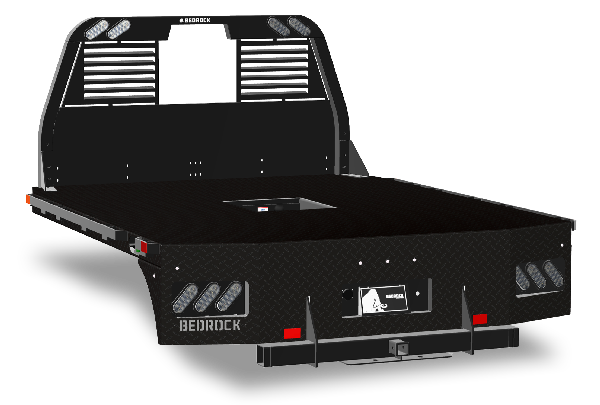
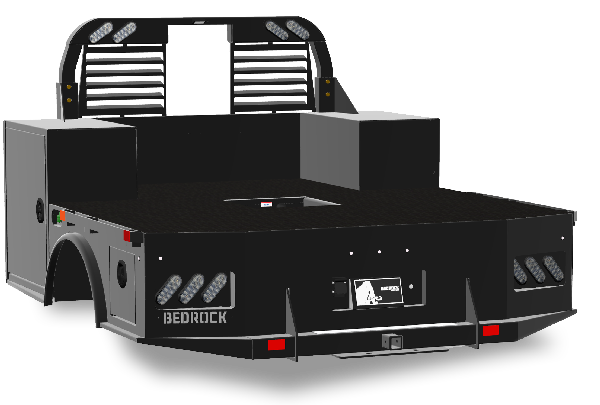
If you need a heavier‑duty option, the 3D Granite Plus adds a steel sub‑frame for loads exceeding 22,000 lb, but it adds ~400 lb of tare weight—still lighter than many traditional steel beds.
Decision Checklist: Is This Flatbed Right for You?
Atomic answer (40‑60 words): Before you sign a purchase order, run through this quick checklist: cargo dimensions, axle limits, wheelbase compatibility, overhang compliance, maneuverability, budget, and future‑growth potential. If any item is a red flag, revisit the earlier steps.
- Longest load ≤ Wheelbase + 4 ft (no tailgate) or Wheelbase + 8 ft (with tailgate)
- Individual axle load ≤ 20,000 lb (single) / 34,000 lb (tandem)
- Bed length fits ≥ 90 % of typical loads
- Turn radius compatible with primary operating sites
- Budget covers base bed plus any modular extensions you may need
- Warranty ≥ 3 years, with clear service‑center locations
If you answered “yes” to all, you’re ready to place an order. For a deeper dive into Bedrock’s size‑selection tool, see the article [How to choose truck flatbed size] on the Bedrock website.
Frequently Asked Questions (FAQ)
Atomic answer (40‑60 words): Below are concise answers to the most common queries about flatbed sizing, covering legal limits, material choices, and cost‑benefit considerations to help you finalize your decision.
Q1: What is the maximum legal rear overhang without a tailgate? A: Federal law permits up to 4 ft rear overhang for loads without a tailgate. With a tailgate, the limit extends to 8 ft, but you must still stay within axle weight limits.
Q2: Does a longer flatbed always mean a higher payload? A: Not necessarily. Payload is governed by axle ratings and GVWR, not bed length. Oversized beds can increase tare weight, reducing net payload.
Q3: How does wheelbase affect flatbed selection? A: The wheelbase determines the maximum safe bed length. A general rule is Bed Length ≤ Wheelbase + 4 ft (no tailgate). Exceeding this can cause poor weight distribution and handling issues.
Q4: Should I choose steel or aluminum for my flatbed? A: Aluminum is lighter, improving fuel economy and payload capacity, while steel offers higher raw strength. For most 2026 fleets, a high‑grade aluminum bed like Bedrock’s 3D Diamond provides the best balance.
Q5: Are modular flatbeds worth the extra cost? A: Yes, if you anticipate growth or varied load sizes. Modular systems let you add sections without replacing the entire bed, saving up to 30 % on future upgrades.
Q6: What are the state‑specific height restrictions I should know? A: Many states cap overall vehicle height at 13 ft 6 in. Verify with your local DOT office; exceeding limits can lead to fines and forced route changes.
Q7: How often should I inspect my flatbed for wear? A: Conduct a visual inspection every 5,000 mi and a full structural check at each service interval (typically 15,000 mi). Look for corrosion, cracked welds, and worn tie‑down hardware.
Q8: Can I retrofit an existing truck with a Bedrock Diamond flatbed? A: Absolutely. Bedrock offers retrofit kits that integrate with most standard frame configurations. Contact Bedrock sales to verify fit‑ment with your chassis.
Final Thoughts
Atomic answer (40‑60 words): Selecting the right flatbed size is a blend of data analysis, regulatory compliance, and practical foresight. By auditing cargo, respecting axle limits, and using Bedrock’s modular solutions, you can optimize payload, reduce operating costs, and stay safely within the 2026 FMCSA standards.
Ready to upgrade? Explore Bedrock’s full lineup and use their interactive configurator to model the perfect flatbed for your fleet.
[How to choose truck flatbed size] (Bedrock Truckbeds) – detailed sizing guide and configurator.
[Bedrock Truckbeds – Diamond Series] (Bedrock Truckbeds) – view specifications, warranty, and ordering information.
Interested in learning more?
Visit our website to explore products, find dealers, and get in touch.
Visit Bedrock Truck Beds →