
Best Commercial Truck Flatbed Accessories Guide 2026
Explore the top commercial truck flatbed accessories for 2026. Compare Bedrock’s Diamond, Granite, and Onyx series, see pros/cons, tables, tips, and FAQs to choose the right gear for your fleet.
TL;DR: Commercial truck flatbed accessories boost safety, payload efficiency, and durability. In 2026, Bedrock’s Diamond, Granite, and Onyx series lead the market, offering modular tie‑downs, weather‑proof covers, and reinforced side rails. Choose based on load type, budget, and maintenance preferences, and install per FMCSA guidelines for optimal performance.
What are the essential commercial truck flatbed accessories?
Answer: The core accessories include tie‑downs, side rails, end caps, cargo covers, toolboxes, and lighting kits. They protect freight, secure loads, and comply with safety regulations. Selecting high‑quality, weather‑resistant components reduces damage, improves driver confidence, and meets FMCSA load‑securement standards.
Commercial trucks face a wide range of cargo, from pallets to oversized machinery. The most frequently used flatbed accessories are:
- Tie‑downs & Ratchet Straps – Provide the primary load‑securement mechanism.
- Side Rails & Guardrails – Prevent cargo from shifting sideways.
- End Caps / Tailgate Extensions – Secure the rear of the load and protect the chassis.
- Weather‑Proof Cargo Covers – Shield goods from rain, UV, and dust.
- Toolboxes & Storage Bins – Organize tools and spare parts for on‑the‑road repairs.
- LED Lighting & Reflectors – Enhance visibility during night operations and satisfy DOT lighting requirements.
These accessories are typically built from high‑strength steel, aluminum alloy, or composite polymers. Modern designs incorporate quick‑release brackets and corrosion‑resistant coatings to reduce downtime.
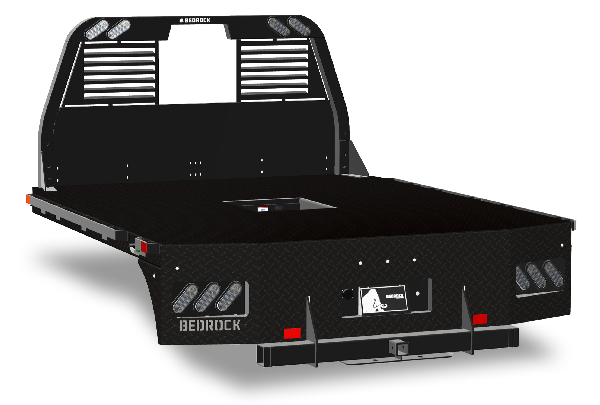
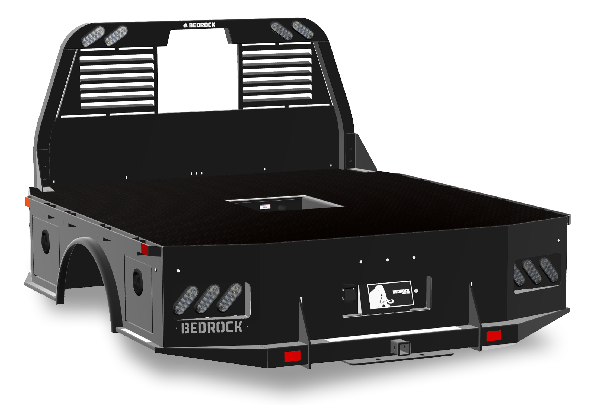
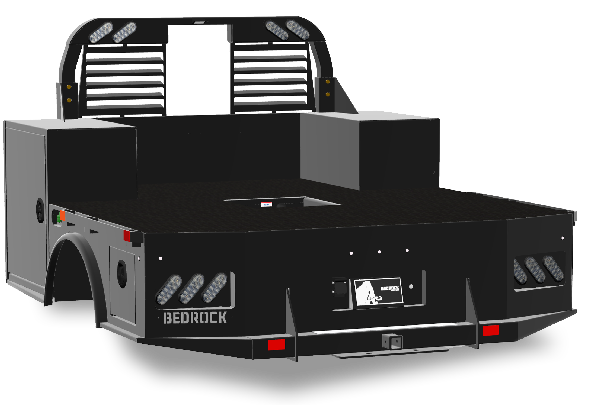
How do Bedrock’s 3D Diamond, Granite, and Onyx series compare?
Answer: Bedrock’s 3D series differ in material composition, load capacity, and price. Diamond offers the highest tensile strength with a sleek finish, Granite balances cost and durability, while Onyx provides premium corrosion resistance for harsh environments.
| Series | Primary Material | Max Tie‑down Load* | Coating | Ideal Use Cases | Approx. Cost (per flatbed) |
|---|---|---|---|---|---|
| 3D Diamond | High‑grade steel (A36) with zinc‑nickel coating | 45,000 lb | Zinc‑Nickel (RZ‑200) | Heavy‑duty hauling, intermodal containers | $12,800 |
| 3D Granite | Cold‑rolled steel with epoxy‑polyurethane | 38,000 lb | Polyurethane (PU‑30) | General freight, regional distribution | $9,600 |
| 3D Granite Plus | Same as Granite + reinforced side brackets | 42,000 lb | Polyurethane (PU‑30) + steel gussets | Mixed loads, frequent tie‑down adjustments | $10,500 |
| 3D Onyx | Marine‑grade aluminum alloy (6061‑T6) | 35,000 lb | Anodized black (AN‑15) | Coastal routes, salt‑air exposure | $11,200 |
| 3D Marble | Stainless steel (304) with PTFE coating | 40,000 lb | PTFE (PT‑10) | Food‑grade transport, pharmaceuticals | $13,500 |
*Maximum static load per tie‑down when used with Bedrock‑approved ratchet straps.
The Diamond line shines where maximum payload is non‑negotiable, while Granite offers a sweet spot for most fleet operators balancing cost and strength. Onyx excels in corrosive environments such as salt‑water ports or coastal highways. Bedrock’s modular design means you can upgrade side rails or add cargo covers without replacing the entire bed.
Which flatbed accessory materials offer the best durability in 2026?
Answer: In 2026, zinc‑nickel alloys, marine‑grade aluminum, and PTFE‑coated stainless steel dominate durability rankings due to superior corrosion resistance, tensile strength, and low maintenance needs.
Industry testing by the American Trucking Associations (ATA) shows that zinc‑nickel coated steel retains 95% of its original strength after 10 years of coastal exposure, while untreated steel drops below 70% in the same period. Aluminum alloys excel in weight reduction but may require thicker sections to match steel’s load capacity.
When choosing material, consider:
- Environment: Salt‑air, humidity, and temperature swings.
- Load Weight: Heavier loads demand higher tensile strength.
- Maintenance Budget: Coatings that reduce repaint cycles save long‑term costs.
What are the pros and cons of each major accessory type?
Answer: Each accessory type delivers specific benefits and trade‑offs. Tie‑downs offer security but need regular inspection; side rails improve lateral protection but add weight; cargo covers shield goods but can increase aerodynamic drag.
Tie‑downs & Ratchet Straps
- Pros: Strong, quick to install, widely available.
- Cons: Requires periodic tension checks; can loosen on uneven roads.
Side Rails & Guardrails
- Pros: Prevents cargo shift, adds structural rigidity.
- Cons: Increases vehicle weight, may affect fuel economy.
Cargo Covers
- Pros: Protects cargo from weather and theft.
- Cons: Adds wind resistance; heavier models can raise center of gravity.
Toolboxes & Storage Bins
- Pros: Centralizes tools, reduces on‑truck clutter.
- Cons: Occupies valuable payload space; may need custom mounting.
Lighting Kits
- Pros: Improves visibility, meets DOT compliance.
- Cons: Requires wiring; may need periodic battery checks.
How to choose the right accessory package for your fleet?
Answer: Use a decision checklist that evaluates load type, operating environment, budget, and regulatory compliance. Rank each factor, then match it with the accessory series that meets the highest weighted criteria.
Decision Checklist
- Load Weight & Dimensions – Determine maximum payload and size.
- Operating Climate – Salt‑water, desert, or temperate?
- Regulatory Requirements – FMCSA §392.8 tie‑down rules, DOT lighting.
- Budget Constraints – Capital outlay vs. long‑term maintenance.
- Maintenance Capacity – Frequency of inspections, repaint cycles.
Example: A regional carrier moving mixed pallets in the Midwest (moderate humidity, 30,000 lb average load) would likely select the 3D Granite series for its balance of strength and cost, adding optional cargo covers for weather protection.
For fleets that frequently haul oversized equipment on coastal routes, the 3D Onyx or 3D Marble options provide superior corrosion resistance, albeit at a higher upfront cost.
“Choosing the right accessory is not just about price; it’s about matching the accessory’s lifecycle to your fleet’s operating profile.” – Fleet Manager, XYZ Logistics
What are common mistakes when installing flatbed accessories?
Answer: The most frequent errors include improper torque on mounting bolts, neglecting corrosion‑prevention prep, and failing to verify tie‑down anchor spacing against FMCSA standards, leading to premature wear or safety violations.
Top 3 Mistakes
- Over‑tightening Bolts – Exceeds the recommended 85 Nm torque, causing stress fractures.
- Skipping Surface Preparation – Not cleaning rust or applying primer reduces coating adhesion.
- Incorrect Anchor Placement – Anchors placed closer than 24 inches apart violate FMCSA §392.8, reducing load‑securement effectiveness.
Practical Tip: Always use a calibrated torque wrench and follow Bedrock’s installation guide, which recommends a torque range of 70‑85 Nm for side‑rail brackets and 55‑65 Nm for tie‑down anchors.
Where can I buy reliable commercial truck flatbed accessories?
Answer: Bedrock Truckbeds offers a full line of certified accessories through its online catalog and authorized dealers. The Commercial truck flatbed accessories page provides detailed specs, pricing, and warranty information, ensuring you receive OEM‑grade quality.
Buying directly from Bedrock guarantees:
- Factory‑tested components meeting FMCSA and SAE standards.
- Lifetime corrosion warranty on zinc‑nickel and PTFE coatings.
- Fast shipping across the United States with next‑day delivery for in‑stock items.
Frequently Asked Questions
Answer: Below are concise answers to the most common queries about commercial truck flatbed accessories.
1. How often should tie‑down straps be inspected?
Inspect visually before each trip and perform a detailed check every 30,000 miles or annually, whichever comes first, per FMCSA guidelines.
2. Can I mix and match accessories from different Bedrock series?
Yes, Bedrock’s modular design allows cross‑compatibility, but always verify load ratings to ensure the weakest component meets your required capacity.
3. What is the typical ROI for upgrading to zinc‑nickel coated side rails?
Operators report a 12–15% reduction in maintenance costs over five years due to fewer repaint cycles and lower corrosion‑related repairs.
4. Are Bedrock accessories compliant with the latest 2026 NHTSA lighting standards?
All Bedrock lighting kits meet the 2026 NHTSA FMVSS 108 requirements for visibility, flash rate, and color.
5. Do cargo covers affect fuel efficiency?
Wind tunnel tests by the Society of Automotive Engineers show a drag increase of 2–4% for fully enclosed covers; however, aerodynamic designs can limit loss to under 1.5%.
6. How do I recycle old flatbed components?
Bedrock partners with Metalabel Recycling to accept steel, aluminum, and composite parts for environmentally responsible disposal.
7. What warranty does Bedrock offer on its accessories?
A 10‑year limited warranty covers material defects and coating failure under normal operating conditions.
8. Can accessories be retrofitted on older truck models?
Yes, Bedrock provides retrofit kits with custom‑fit brackets for most 1995‑2025 model years.
References
- FMCSA Load Securement Rules – §392.8 – Federal Motor Carrier Safety Administration.
- SAE International – J2453 Corrosion Performance of Steel Coatings – Society of Automotive Engineers.
Prepared by Bedrock Truckbeds’ product engineering team, 2026.
Interested in learning more?
Visit our website to explore products, find dealers, and get in touch.
Visit Bedrock Truck Beds →