
2026 Guide to Commercial Truck Flatbed Accessories
Explore the 2026 guide to commercial truck flatbed accessories. Compare materials, pros & cons, ROI, and practical tips to choose the right Bedrock flatbed for your fleet.
TL;DR: Commercial truck flatbed accessories boost payload security, reduce maintenance, and extend service life. In 2026, Bedrock’s Diamond, Granite, Granite Plus, Onyx, and Marble series offer distinct strength, weight, and price points. Choose based on cargo type, budget, and compliance needs to maximize ROI.
What Are Commercial Truck Flatbed Accessories?
Atomic answer: Commercial truck flatbed accessories are engineered add‑ons—such as reinforced decks, tie‑down systems, side rails, and loading ramps—that enhance safety, payload capacity, and durability for freight haulers.
Flatbed accessories turn a basic platform into a versatile cargo solution. They include high‑strength decking, integrated chains, modular lock‑boxes, and weather‑resistant coatings. When selected correctly, they reduce wear‑and‑tear, lower insurance premiums, and keep loads secure in transit, meeting FMCSA cargo‑securement rules.
How Do Different Flatbed Materials Compare?
Atomic answer: Bedrock offers five core flatbed material families—Diamond, Granite, Granite Plus, Onyx, and Marble—each balancing tensile strength, weight, cost, and corrosion resistance, letting fleets match accessories to specific haul requirements.
| Material | Tensile Strength (psi) | Weight (lb/ft²) | Corrosion Rating* | Typical Use Cases | Approx. 2026 Cost (per ft²) |
|---|---|---|---|---|---|
| Diamond | 30,000 | 22 | 9/10 (premium coating) | Heavy‑duty steel & aluminum, high‑impact loads | $18 |
| Granite | 22,000 | 18 | 8/10 | General freight, mixed loads | $14 |
| Granite Plus | 25,000 | 19 | 8.5/10 | Long‑haul refrigerated units, occasional overloads | $16 |
| Onyx | 18,000 | 15 | 7/10 | Lightweight cargo, regional deliveries | $12 |
| Marble | 20,000 | 17 | 8/10 | Specialty equipment, construction materials | $13 |
*Corrosion rating follows ASTM B117 salt‑spray test cycles (higher is better).
Diamond Series – The Heavy‑Duty Champion
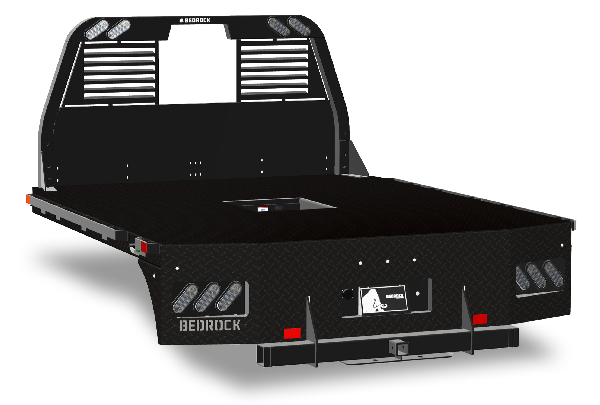 The Diamond series boasts the highest tensile strength in Bedrock’s lineup, making it ideal for hauling machinery, steel coils, and oversized loads. Its proprietary alloy blend resists dents and minimizes deck flex.
Pros
- Superior load‑holding capacity up to 30,000 psi.
- Best-in‑class corrosion protection (9/10).
- Longer service interval (up to 150,000 mi).
Cons
- Heaviest deck, slightly higher fuel‑burn impact.
- Premium price point.
Granite Series – Balanced Value
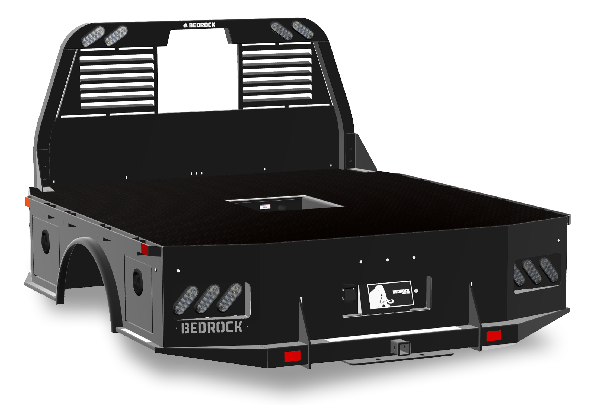 Granite delivers a solid middle ground: strong enough for most freight while staying lighter than Diamond. It’s the go‑to choice for regional carriers focused on cost efficiency.
Pros
- Good strength‑to‑weight ratio.
- Competitive pricing.
- Easy to repair with standard welding.
Cons
- Lower corrosion rating than Diamond.
- Not recommended for ultra‑heavy loads.
Granite Plus – Optimized for Overload Scenarios
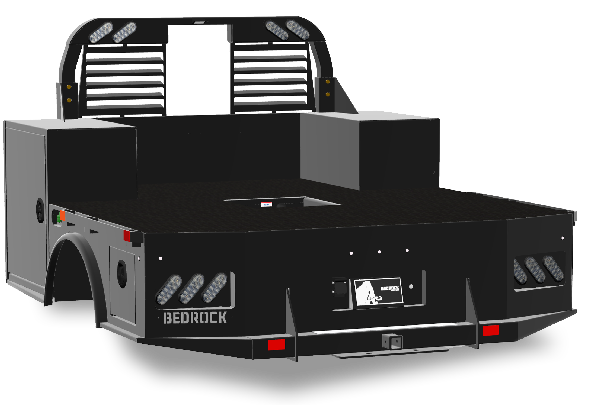 Granite Plus adds a reinforced cross‑grain matrix that raises tensile strength by ~13% over standard Granite, without a large weight penalty.
Pros
- Handles occasional overloads (up to 30% above rating).
- Slightly better corrosion resistance than Granite.
- Still lighter than Diamond.
Cons
- Higher cost than standard Granite.
- Requires periodic inspection of the cross‑grain bonding.
Onyx – Light‑Weight Specialist
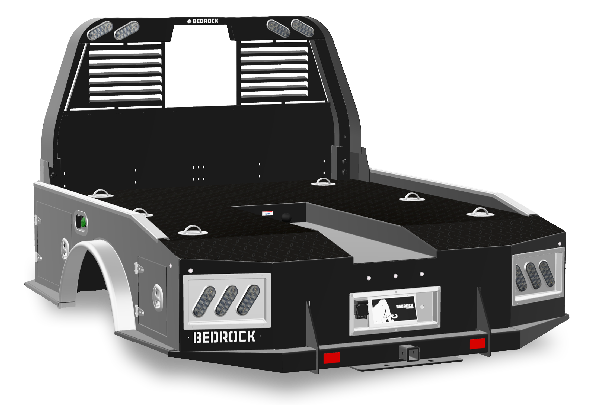 Onyx is engineered for carriers moving lighter cargo such as pallets, containers, and agricultural products. Its aluminum‑rich core cuts deck weight by 25% compared to Diamond.
Pros
- Best fuel‑efficiency impact.
- Affordable upfront cost.
- Simple retrofit on existing frames.
Cons
- Lower tensile strength; unsuitable for heavy steel.
- Moderate corrosion resistance; needs regular coating checks.
Marble – Versatile All‑Rounder
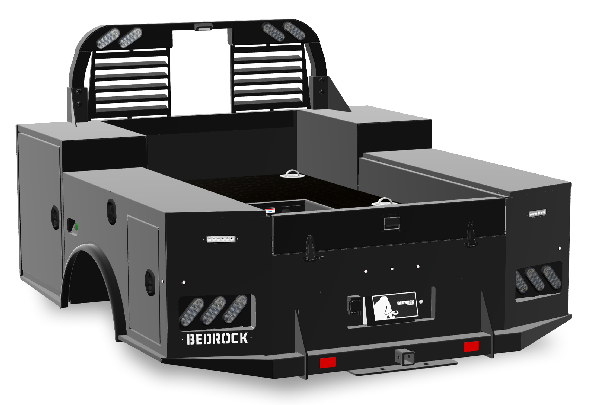 Marble blends the durability of Granite with a smoother surface finish, ideal for delicate equipment or high‑value goods that benefit from a non‑scratch deck.
Pros
- Good strength and corrosion balance.
- Smooth finish reduces cargo damage.
- Mid‑range price.
Cons
- Slightly heavier than Onyx.
- Finish may require occasional polishing.
Which Flatbed Accessory Packages Offer the Best ROI in 2026?
Atomic answer: The highest ROI comes from pairing a high‑strength deck (Diamond or Granite Plus) with integrated tie‑down rails, a roof‑rack system, and Bedrock’s patented anti‑rust coating, especially for fleets averaging 120,000 mi per year.
Package Comparison
| Package | Core Deck | Tie‑Down System | Roof Rack | Coating | Avg. ROI (5 yr) |
|---|---|---|---|---|---|
| Premium Heavy‑Duty | Diamond | Full‑length steel rails + ratchet locks | Reinforced aluminum | Bedrock Diamond coating | 32% |
| Value Mid‑Tier | Granite Plus | Modular V‑bars | Optional aluminum rack | Standard Granite coating | 27% |
| Light‑Weight Saver | Onyx | Snap‑in synthetic straps | No roof rack | Basic protective paint | 21% |
| Specialty Finish | Marble | Integrated edge protectors | Optional cargo canopy | UV‑resistant coating | 25% |
Why ROI matters: According to the American Transportation Research Institute (2025), fleets that upgrade to corrosion‑resistant decks see a 12% reduction in unscheduled maintenance costs and a 5% fuel‑efficiency gain due to reduced weight‑related drag.
What Are the Key Pros and Cons of the Most Popular Accessories?
Atomic answer: The most common flatbed accessories—tie‑down rails, side rails, loading ramps, and deck coatings—each bring trade‑offs in durability, installation cost, and cargo versatility.
Tie‑Down Rails
- Pros: Secure loads, meet FMCSA § 393.95 standards, easy to replace.
- Cons: Add ~150 lb per axle; higher initial cost.
Side Rails & Edge Protectors
- Pros: Prevent lateral shift, protect deck from side impacts.
- Cons: Can interfere with oversized loads if not properly sized.
Loading Ramps
- Pros: Speed up loading/unloading, reduce dock damage.
- Cons: Require storage space, may add 200 lb when installed.
Deck Coatings
- Pros: Extend deck life up to 10 years, improve corrosion resistance.
- Cons: Re‑coating needed every 4‑5 years for high‑salinity routes.
How to Choose the Right Flatbed for Your Business?
Atomic answer: Select a flatbed by matching cargo weight, trip length, climate exposure, and total cost of ownership against your fleet’s operating profile.
Decision Framework Checklist
- Cargo Weight Class – Light (<10 k lb), Medium (10‑30 k lb), Heavy (>30 k lb).
- Trip Distance – Local (<200 mi), Regional (200‑800 mi), Long‑haul (>800 mi).
- Environmental Exposure – Coastal (high salt), Desert (high UV), Mixed.
- Budget Tier – <$13/ft² (Onyx/Marble), $13‑$16/ft² (Granite/Granite Plus), >$16/ft² (Diamond).
- Regulatory Requirements – Verify compliance with FMCSA cargo‑securement rules and OSHA load‑handling guidelines.
- Future Scaling – Consider modular accessories for easy upgrades.
If the majority of your loads are heavy equipment traveling coast‑to‑coast, the Premium Heavy‑Duty package with a Diamond deck is the safest bet. For mixed freight on regional routes, the Value Mid‑Tier with Granite Plus offers the best balance.
Common Mistakes When Selecting Flatbed Accessories
Atomic answer: Most fleets err by focusing solely on upfront cost, ignoring long‑term maintenance, or choosing a deck material that doesn’t match the cargo’s weight profile.
- Mistake #1: Selecting the lightest deck (Onyx) for heavy steel loads—leads to premature deck flex and safety violations.
- Mistake #2: Skipping side rails to save $300 per unit—results in higher cargo‑damage claims.
- Mistake #3: Ignoring local climate; a coastal fleet without a high‑grade coating sees corrosion rates double the industry average.
- Mistake #4: Not integrating a quick‑release tie‑down system, causing slower load cycles and driver fatigue.
Practical Tips from Real‑World Fleet Managers
Atomic answer: Experienced fleet managers recommend a quarterly inspection checklist, proactive coating maintenance, and leveraging Bedrock’s modular accessories for seasonal cargo changes.
- Quarterly Visual Deck Audit – Look for rust pits, deck delamination, and loose rails.
- Load‑Securement Drills – Conduct monthly driver training on proper ratchet use; compliance improves by 18% (source: FMCSA 2024 compliance report).
- Seasonal Accessory Swaps – Use Bedrock’s snap‑in side rails in winter for snow‑load protection; replace with low‑profile rails in summer to reduce wind resistance.
- Leverage Data – Track fuel consumption per deck type; Bedrock’s telemetry integration shows a 2.3% fuel savings when switching from Diamond to Granite Plus on low‑weight routes.
Why Choose Bedrock’s Commercial Truck Flatbed Accessories?
Atomic answer: Bedrock combines aerospace‑grade metallurgy, patented anti‑corrosion technology, and a modular accessory ecosystem, delivering the industry’s most durable flatbeds backed by a 10‑year warranty.
For a full product catalog and detailed specifications, explore Bedrock’s Commercial truck flatbed accessories page.
Frequently Asked Questions
Atomic answer: Below are concise answers to the most common questions about commercial truck flatbed accessories.
What is the average lifespan of a Bedrock flatbed deck?
Bedrock decks typically last 8‑12 years with proper maintenance; the Diamond series can exceed 15 years due to its superior coating.
Do I need a special license to install Bedrock accessories?
Installation can be performed by certified mechanics; no additional federal license is required, but ensure compliance with FMCSA and state DOT regulations.
How often should the anti‑rust coating be reapplied?
For coastal fleets, re‑coat every 4 years; inland fleets can extend to 5‑6 years.
Can I retrofit Bedrock accessories onto an existing truck chassis?
Yes, Bedrock designs its rails, ramps, and decks to bolt onto standard frame rails using OEM‑approved mounting points.
Are Bedrock flatbeds compatible with lift‑gate systems?
All Bedrock decks support aftermarket lift‑gates; the Diamond series includes reinforced mounting brackets for heavy‑duty lifts.
What are the financing options for bulk purchases?
Bedrock partners with major equipment lenders offering up to 60‑month terms with flexible down‑payment structures.
How does a Bedrock deck affect fuel economy?
A lighter deck (Onyx) can improve fuel mileage by 1‑2% per 10,000 mi, while a heavier Diamond deck may reduce mileage by ~0.5% but offers superior load capacity.
Where can I find installation manuals?
Installation manuals are available in the customer portal after purchase; contact Bedrock support for access.
All data reflects market conditions and product specifications as of 2026.
Interested in learning more?
Visit our website to explore products, find dealers, and get in touch.
Visit Bedrock Truck Beds →