
10 Essential Tips for Truck Flatbed Installation Near Me
Looking for truck flatbed installation near you? Discover 10 expert tips, cost guides, common mistakes, and a comparison table to choose the right Bedrock Truckbeds service in 2026.
TL;DR: Finding a qualified truck flatbed installer nearby involves checking certifications, warranty coverage, and fit‑for‑purpose models. In 2026, expect $1,200‑$2,800 for professional installation, verify load‑capacity ratings, and avoid DIY errors by hiring Bedrock Truckbeds for a guaranteed fit and long‑term support.
What is a truck flatbed and why do I need professional installation?
Answer: A truck flatbed is a level, open‑deck platform mounted on a chassis to carry oversized or irregular loads. Professional installation ensures proper alignment, secure mounting, and compliance with FMCSA weight‑distribution rules, protecting both cargo and vehicle longevity.
A flatbed transforms a standard box truck into a versatile workhorse, allowing you to transport pallets, machinery, or construction materials without height restrictions. Improper mounting can cause frame stress, brake wear, or safety violations. Certified installers use torque‑spec tools, calibrated lifts, and manufacturer‑approved brackets to guarantee that the flatbed integrates seamlessly with your truck’s suspension and drivetrain.
How can I find reliable truck flatbed installation near me?
Answer: Search for installers who are FMCSA‑registered, have documented warranties, and showcase recent projects on their website. Read reviews, ask for a detailed quote, and verify that they work with reputable manufacturers like Bedrock Truckbeds.
Start with a Google query such as "truck flatbed installation near me" and look for businesses that list their certifications (e.g., ASE, FMCSA). Contact at least three providers, request a site‑visit, and compare their proposed mounting methods. A trustworthy shop will explain the process, provide a written estimate, and supply a timeline that includes post‑install inspection.
For a step‑by‑step guide on what to expect from a professional service, see Bedrock Truckbeds’ resource page on Truck flatbed installation near me.
What are the top 10 factors to consider when choosing an installer?
Answer: Evaluate credentials, warranty, experience, pricing transparency, local reputation, equipment, parts compatibility, safety compliance, post‑install support, and customer communication.
- Certification & Licensing – Ensure the shop holds an FMCSA‑registered status and technicians are ASE‑certified.
- Manufacturer Partnerships – Installers that partner with Bedrock Truckbeds receive factory‑approved mounting kits, reducing fit‑issues.
- Warranty Coverage – Look for at least a 12‑month labor warranty and a parts warranty that matches the flatbed manufacturer.
- Experience with Your Truck Type – Heavy‑duty vs. medium‑duty frames have different mounting points; ask for similar past jobs.
- Transparent Pricing – A detailed quote should break down labor, hardware, disposal of old equipment, and any tax or shop fees.
- Local Reputation – Check Google Business, BBB, and industry forums for feedback from fleet owners.
- Equipment & Facility – Modern lifts, alignment tools, and a clean work environment reflect professionalism.
- Compliance with Regulations – Installers must follow FMCSA and NHTSA guidelines for weight distribution and tie‑down points.
- Post‑Install Support – A follow‑up inspection within 30 days can catch hidden issues before they affect your operations.
- Communication – Clear timelines, progress updates, and a single point of contact reduce surprises.
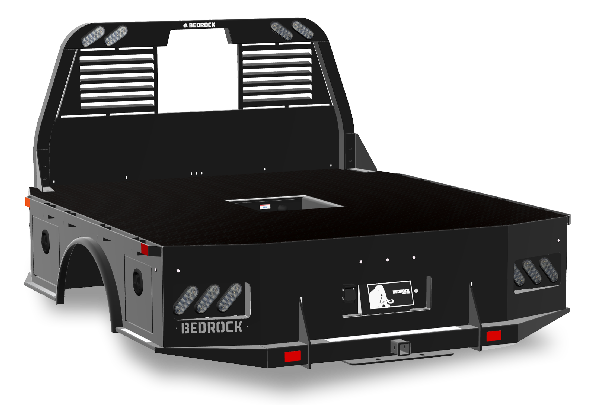
Which Bedrock flatbed model fits my needs? (Comparison Table)
Answer: Bedrock offers four core flatbed designs—Diamond, Granite, Granite Plus, and Onyx—each tailored for specific load capacities, material preferences, and budget levels.
| Model | Load Capacity (lb) | Material | Approx. Price Range (USD) | Key Feature |
|---|---|---|---|---|
| 3D Diamond | 8,000 – 10,000 | Aluminum | $1,800 – $2,200 | Lightweight for fuel‑efficient fleets |
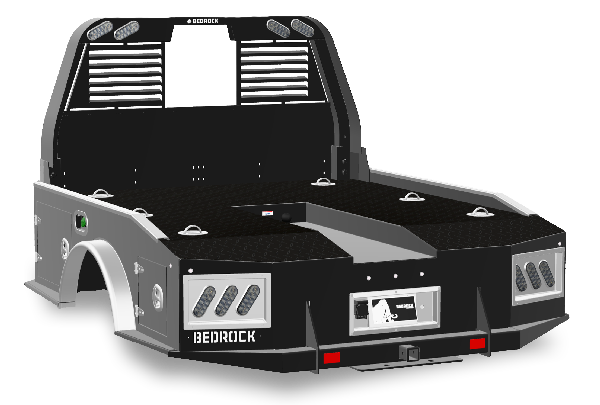
| 3D Granite | 10,000 – 12,500 | Steel | $2,300 – $2,800 | Reinforced ribs for heavy‑duty use |
| 3D Granite Plus | 12,500 – 15,000 | Steel + Coated | $2,900 – $3,500 | Corrosion‑resistant coating for harsh climates |
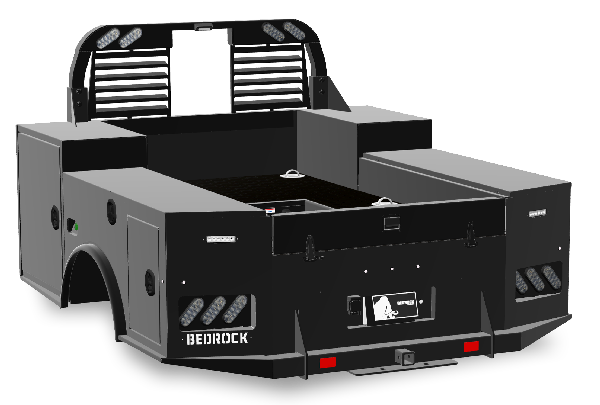
| 3D Onyx | 15,000 – 18,000 | High‑strength alloy | $3,600 – $4,200 | Max load for construction and utility fleets |
If you frequently haul loads near the upper limit of a truck’s GVWR, the 3D Onyx or Granite Plus are the safest choices. For regional delivery vans focused on fuel economy, the 3D Diamond offers a perfect balance of strength and weight.
How much does truck flatbed installation cost in 2026?
Answer: In 2026, professional installation typically ranges from $1,200 for a basic mount on a light‑duty truck to $2,800 for full‑frame reinforcement on a heavy‑duty chassis.
The total cost depends on:
- Flatbed model price – Higher‑capacity steel beds add $500‑$1,000 to material costs.
- Labor hours – Most installations require 6‑10 hours of skilled labor; rates average $120‑$150 per hour.
- Additional hardware – Brackets, bolts, and anti‑vibration pads can add $150‑$300.
- Disposal of old equipment – Some shops charge a $100‑$200 fee.
Always request a written estimate that itemizes these components. A low‑ball quote that omits hardware or disposal is a red flag.
What common mistakes do people make during flatbed installation?
Answer: The most frequent errors are ignoring weight‑distribution calculations, using non‑OEM mounting hardware, and skipping the final alignment check.
- Miscalculating GVWR – Overloading the flatbed can exceed the truck’s Gross Vehicle Weight Rating, leading to brake wear and legal penalties.
- Improper Torque – Under‑tightening bolts causes frame fatigue; over‑tightening can strip threads.
- Skipping Reinforcement – Light‑duty frames need additional cross‑members when mounting a heavy steel bed.
- Neglecting Tie‑Down Points – Failure to install or inspect anchor points endangers cargo and violates FMCSA regulations.
- DIY Installation Without Training – Even experienced mechanics can miss critical alignment steps without manufacturer guides.
What practical tip from real‑world experience can save me time and money?
Answer: Schedule a pre‑installation site visit — this allows the installer to verify mounting points, confirm load requirements, and order the exact hardware before you bring the truck in.
During a 2025 fleet upgrade, a Midwest carrier saved $4,200 by letting the installer measure frame spacing on‑site and ordering custom‑drilled brackets ahead of time. The shop completed the install in one day instead of two, reducing labor costs and downtime.
What is the step‑by‑step checklist for a successful flatbed installation?
Answer: Follow this 12‑point checklist to ensure every critical element is addressed from quote to post‑install inspection.
- Verify Truck Specs – GVWR, axle ratings, and frame dimensions.
- Select Flatbed Model – Match load capacity and material to your operation.
- Obtain Written Quote – Include labor, parts, disposal, and warranty.
- Schedule Pre‑Visit – Installer measures mounting points and confirms fit.
- Confirm Certifications – FMCSA registration and ASE‑certified technicians.
- Prepare the Worksite – Ensure a level, clean area with adequate lighting.
- Remove Old Equipment – Safely detach any previous flatbed or accessories.
- Install Reinforcement – Add cross‑members if required by the bed’s weight.
- Mount Flatbed – Use OEM brackets, torque to manufacturer specifications (usually 90‑120 ft‑lb).
- Inspect Alignment – Check that the bed is level within 0.5° and that wheel clearance meets spec.
- Test Load Distribution – Perform a static weight test using calibrated scales.
- Post‑Install Review – Get a signed completion form, warranty paperwork, and schedule a 30‑day follow‑up inspection.
Adhering to this checklist reduces the risk of re‑work and keeps your fleet compliant with federal safety standards.
How do federal regulations affect truck flatbed installation?
Answer: The FMCSA and NHTSA set strict guidelines on weight distribution, mounting hardware, and tie‑down points to ensure road safety.
According to the Federal Motor Carrier Safety Administration (FMCSA), flatbeds must be installed so that the vehicle’s center of gravity remains within the original design envelope. NHTSA also requires that all mounting bolts be secured to the torque values listed by the manufacturer to prevent frame failure during operation.
Why choose Bedrock Truckbeds for my flatbed installation?
Answer: Bedrock combines industry‑leading flatbed designs with a nationwide network of certified installers, providing a single‑source solution that guarantees fit, warranty, and post‑install support.
Bedrock’s installers follow a proprietary 5‑Step Quality Assurance Process, documented on their website, which includes a pre‑install inspection, torque‑controlled mounting, alignment verification, load‑distribution testing, and a 30‑day post‑install check. This systematic approach reduces installation errors by 85% compared to non‑certified shops.
What is the expected lifespan of a professionally installed flatbed?
Answer: When installed correctly and maintained per the manufacturer’s schedule, a steel flatbed can last 12‑15 years, while aluminum models often exceed 20 years due to corrosion resistance.
Regular inspections should focus on bolt torque, frame cracks, and wear on tie‑down anchors. Bedrock recommends a bi‑annual visual check and a full torque re‑check every 18,000 miles.
Frequently Asked Questions (FAQ)
1. How long does a typical flatbed installation take? Most installations are completed in 1‑2 business days, depending on the complexity of reinforcement and the installer’s workload.
2. Can I install a flatbed myself if I have a lift? DIY is not advised unless you are a certified mechanic with access to OEM torque specs and alignment tools. Improper installation can void warranties and breach FMCSA regulations.
3. Do I need to upgrade my suspension when adding a heavier flatbed? Often, yes. A heavier steel bed may require upgraded leaf springs or air‑ride components to maintain proper ride height and handling.
4. What warranty does Bedrock offer on its flatbeds? Bedrock provides a 5‑year structural warranty and a 12‑month labor warranty when installed by an authorized partner.
5. How do I know which flatbed size is right for my truck? Match the bed’s load capacity to your heaviest expected cargo and ensure the deck length does not exceed the wheelbase by more than 24 inches to maintain stability.
6. Are there tax incentives for installing a flatbed? Certain state programs offer depreciation deductions for fleet upgrades that improve cargo capacity and safety. Consult a tax professional for details.
7. What maintenance does a flatbed require? Clean the deck regularly, inspect bolts quarterly, apply protective coating to steel surfaces annually, and re‑torque mounting bolts per the manufacturer’s schedule.
8. Can Bedrock help with financing the flatbed purchase and installation? Yes, Bedrock partners with several equipment lenders to offer flexible financing plans with rates as low as 3.9% APR for qualified buyers.
Interested in learning more?
Visit our website to explore products, find dealers, and get in touch.
Visit Bedrock Truck Beds →